
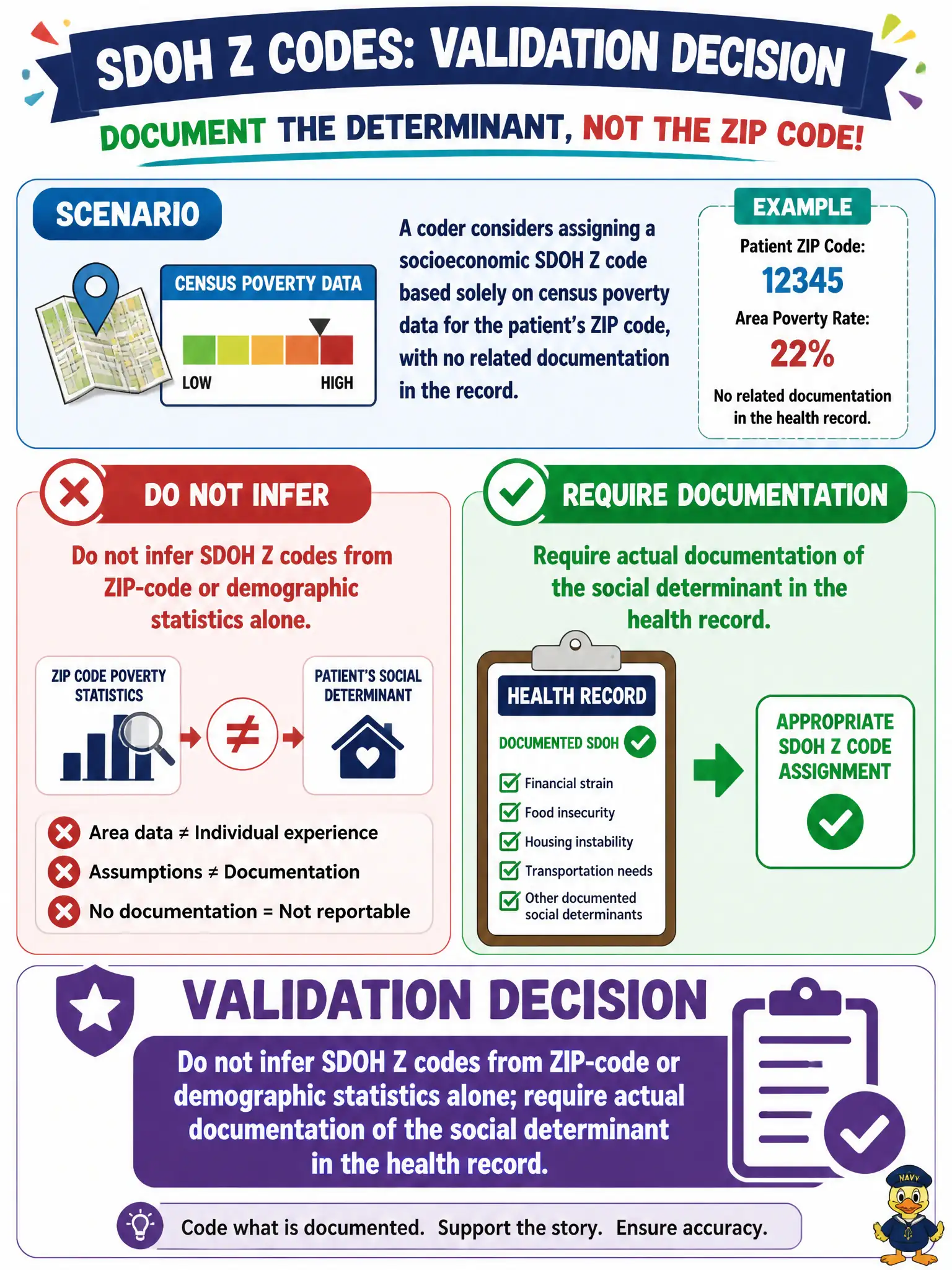
A coder considers assigning a socioeconomic SDOH Z code based solely on census poverty data for the patient's ZIP code, with no related documentation in the record. What is the correct validation decision?
Select an answer to reveal the explanation.
Short Explanation
ZIP codes are geography, not a social-history interview. You cannot mint SDOH Z codes from census heat maps. Someone has to document the actual determinant in the chart first.
Full Explanation
Social determinants of health Z codes require documentation of the social determinant in the health record from an allowable source; they cannot be inferred from area statistics. Assigning socioeconomic SDOH codes from census poverty data for the patient's ZIP code alone, with no related documentation, is invalid assumption coding. Coders must not invent housing, food insecurity, or related Z codes from demographic proxies that never appear as patient-level clinical or care-management statements. Assigning every available SDOH Z code for patients from a high-poverty ZIP mass-codes unsupported social risk and distorts public-health and risk-adjustment data for municipal populations. Using ZIP poverty rate as a substitute for specific housing or food-insecurity codes still lacks patient-level documentation. Skipping documentation checks for Medicare-only claims creates a payer-specific integrity failure rather than fixing the documentation gap. Exam caveat: SDOH reporting permissions and source rules continue to evolve—follow the Official Guidelines edition applicable to the discharge date and facility policy. Operational check: find an explicit social-determinant statement in an allowable note before assigning any SDOH Z code; if absent, omit the code or pursue appropriate documentation rather than geographic inference.