
An outpatient hospital procedure is canceled after anesthesia consent but before incision, yet the EHR charge router still posts the case as performed. What should the coder validate?
Select an answer to reveal the explanation.
Short Explanation
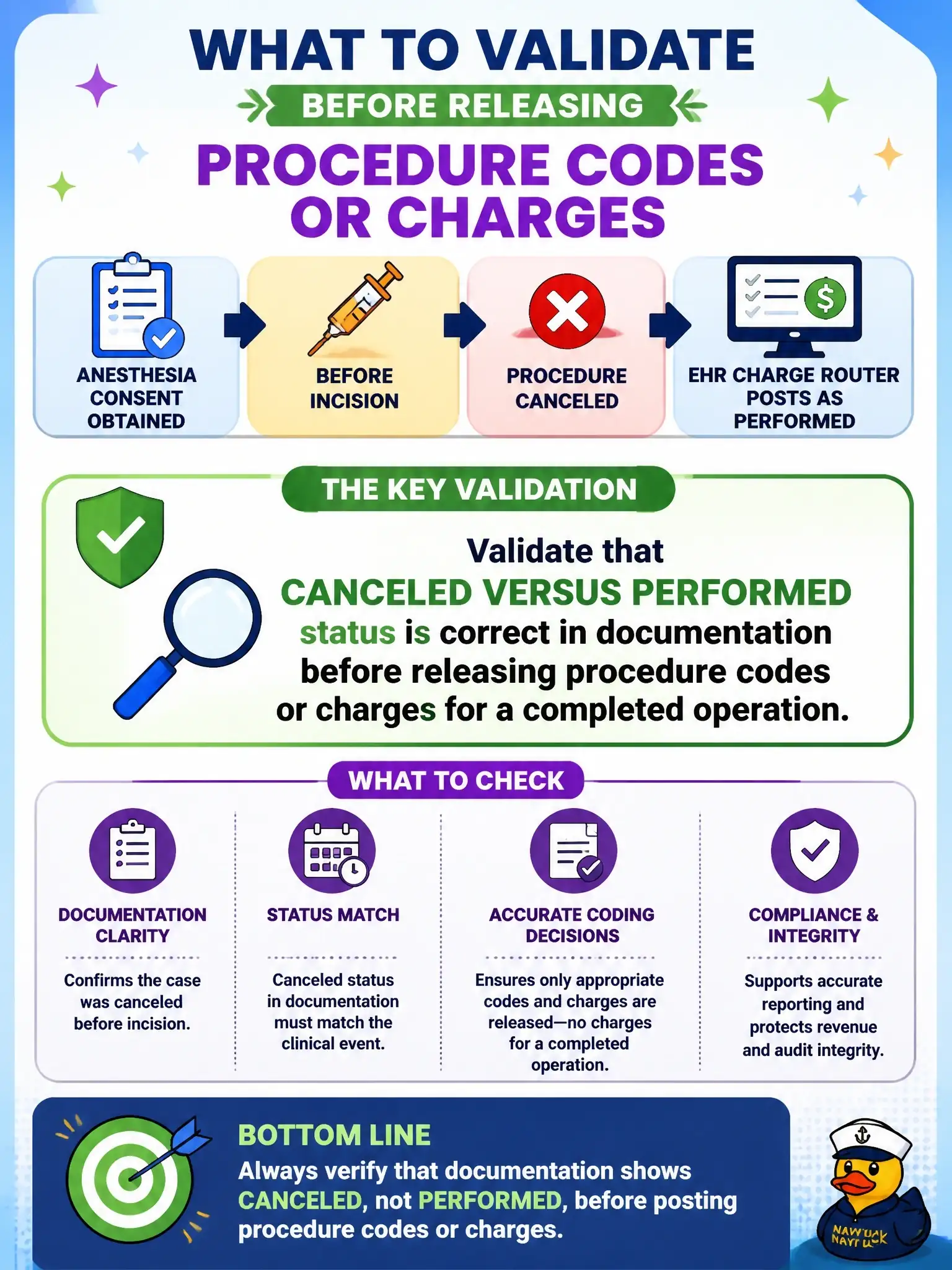
Consent isn't incision. If the case was canceled, don't let a charge router bill it as done. Validate performed versus canceled in the op/nursing record before releasing any procedure codes or charges.
Full Explanation
Outpatient facility coding and charging require confirmation that a procedure was actually performed. When a case is canceled after anesthesia consent but before incision while the EHR charge router still posts the case as performed, the coder must validate that canceled versus performed status is correct in documentation before releasing procedure codes or charges for a completed operation. The scheduler's block time alone never proves the procedure occurred; it only shows reserved operating-room time. Billing the highest-RVU preference-card procedure regardless of documentation is charge abuse disconnected from the clinical record. Coding canceled cases as completed merely because consent was signed equates permission to proceed with surgical performance and is incorrect. Limited services actually rendered before cancellation may be reportable under specific rules, but that is not the same as coding the full intended operation. Exam caveat: apply current outpatient hospital CPT and facility guidance for discontinued procedures and reconcile clinical notes with charge master posts. Operational check in a civic ambulatory surgery center: read nursing, anesthesia, and operative cancellation documentation, suppress erroneous "performed" charges, and code only services supported as rendered.