
Before coding inpatient transfusion procedures or reporting transfusion-related detail that depends on quantity, what must the coder validate?
Select an answer to reveal the explanation.
Short Explanation
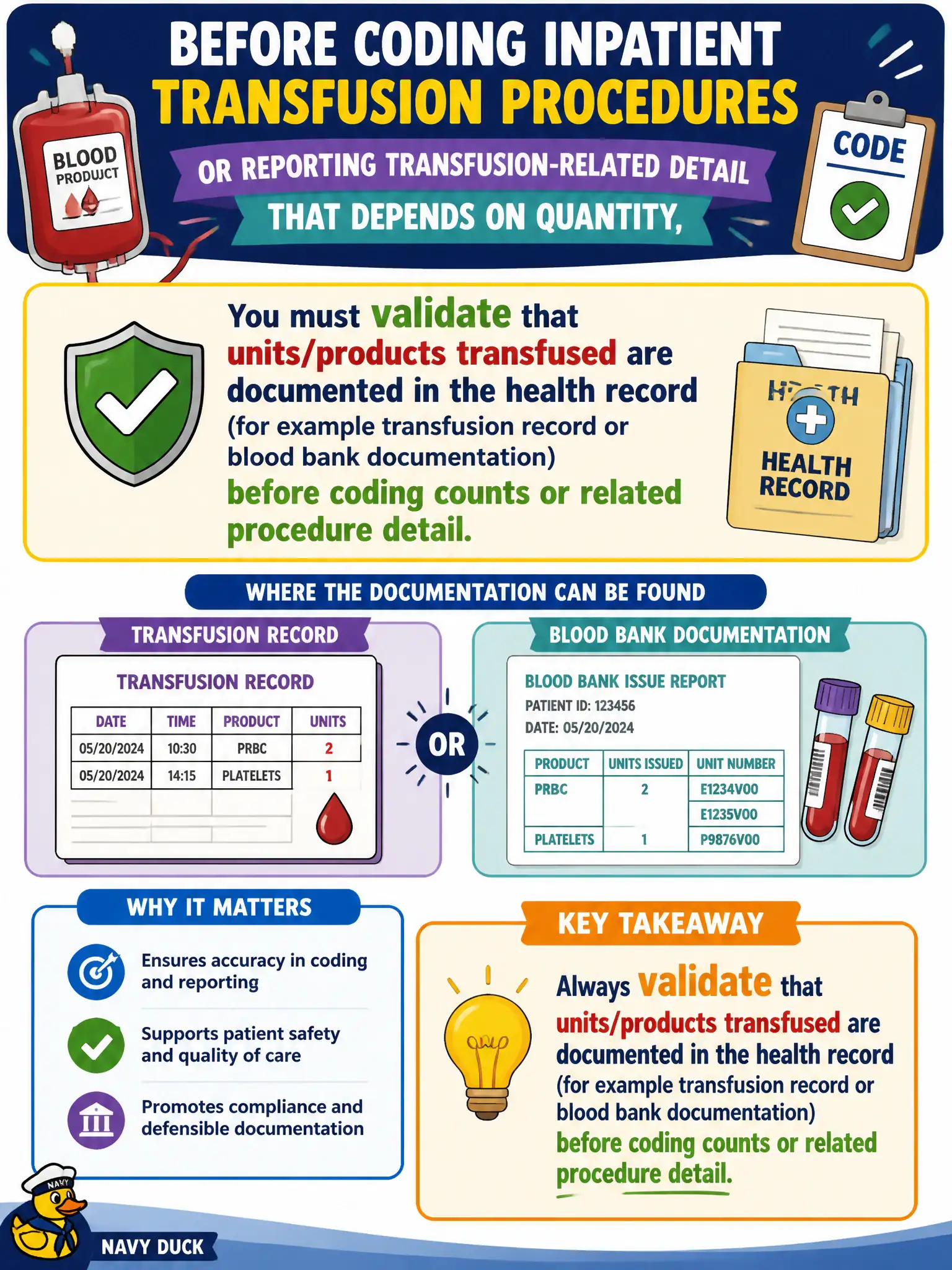
Transfusion coding needs a unit count you can point to in the chart — not folklore from the hallway. Check the transfusion record or blood bank docs for what was actually given. Charges without clinical documentation are not enough.
Full Explanation
Inpatient transfusion procedure coding and any quantity-dependent transfusion detail require documented evidence of what products and how many units were actually transfused. Coders must validate units and products in the health record—typically transfusion records or blood bank documentation—before coding counts or related procedure detail. A blood bank marketing brochure is not clinical documentation of transfusion to this patient and cannot support unit counts. A family member's verbal recall of how many units were hung is not an authenticated clinical source for coding. A charge-router blood administration fee without corresponding clinical transfusion documentation may reflect a charging error rather than care rendered and cannot alone prove units transfused. Exam caveat: distinguish blood product administration coding from related procedures and know when quantity affects code selection or quality reporting for municipal trauma and surgical services. Operational check: match transfusion tags and flowsheets to physician orders and operative notes, confirm product type and unit counts, resolve discrepancies with blood bank or clinical clarification, then finalize transfusion-related codes.