
At final coding, working diagnoses in the encoder differ from the attending's authenticated final diagnostic statement. What validation step is required?
Select an answer to reveal the explanation.
Short Explanation
Working codes are sticky notes; the signed final diagnosis list is the poster on the wall. Before you drop the bill, make the coded set match that authenticated finale. First-in CAC drafts do not win by seniority.
Full Explanation
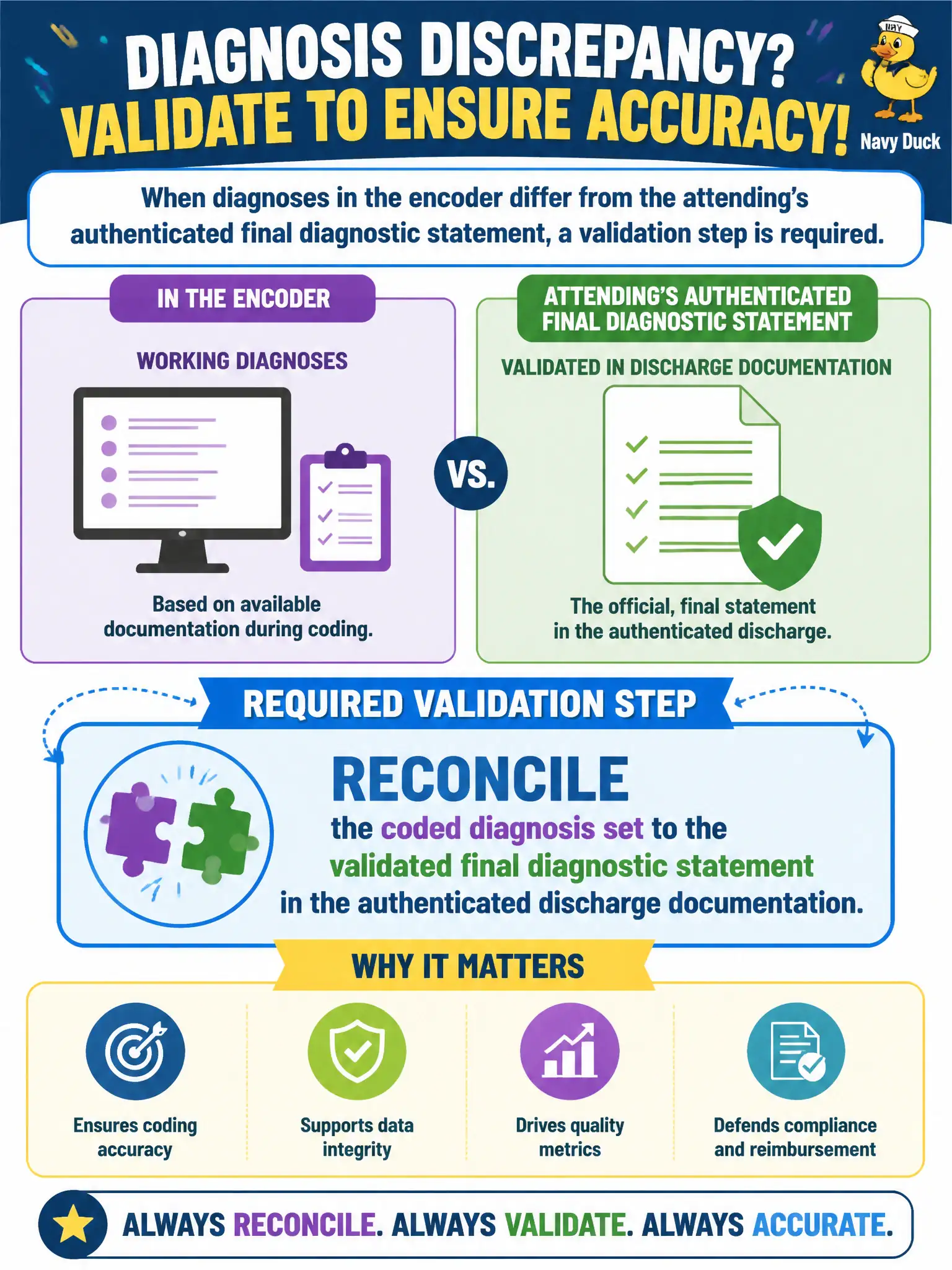
Working diagnoses in an encoder or computer-assisted coding workspace are provisional tools for concurrent coding; they are not the final diagnostic authority. At final coding, when working diagnoses differ from the attending's authenticated final diagnostic statement, the coder must reconcile the coded set to the validated final diagnostic statement in authenticated discharge documentation. Keeping the working CAC list because it was entered first prioritizes process history over the legal discharge diagnosis and invites unsupported secondary conditions onto the claim. Averaging working and final lists into a blended code set invents diagnoses neither fully supported nor fully discarded. Submitting both code sets on separate claims for the same stay creates duplicate billing and conflicting abstracts for municipal payers. Exam caveat: progress-note diagnoses that were monitored and treated may still be reportable even if omitted from a brief discharge summary—use compliant clarification rather than silently discarding or inventing. Operational check: compare the encoder working list to the authenticated discharge diagnoses and clinically validated secondary conditions; align the abstract, query gaps, and release one reconciled code set for the civic hospital claim.