
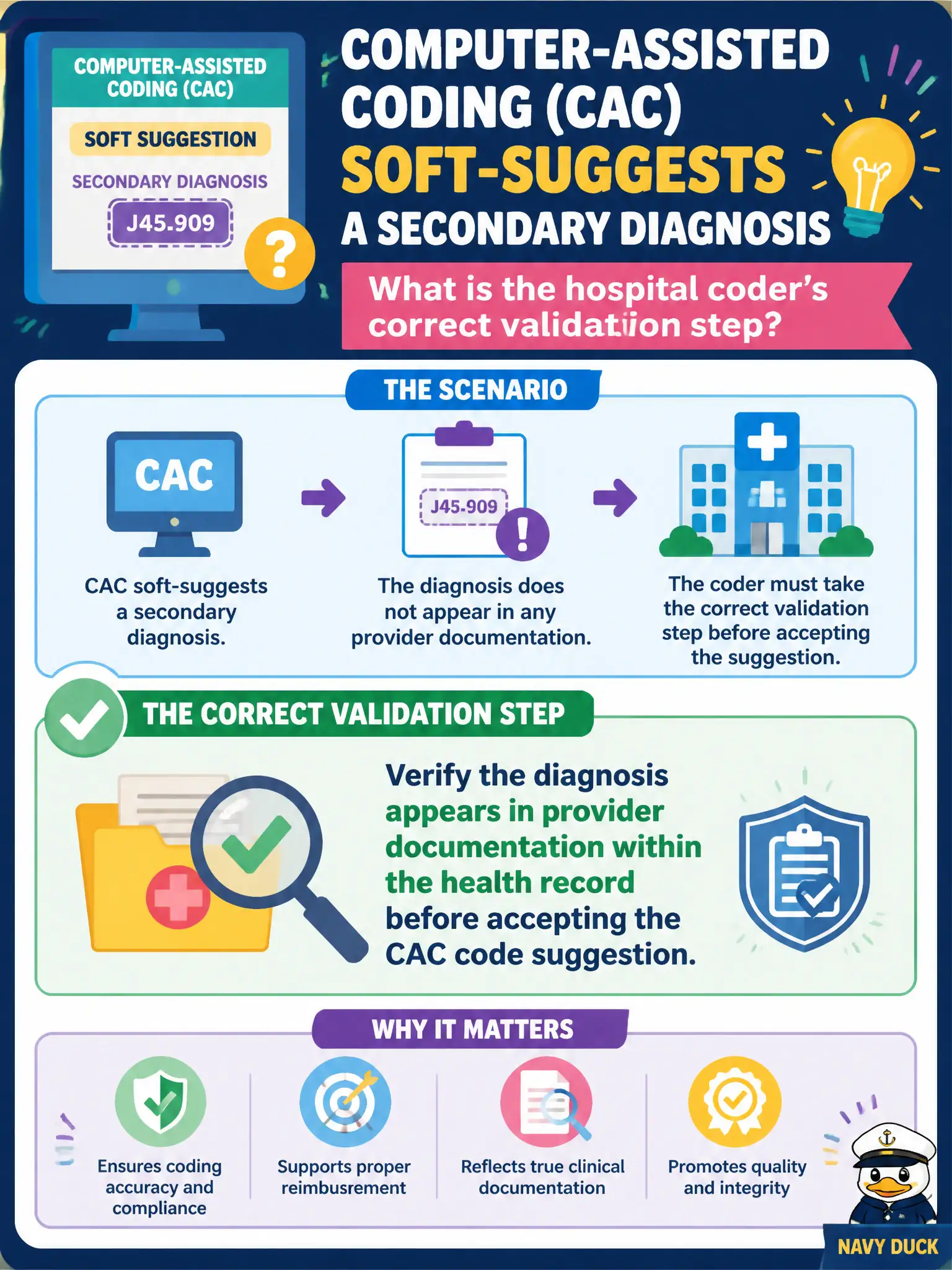
Computer-assisted coding (CAC) soft-suggests a secondary diagnosis that does not appear in any provider documentation. What is the hospital coder's correct validation step?
Select an answer to reveal the explanation.
Short Explanation
CAC is a helpful highlighter, not the attending. If the engine whispers a diagnosis that no provider wrote, you do not rubber-stamp it. Open the chart, prove the documentation, then accept or reject the suggestion.
Full Explanation
Computer-assisted coding (CAC) is a productivity aid that proposes codes from natural-language processing; it is not an independent documentation source. When CAC soft-suggests a secondary diagnosis absent from provider documentation, the hospital coder must verify that the diagnosis actually appears in authenticated provider documentation before accepting the suggestion. Accepting CAC output because the engine was trained on similar DRGs substitutes machine pattern-matching for the legal record and can inflate severity without clinical support. Confidence scores above 90% still do not create documentation that is not in the chart. Adding a query-pending diagnosis as if it were an established code on the claim reports an unsettled clarification as fact and creates compliance risk for county-facility claims. Exam caveat: CAC suggestions can be valuable clues for missed documented conditions, but UHDDS and Official Guidelines still require reportable diagnoses to be supported in the record. Operational check: open the CAC evidence snippet, locate matching provider diagnostic language in progress notes or discharge documentation, accept only supported codes, and reject or query the rest before bill drop.