
An inpatient is admitted for a reportable injury, and the record describes the fracture but omits how the injury occurred. What should the facility coder recognize about external-cause documentation?
Select an answer to reveal the explanation.
Short Explanation
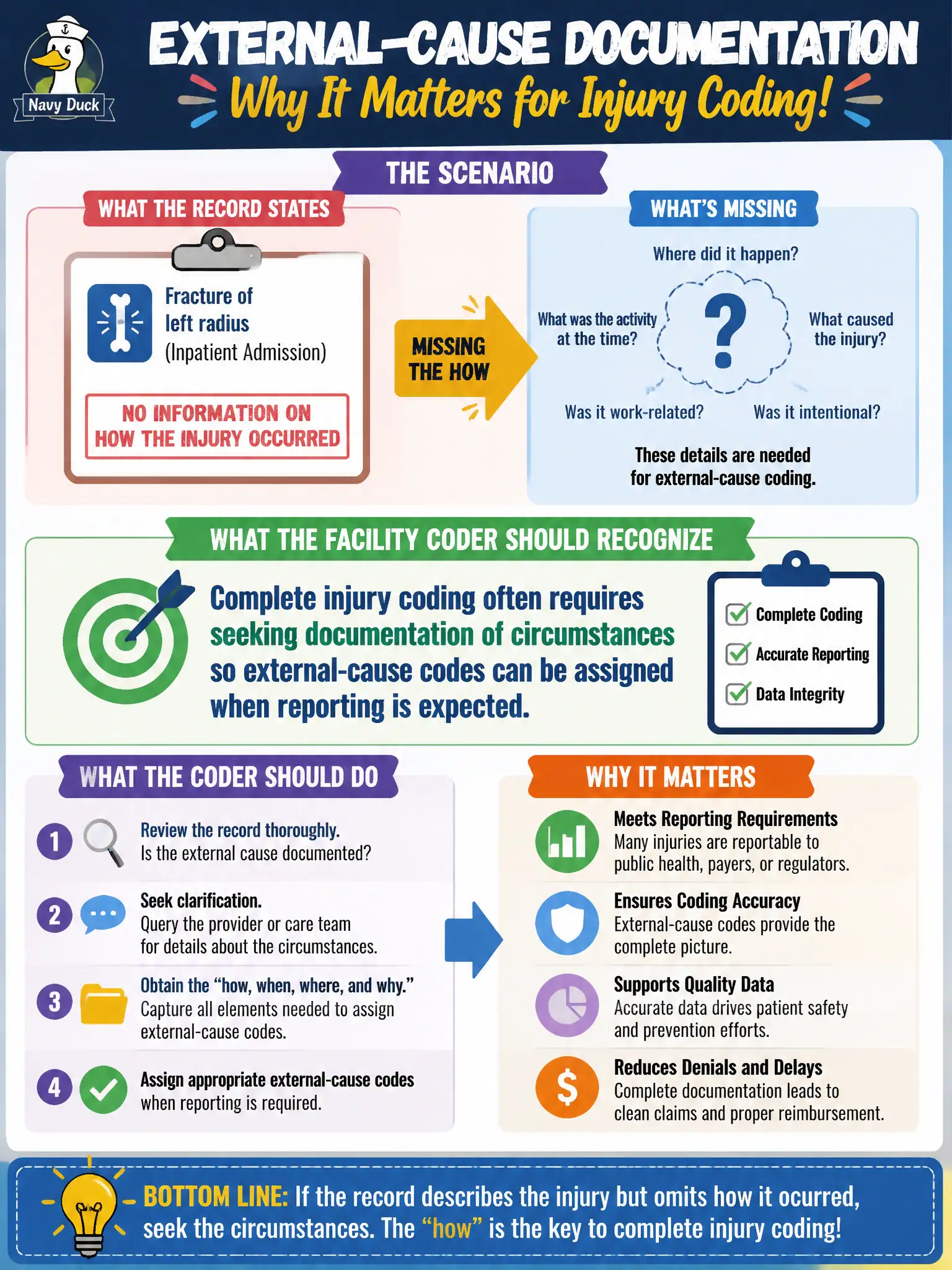
Knowing the broken bone is only half the story — payers and public health also care how it happened. If the chart never says fall, crash, or assault, the injury coding package is incomplete. Hunt for circumstance notes or clarify before you finalize.
Full Explanation
Complete injury coding for reportable inpatient injuries typically includes not only the injury diagnosis but also external-cause detail describing how, where, and the activity context when reporting is expected under facility, state, or public-health requirements. When the record describes a fracture but omits injury circumstances, the coder should recognize that external-cause documentation may need to be sought so those codes can be assigned appropriately. It is incorrect to claim external-cause codes are never reported for inpatient injuries; many hospitals and jurisdictions expect them for trauma surveillance and secondary data use. Inventing a mechanism from age-group epidemiology is fabrication, not coding. Limiting external-cause sources to autopsy reports alone ignores ED, EMS, H&P, and progress-note documentation that commonly supply mechanism and place of occurrence. Exam caveat: external-cause coding requirements and sequencing expectations can vary by setting and state reporting rules—know what your facility must submit. Operational check for civic trauma abstracts: search EMS, ED, H&P, and consult notes for mechanism, place, and activity; if expected elements are missing and obtainable, pursue clarification before final injury packaging.