
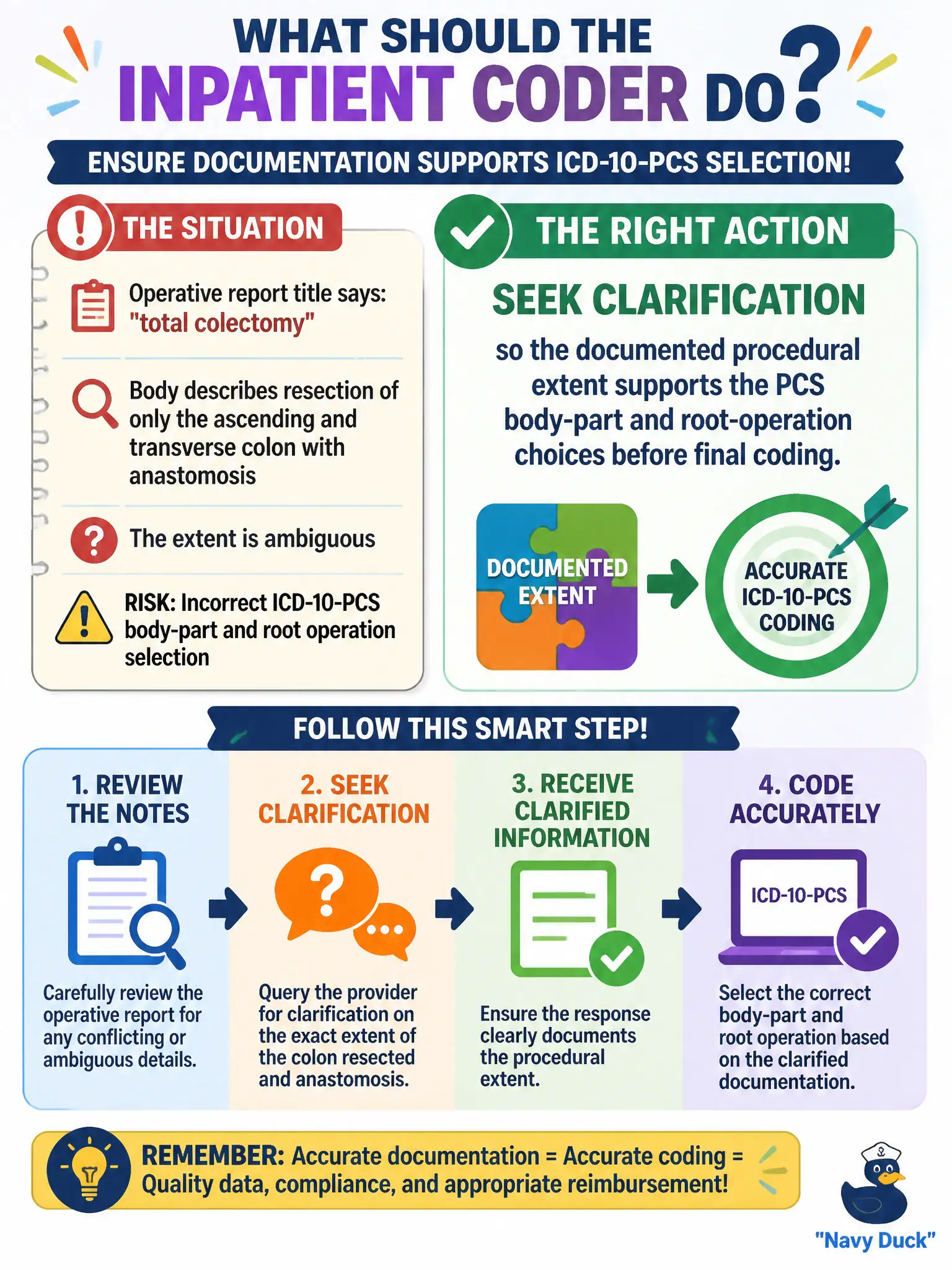
An operative report title says 'total colectomy,' but the body describes resection of only the ascending and transverse colon with anastomosis, and the extent is ambiguous. What should the inpatient coder do before selecting the ICD-10-PCS body-part/root detail?
Select an answer to reveal the explanation.
Short Explanation
Op-note titles can be marketing; the narrative is the truth. If 'total' in the header fights 'partial' in the body, you pause. Get the surgeon's intent and completed extent straight before you lock PCS body part and root.
Full Explanation
ICD-10-PCS body-part and root-operation selection must reflect the procedure that was actually performed, as documented in the operative narrative, not an ambiguous or conflicting title. When an operative report title says 'total colectomy' but the body describes resection of only ascending and transverse colon with anastomosis, the extent is unsettled and final PCS characters cannot be responsibly locked. Seeking clarification so documented procedural extent supports body-part and root choices is the compliant validation step for hospital inpatient coding. Coding total colectomy solely because the title always controls elevates a header over the operative findings and risks incorrect MS-DRG and quality reporting for civic surgical services. Coding from the anesthesia record alone omits the surgeon's description of what was resected and anastomosed. Assigning both partial and total colectomy for the same intended resection double-counts conflicting extents rather than resolving them. Exam caveat: PCS root operations such as resection versus excision and body-part values for colon segments are precise; mismatched titles are a classic query trigger. Operational check: compare title, indication, findings, and procedure description; if extent still conflicts, query the surgeon for completed extent before final PCS assignment.