
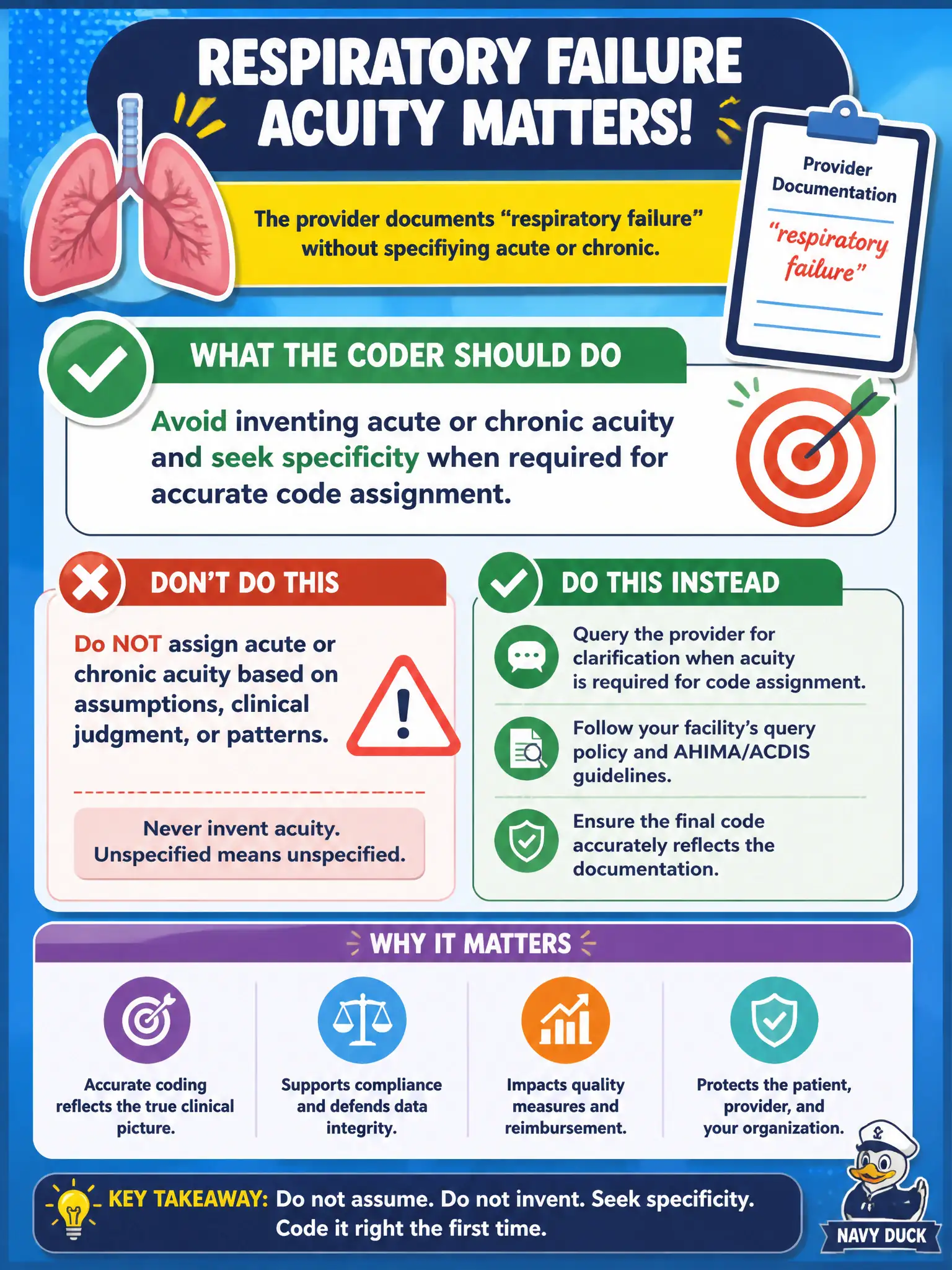
The provider documents “respiratory failure” without specifying acute or chronic. What should the coder do regarding acuity?
Select an answer to reveal the explanation.
Short Explanation
“Respiratory failure” without acute or chronic is an unfinished label. Do not fill in acuity from habit or from a COPD history—ask for the specificity the code set needs.
Full Explanation
When the provider documents “respiratory failure” without specifying acute or chronic, the coder should avoid inventing acute or chronic acuity and seek specificity when required for accurate code assignment. ICD-10-CM distinguishes acuity types that matter for clinical data and often for severity in county inpatient coding. Defaulting to acute respiratory failure because inpatient cases are usually acute invents acuity from setting. Coding chronic respiratory failure whenever the patient has COPD listed invents chronic failure from comorbidity alone. Omitting respiratory failure entirely until arterial blood gas results are printed may be unnecessary if other documentation supports respiratory failure pending acuity clarification—ABGs are not the sole gate. Exam caveat: do not invent acuity; query for acute, chronic, or acute-on-chronic when needed. Operational check: gather clinical indicators on the municipal account, issue a non-leading acuity query, code the authenticated type, and assign POA carefully. Educate that COPD presence does not automatically equal chronic respiratory failure coding. In municipal and county facility practice, record the rationale for the chosen coding path and the rejected alternatives in the abstract notes so auditors and future coders understand the clinical and compliance basis. Re-check the decision if new authenticated documentation arrives before final bill drop, and escalate persistent documentation gaps to CDI or compliance rather than normalizing unsupported shortcuts that would distort civic claims, quality metrics, or case-mix reporting.