
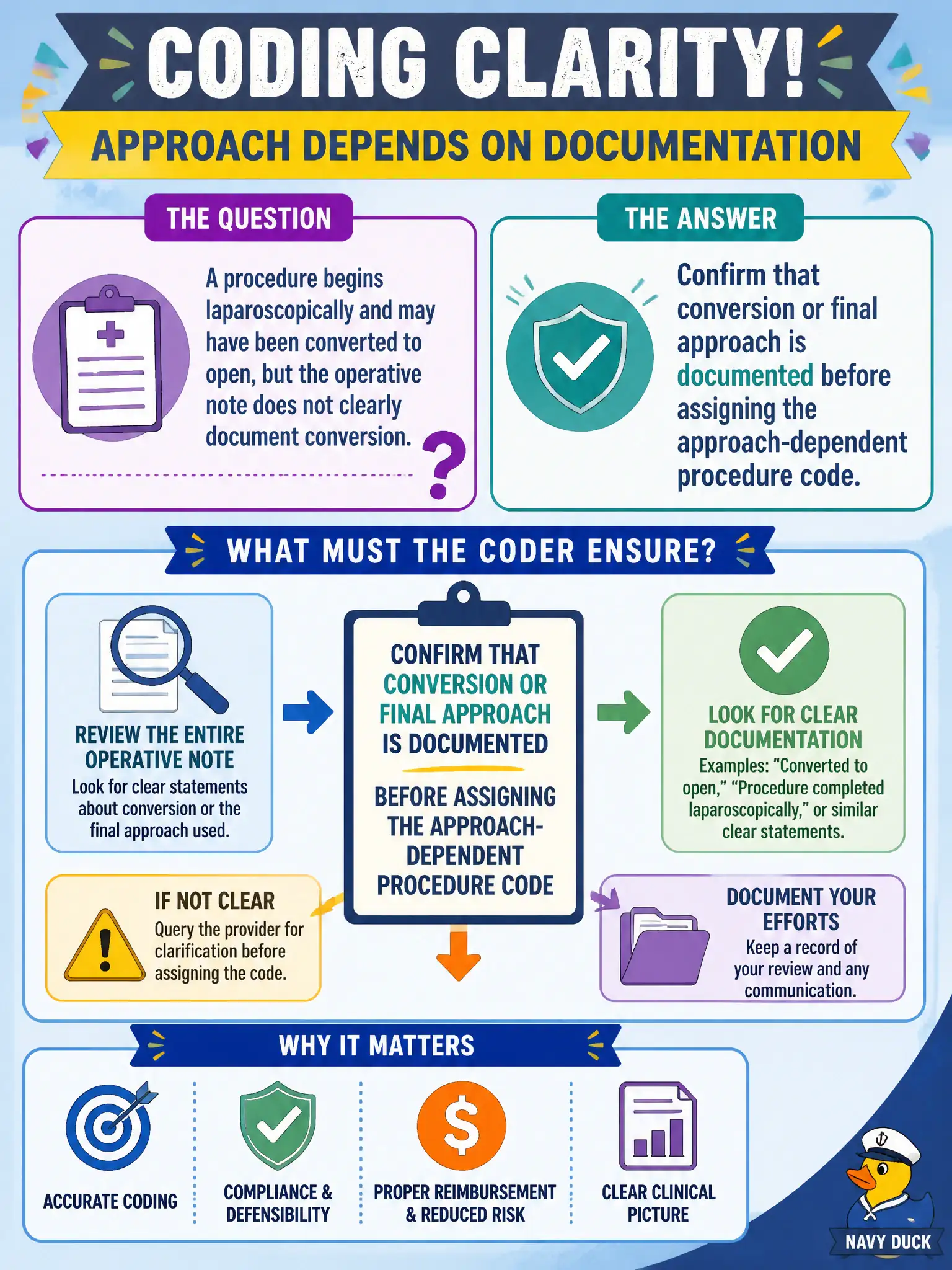
A procedure begins laparoscopically and may have been converted to open, but the operative note does not clearly document conversion. What must the coder ensure before selecting approach?
Select an answer to reveal the explanation.
Short Explanation
Started with cameras does not automatically mean it finished that way. If conversion might have happened, get the final approach written down before you choose laparoscopic versus open coding.
Full Explanation
When a procedure begins laparoscopically and may have been converted to open but the operative note does not clearly document conversion, the coder must confirm that conversion or final approach is documented before assigning the approach-dependent procedure code. Ambiguous approach undermines PCS/CPT accuracy and surgical grouping for public hospitals. Assuming open approach whenever operative time exceeds two hours fails as a duration-based guess. Coding laparoscopic approach only because the case started with ports fails when conversion may have occurred but was not documented. Reporting both laparoscopic and open CPT/PCS approaches without narrative support fails dual-approach coding without documentation. Exam caveat: document final approach/conversion before approach-dependent code selection. Operational check: query the civic surgeon for conversion and final approach, update the operative narrative, then assign the correct approach character or CPT. Use OR documentation templates that prompt conversion statements to reduce municipal ambiguity. In municipal and county facility practice, record the rationale for the chosen coding path and the rejected alternatives in the abstract notes so auditors and future coders understand the clinical and compliance basis. Re-check the decision if new authenticated documentation arrives before final bill drop, and escalate persistent documentation gaps to CDI or compliance rather than normalizing unsupported shortcuts that would distort civic claims, quality metrics, or case-mix reporting.