
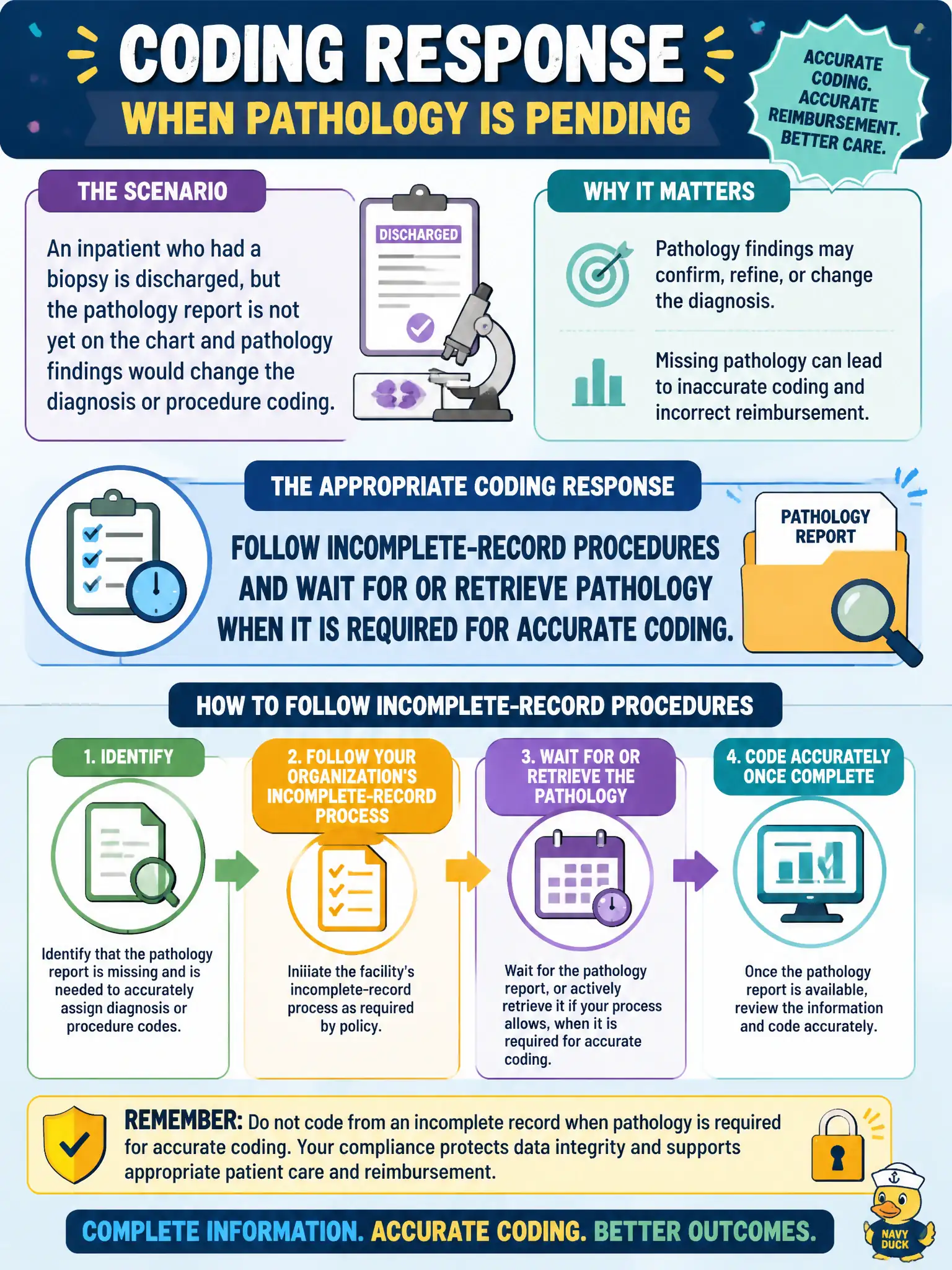
An inpatient who had a biopsy is discharged, but the pathology report is not yet on the chart and pathology findings would change the diagnosis or procedure coding. What is the appropriate coding response?
Select an answer to reveal the explanation.
Short Explanation
If the path report is the missing puzzle piece, do not finish the picture with a guess. Park the chart under incomplete-record rules until pathology is in when those results drive the codes.
Full Explanation
When an inpatient who had a biopsy is discharged but the pathology report is not yet on the chart and pathology findings would change the diagnosis or procedure coding, the appropriate response is to follow incomplete-record procedures and wait for or retrieve pathology when it is required for accurate coding. Civic coding quality favors complete clinical evidence over premature final bills. Final-coding the case as benign disease so the bill drops immediately risks incorrect neoplasm status. Coding an unspecified neoplasm permanently and never updating after pathology returns fails continuous coding integrity. Using the surgeon’s verbal hallway comment about pathology as the final diagnosis fails documentation standards—verbal comments must be authenticated in the record. Exam caveat: when pathology drives codes, use incomplete-record holds rather than speculative final coding. Operational check: place the county account on incomplete-record status, retrieve pathology promptly, update diagnosis/procedure codes, then release the bill. Define SLAs with pathology so public hospital discharges are not coded on rumor or permanent unspecified placeholders. In municipal and county facility practice, record the rationale for the chosen coding path and the rejected alternatives in the abstract notes so auditors and future coders understand the clinical and compliance basis. Re-check the decision if new authenticated documentation arrives before final bill drop, and escalate persistent documentation gaps to CDI or compliance rather than normalizing unsupported shortcuts that would distort civic claims, quality metrics, or case-mix reporting.