
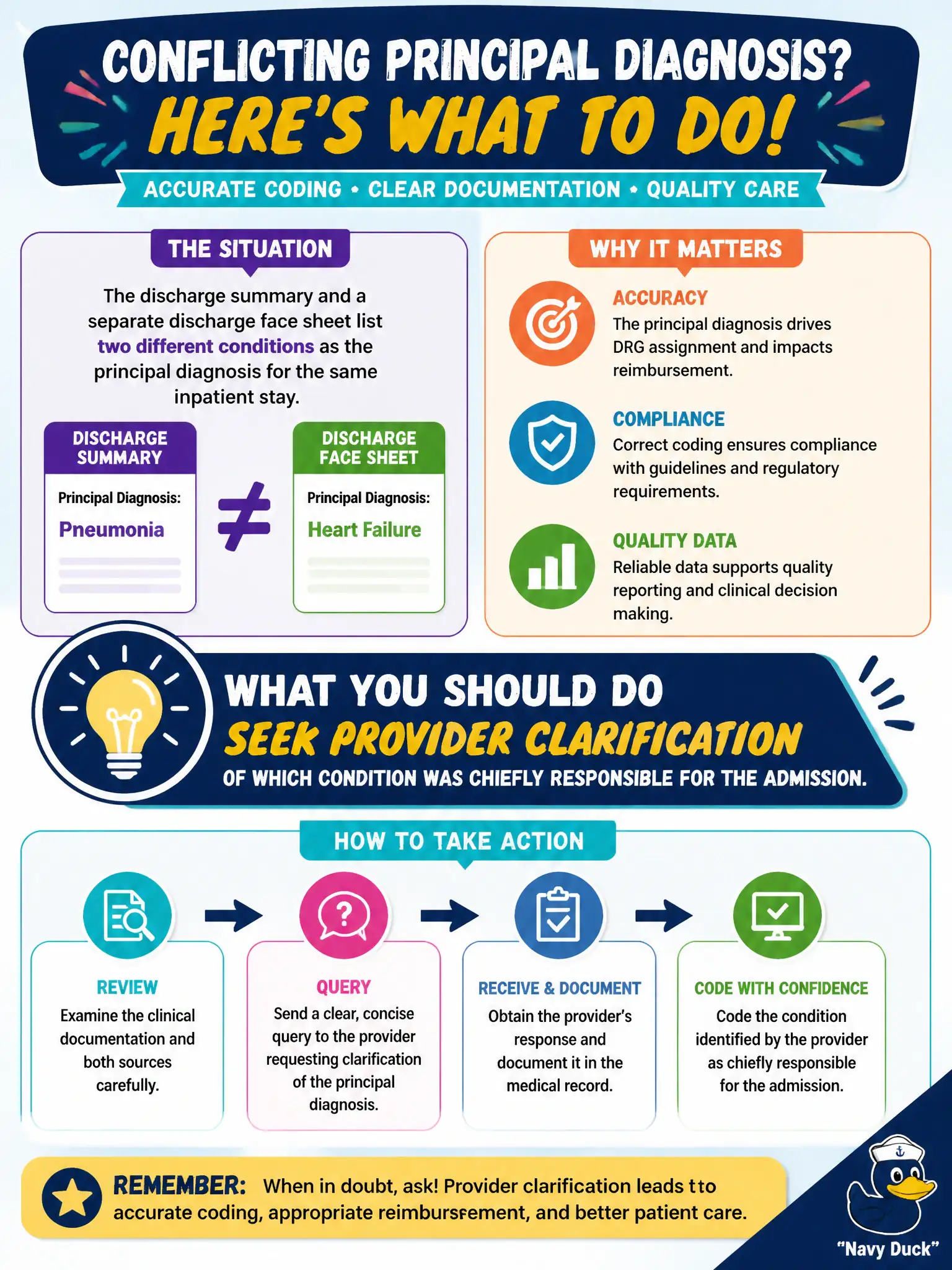
The discharge summary and a separate discharge face sheet list two different conditions as the principal diagnosis for the same inpatient stay. What should the coder do?
Select an answer to reveal the explanation.
Short Explanation
Principal diagnosis is a single crown—you do not get two kings on one claim. When discharge documents disagree about who wore the crown, ask the provider which condition really drove the admission.
Full Explanation
When the discharge summary and a separate discharge face sheet list two different conditions as the principal diagnosis for the same inpatient stay, the coder should seek provider clarification of which condition was chiefly responsible for the admission. UHDDS allows one principal diagnosis for the facility abstract at public hospitals. Coding both conditions as principal diagnoses on the same claim fails the single-principal rule. Choosing the diagnosis that appears first in the discharge summary without further review fails when another discharge document conflicts. Selecting the diagnosis associated with the longer length of stay automatically fails as a nonclinical proxy for principal diagnosis. Exam caveat: conflicting principal statements require clarification, not dual principals, first-line defaults, or LOS proxies. Operational check: query the attending for the municipal stay, align discharge documents, assign the clarified principal, and sequence secondaries appropriately. Use such conflicts as CDI opportunities to standardize principal-diagnosis statements across discharge artifacts. In municipal and county facility practice, record the rationale for the chosen coding path and the rejected alternatives in the abstract notes so auditors and future coders understand the clinical and compliance basis. Re-check the decision if new authenticated documentation arrives before final bill drop, and escalate persistent documentation gaps to CDI or compliance rather than normalizing unsupported shortcuts that would distort civic claims, quality metrics, or case-mix reporting.