
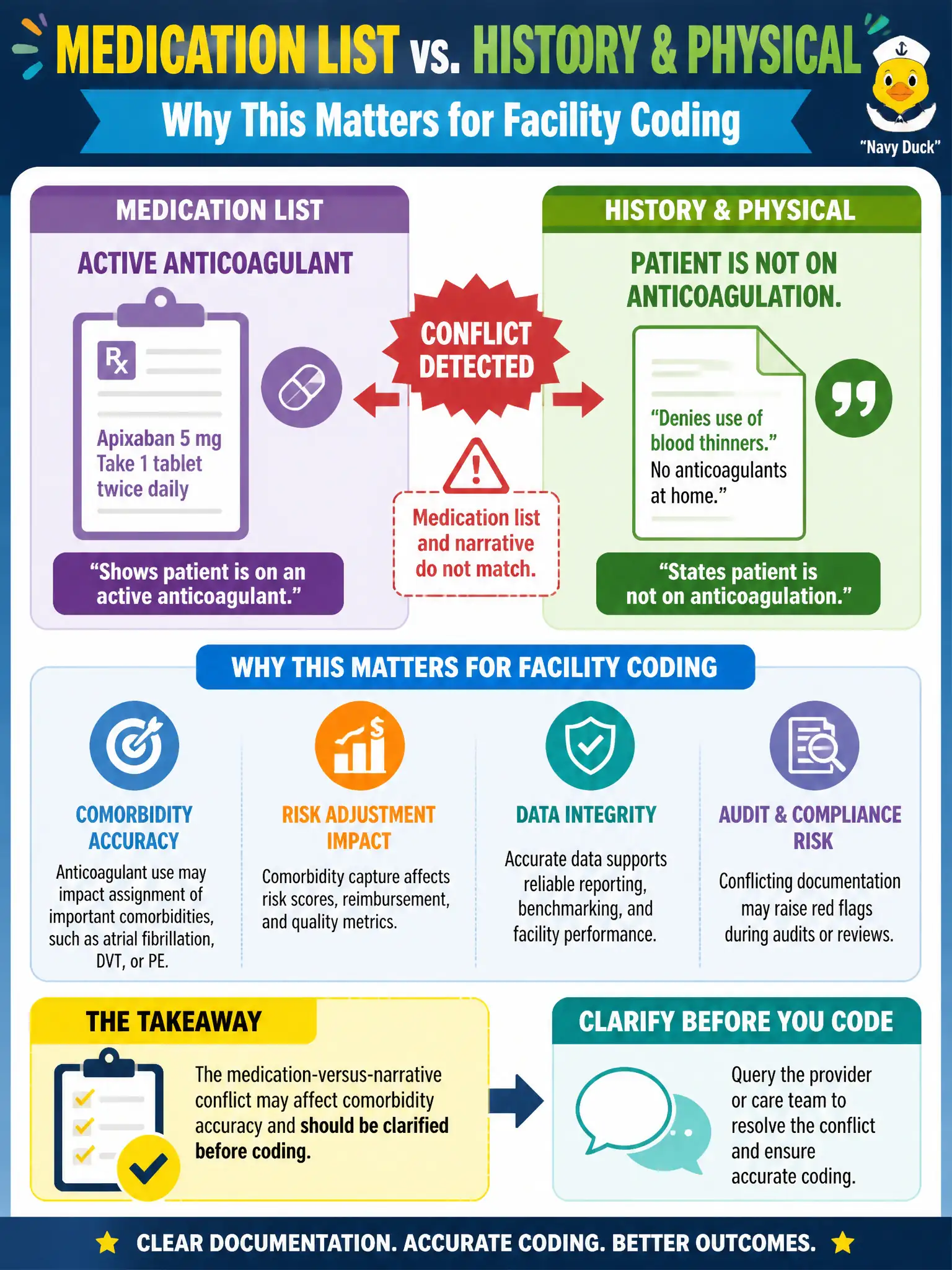
The medication list shows an active anticoagulant, but the history and physical states the patient is not on anticoagulation. Why does this matter for facility coding?
Select an answer to reveal the explanation.
Short Explanation
One chart saying “on a blood thinner” and another saying “not” is a classic history tangle. That fight can change comorbidity coding, so get it clarified instead of guessing from the med list alone.
Full Explanation
When the medication list shows an active anticoagulant but the history and physical states the patient is not on anticoagulation, the conflict matters because medication-versus-narrative discrepancies may affect comorbidity accuracy and should be clarified before coding. Civic risk adjustment and CC capture depend on consistent clinical truth. Medication lists never affecting coding so the conflict can be ignored fails stewardship. Automatically assigning a long-term anticoagulant use code from the medication list alone fails when narrative documentation contradicts and provider confirmation is needed. Only pharmacy changing coded diagnoses related to anticoagulation status fails because diagnosis coding is a provider-documented, coder-abstracted function—not a pharmacy coding role. Exam caveat: resolve med-list versus narrative conflicts before assigning anticoagulant-related codes. Operational check: query the attending at the county facility about anticoagulation status, reconcile the medication list, then code long-term use or related conditions only with consistent support. Share recurring conflicts with pharmacy and CDI for medication reconciliation improvement. In municipal and county facility practice, record the rationale for the chosen coding path and the rejected alternatives in the abstract notes so auditors and future coders understand the clinical and compliance basis. Re-check the decision if new authenticated documentation arrives before final bill drop, and escalate persistent documentation gaps to CDI or compliance rather than normalizing unsupported shortcuts that would distort civic claims, quality metrics, or case-mix reporting.