
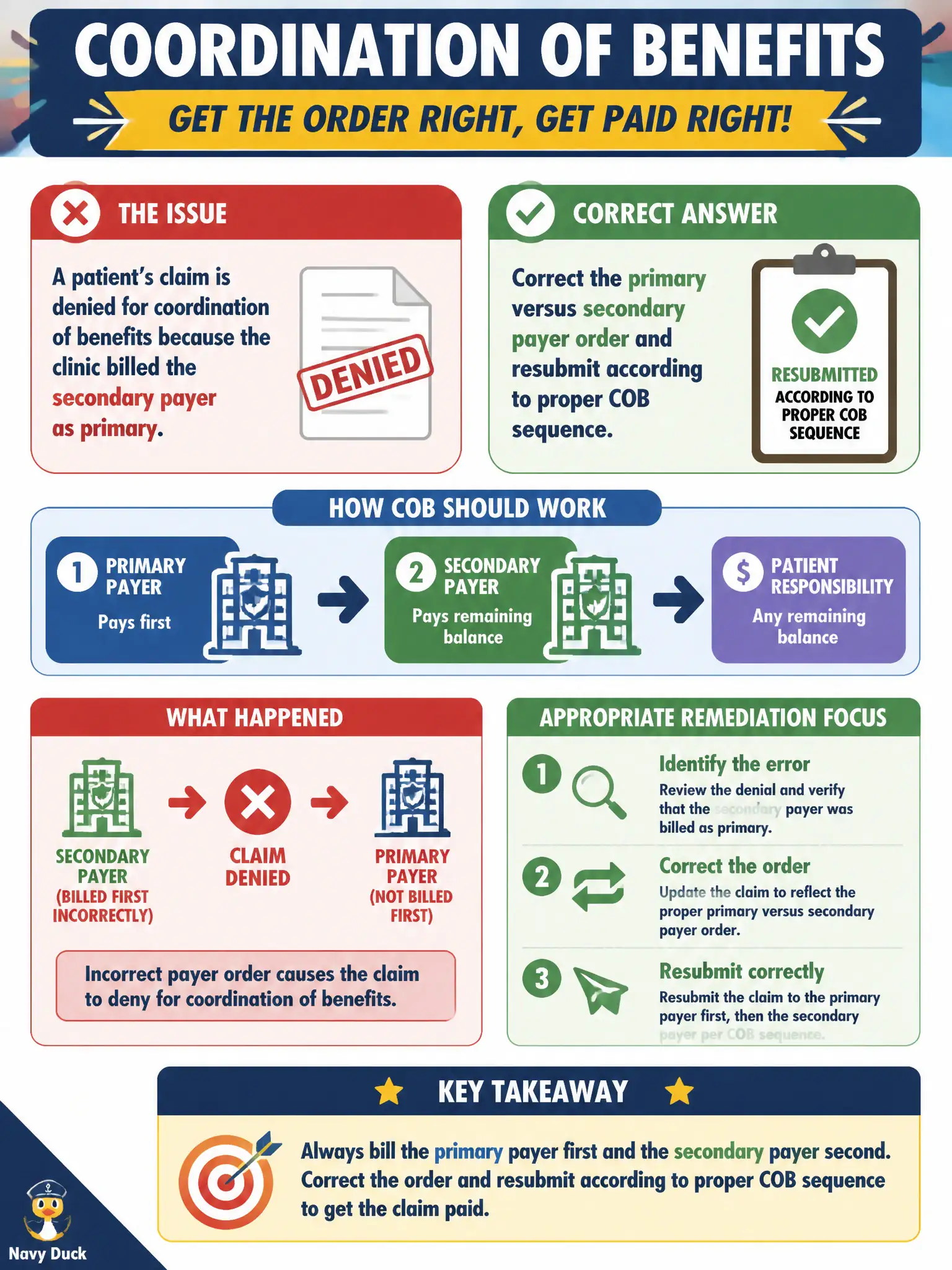
A patient’s claim is denied for coordination of benefits because the clinic billed the secondary payer as primary. What is the appropriate remediation focus?
Select an answer to reveal the explanation.
Short Explanation
COB denials are a “wrong cashier” problem—you asked payer B to go first when payer A was primary. Fix the order, then resubmit. Arguing medical necessity while the payer sequence is wrong just spins the wheels.
Full Explanation
When a claim is denied for coordination of benefits because the clinic billed the secondary payer as primary, the remediation focus is to correct the primary versus secondary payer order and resubmit according to proper COB sequence. Wrong-cashier sequencing is a coverage hierarchy problem common in multi-payer civic clinics and is fixed by reordering payers—not by unrelated medical-necessity arguments or CPT tweaks on professional claims.
Appealing solely on medical necessity without correcting payer order fails by concept because the denial root is COB sequence, not clinical necessity. Writing off immediately because COB denials cannot be corrected fails because COB order errors are routinely repairable. Changing only the CPT and resubmitting to the same payer as primary fails because procedure changes do not fix which plan is primary.
Exam caveat: gather primary EOB data when rebilling secondary after correcting order; secondary adjudication often needs primary payment information. Operational check: verify COB through eligibility tools before first submission, correct payer sequencing in the practice management system, and resubmit primary first when the original filing inverted the order.