
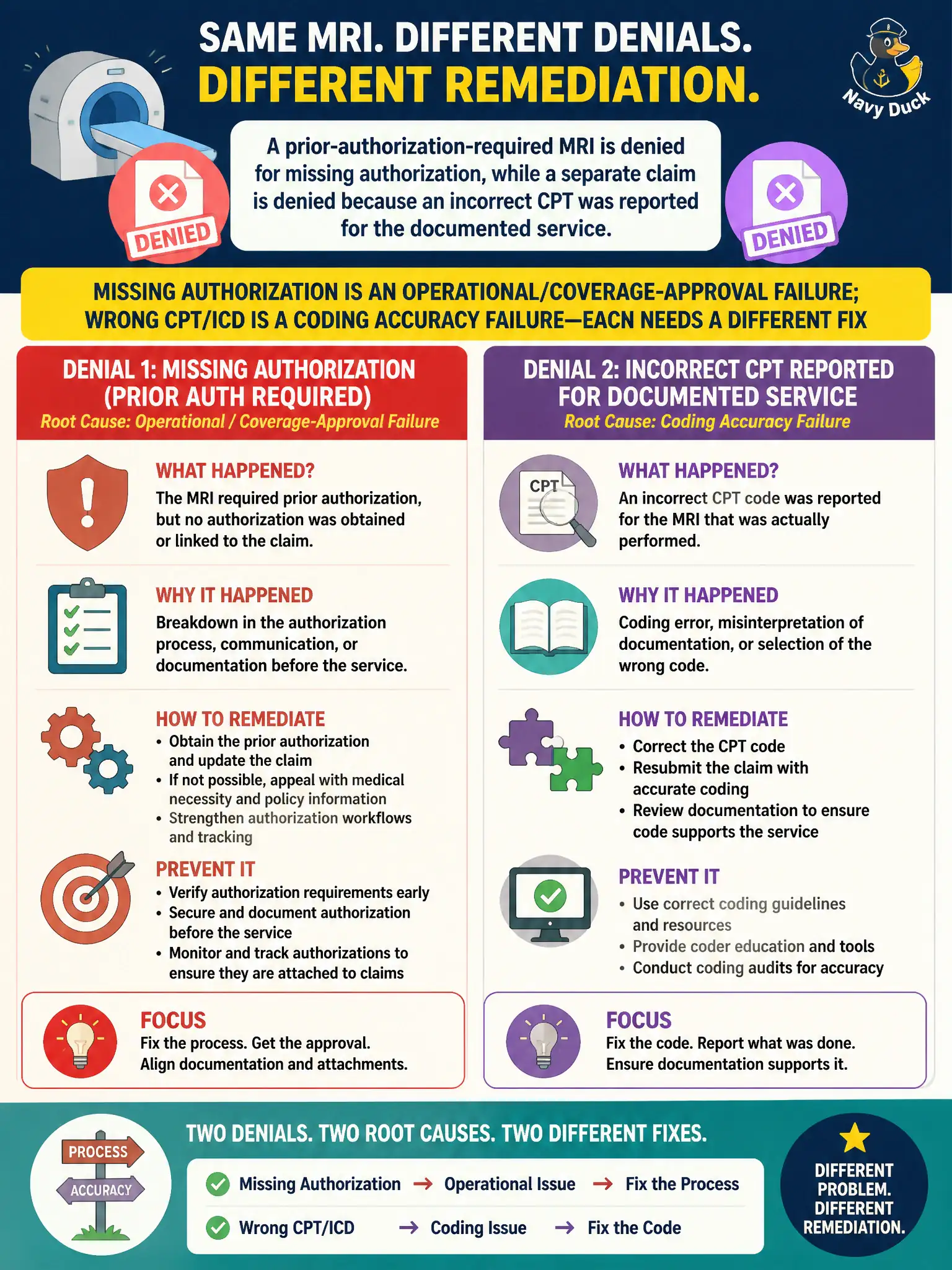
A prior-authorization-required MRI is denied for missing authorization, while a separate claim is denied because an incorrect CPT was reported for the documented service. How should remediation differ?
Select an answer to reveal the explanation.
Short Explanation
No auth is a green-light problem—someone skipped the approval step. Wrong CPT is a coding problem—someone miscoded the work. Fix the process for one and the code assignment for the other.
Full Explanation
A prior-authorization-required MRI denied for missing authorization is an operational/coverage-approval failure, while a claim denied because an incorrect CPT was reported for the documented service is a coding accuracy failure. Remediation differs: obtain or retrospectively address authorization per payer rules for the first; correct coding and submit a corrected claim for the second. Civic imaging and specialty clinics should not conflate green-light process failures with code-assignment errors.
Treating both denials as coding errors fixed only by changing ICD-10-CM fails by concept because missing auth is not cured by diagnosis swaps, and wrong CPT needs CPT correction. Calling authorization and coding denials interchangeable labels for the same edit fails because they cite different root causes. Resolving coding denials by obtaining only a retroactive eligibility letter fails because eligibility letters do not fix incorrect procedure coding.
Exam caveat: some payers disallow retro auth; know whether the missing-auth denial can be cured or must be written off/patient-liability handled under notice rules. Operational check: route auth denials to authorization specialists and coding denials to coding QA with documented service-to-CPT reconciliation.