
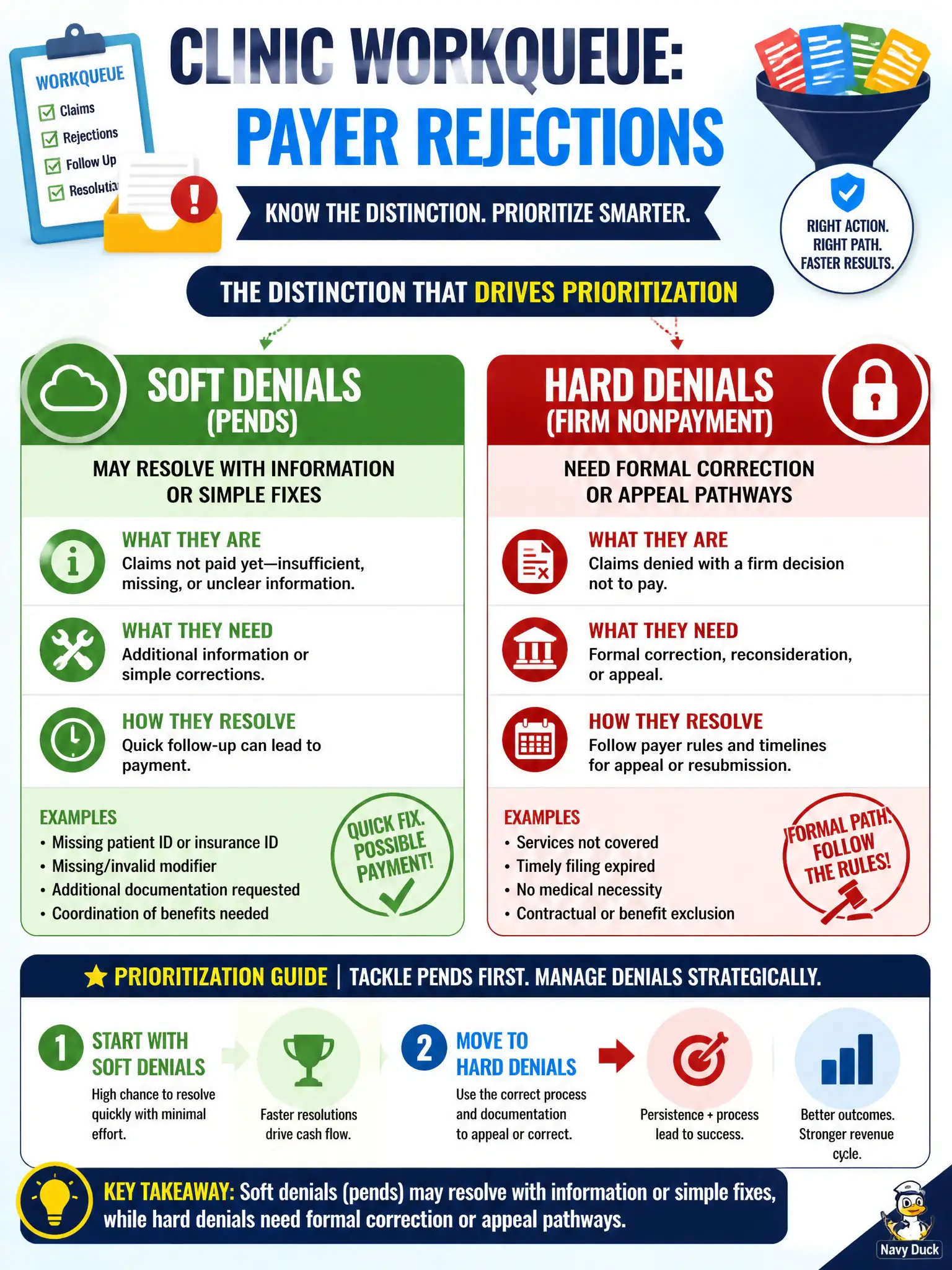
A clinic workqueue shows some payer rejections that can clear with additional information and others that require formal correction or appeal after a firm nonpayment determination. Which distinction should drive prioritization?
Select an answer to reveal the explanation.
Short Explanation
A pend is a yellow light—send the missing piece and you may roll again. A hard denial is a red light—you need a real fix or an appeal. Sort the queue by which kind you are looking at so you do not over-appeal a paperwork pend.
Full Explanation
Payer rejections are not all the same. Soft denials or pends may resolve with additional information or simple fixes, while hard denials after a firm nonpayment determination need formal correction or appeal pathways. Prioritizing a civic clinic workqueue by that distinction prevents over-lawyering a paperwork pend and under-reacting to a true hard denial on professional claims.
Treating all rejections as identical hard denials requiring immediate external legal appeal fails by concept because many pends clear with information. Assuming soft denials never need follow-up because they auto-resolve within 24 hours fails because unworked pends often become lost revenue. Claiming hard denials are only eligibility issues and that medical necessity is never a denial fails because medical necessity is a common hard-denial category.
Exam caveat: payer terminology varies (pend, reject, denial); classify by whether payment was refused pending info versus finally denied. Operational check: tag workqueue items as information-request versus hard denial, route pends to documentation/eligibility specialists quickly, and reserve formal appeals for hard determinations with clinical or coding merit.