
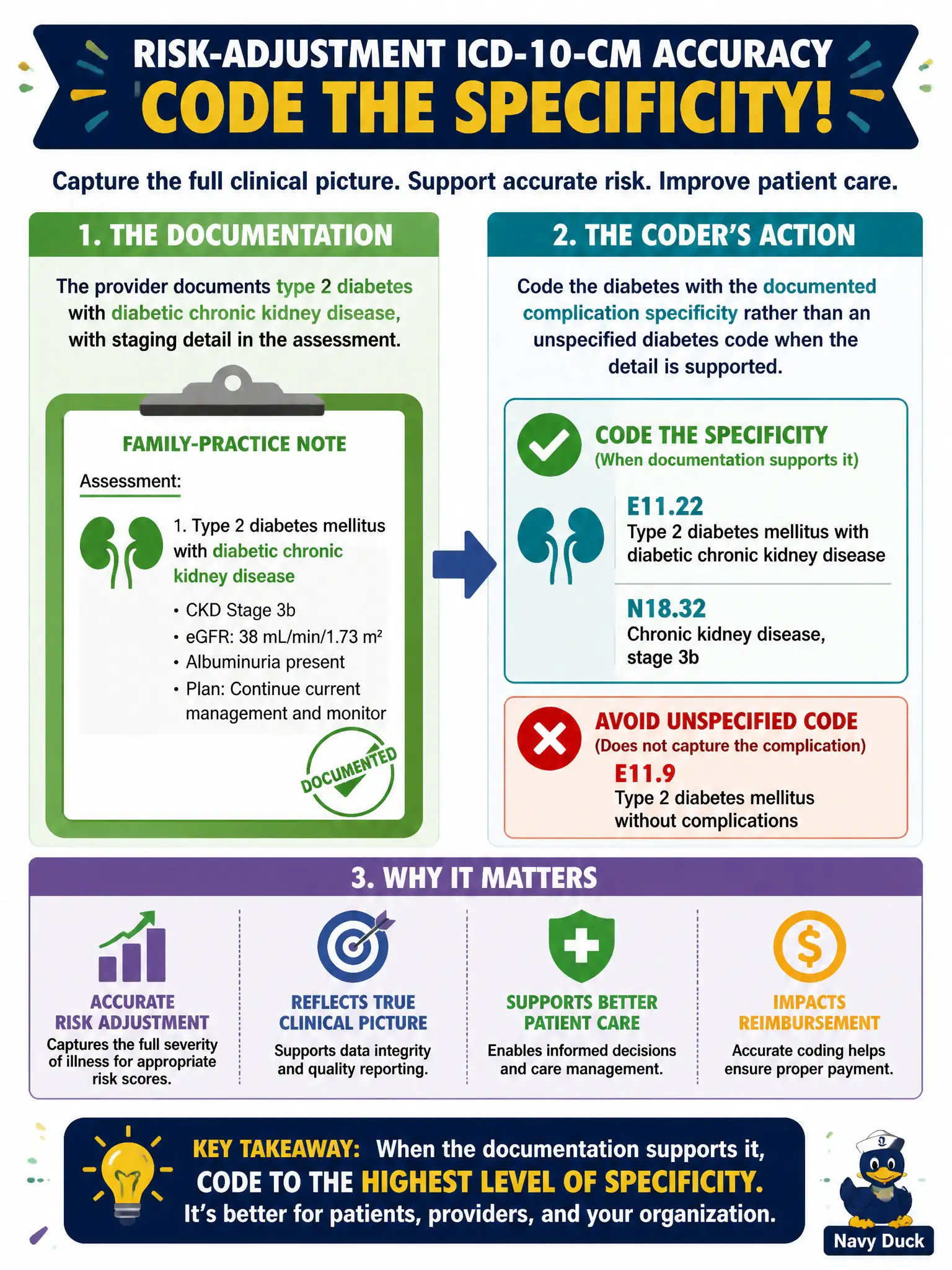
A family-practice note documents type 2 diabetes with diabetic chronic kidney disease, with staging detail in the assessment. For risk-adjustment ICD-10-CM accuracy, what should the coder do?
Select an answer to reveal the explanation.
Short Explanation
If the note spells out diabetes with CKD, do not flatten it to plain “diabetes, unspecified.” Risk adjustment rewards accurate complication specificity the record actually supports. Vague on purpose is not safer—it is just less accurate.
Full Explanation
When a family-practice note documents type 2 diabetes with diabetic chronic kidney disease and staging detail in the assessment, the coder should report diabetes with the documented complication specificity rather than an unspecified diabetes code. Accurate complication coding improves clinical fidelity and appropriate risk-adjustment representation for civic primary-care populations when the record supports the detail.
Always reporting unspecified type 2 diabetes without complications to avoid HCC inflation accusations fails by concept because intentional under-specificity is inaccurate coding, not a safe harbor. Omitting diabetes entirely if CKD is coded because hierarchies supposedly forbid both fails because clinicians document both concepts and hierarchy logic—not manual omission—handles related categories. Replacing diabetes with a general checkup Z-code fails because it erases the disease being managed.
Exam caveat: combination codes and “with” conventions in ICD-10-CM must be followed; do not assume every CKD in a diabetic is diabetic CKD without documentation support under guideline rules. Operational check: when assessment states diabetes with CKD and stage, select the specific combination/complication codes supported and avoid unspecified diabetes defaults.