
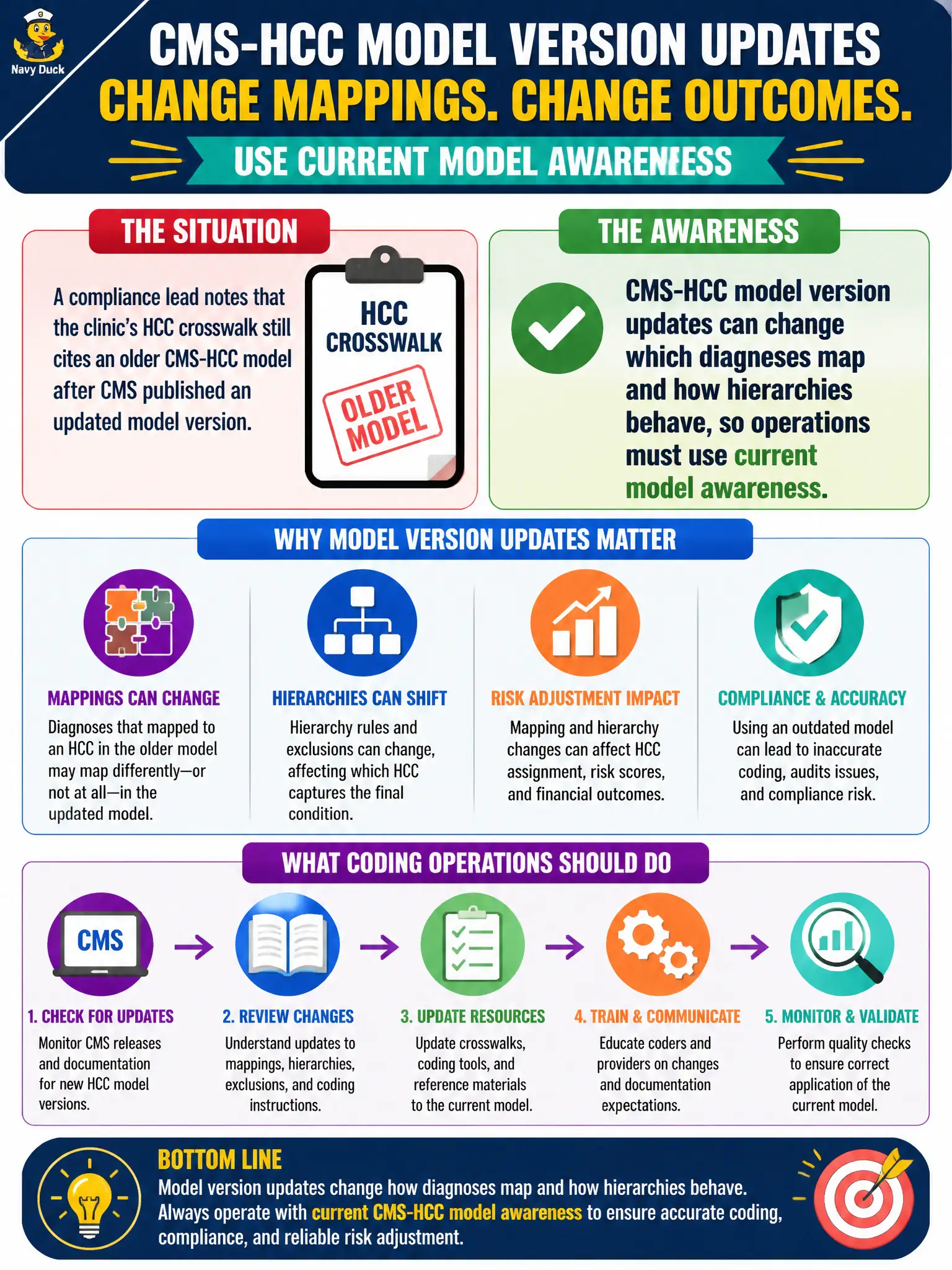
A compliance lead notes that the clinic’s HCC crosswalk still cites an older CMS-HCC model after CMS published an updated model version. What awareness should coding operations apply?
Select an answer to reveal the explanation.
Short Explanation
HCC models get software updates—mappings and hierarchies can shift. Running last year’s crosswalk against this year’s model is like using an expired bus schedule. Stay current on the active CMS-HCC version.
Full Explanation
CMS-HCC model version updates can change which diagnoses map and how hierarchies behave, so coding operations must maintain current model awareness. A clinic crosswalk that still cites an older model after CMS publishes an update risks mis-ranking RAF opportunities and teaching obsolete hierarchy behavior. Civic MA participants should treat model version control like physician fee-schedule updates—operationally mandatory for compliant professional-fee and encounter-data workflows.
Assuming HCC mappings never change once the first MA contract is signed fails by concept because CMS revises models over time. Claiming model updates affect only hospital DRGs and never physician-office diagnosis mapping fails because CMS-HCC is central to MA risk adjustment for ambulatory diagnosis capture. Ignoring model changes if CPT books were already purchased fails because CPT purchase cycles are unrelated to HCC model versioning.
Exam caveat: payment year and model version pairing matters; do not mix an old crosswalk with a new payment year’s logic. Operational check: assign an owner to track CMS-HCC version announcements, update encoder/crosswalk tools, and brief coding staff when hierarchy or mapping changes affect common chronic conditions.