
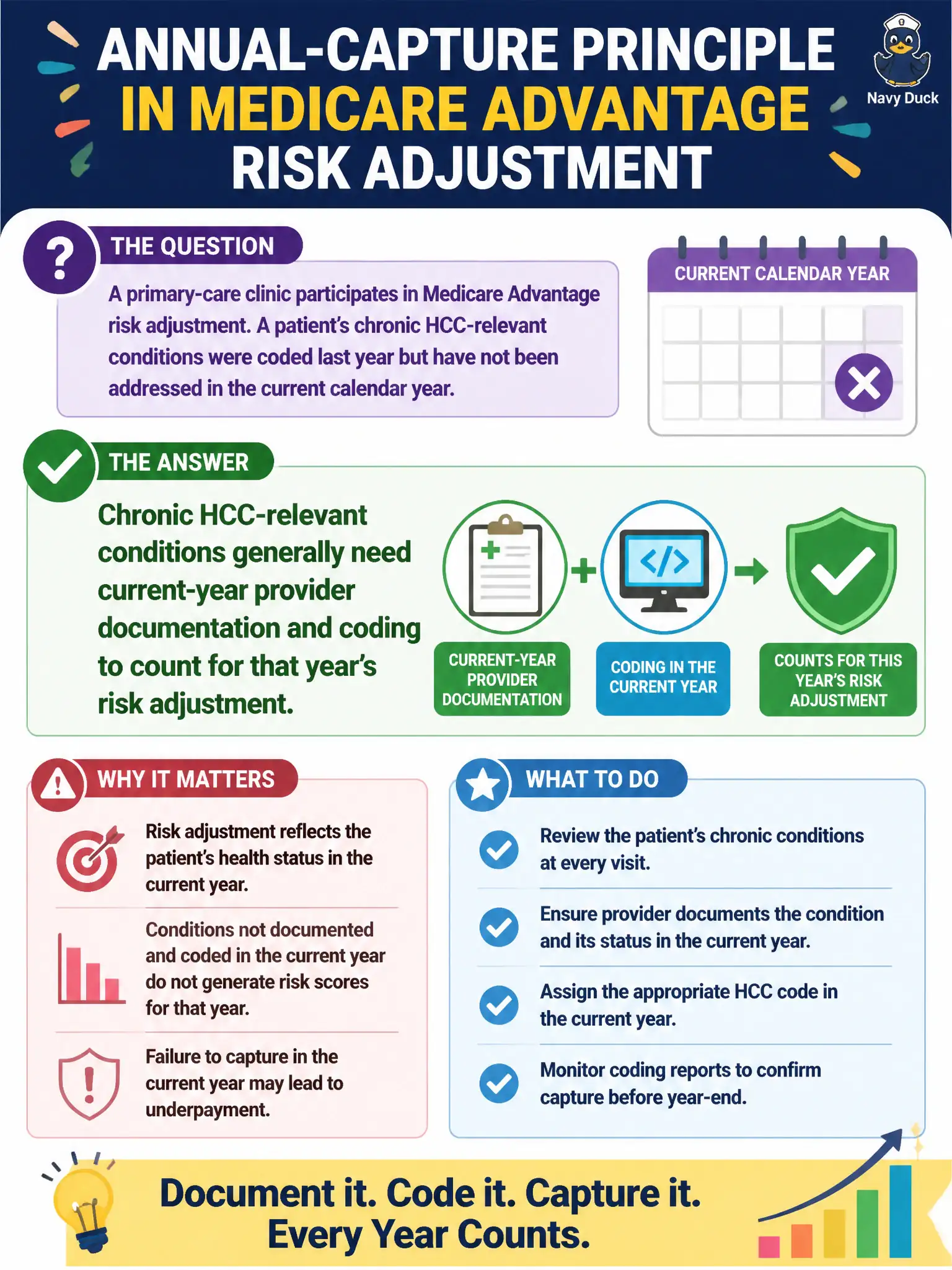
A primary-care clinic participates in Medicare Advantage risk adjustment. A patient’s chronic HCC-relevant conditions were coded last year but have not been addressed in the current calendar year. What annual-capture principle should guide the coding team?
Select an answer to reveal the explanation.
Short Explanation
Risk adjustment is a yearly race, not a lifetime trophy. Chronic conditions that matter for HCCs usually need to be documented and coded again in the current year. Last year’s codes do not babysit this year’s score by themselves.
Full Explanation
For Medicare Advantage risk adjustment, chronic HCC-relevant conditions generally need current-year provider documentation and coding to count for that year’s risk score. Prior-year capture does not automatically babysit the new calendar year. Primary-care coding teams in civic MA-participating clinics should treat annual recapture—with real encounter assessment—as a core integrity and revenue principle.
Assuming prior-year HCC codes automatically renew without current-year documentation fails by concept because risk adjustment is typically year-based. Billing chronic conditions from the problem list alone with no encounter assessment fails because inactive list text is not substitute documentation. Claiming risk scores use only demographics so chronic recapture is unnecessary fails because diagnosis-based HCCs are a major component beyond demographics.
Exam caveat: specific program rules and submission mechanisms (encounter data versus RAPS historically) evolve; the annual documentation/coding principle remains the tested concept. Operational check: run chronic-condition gap reports early each year, schedule visits that address outstanding HCC-relevant conditions, and code only what the current encounter actually supports.