
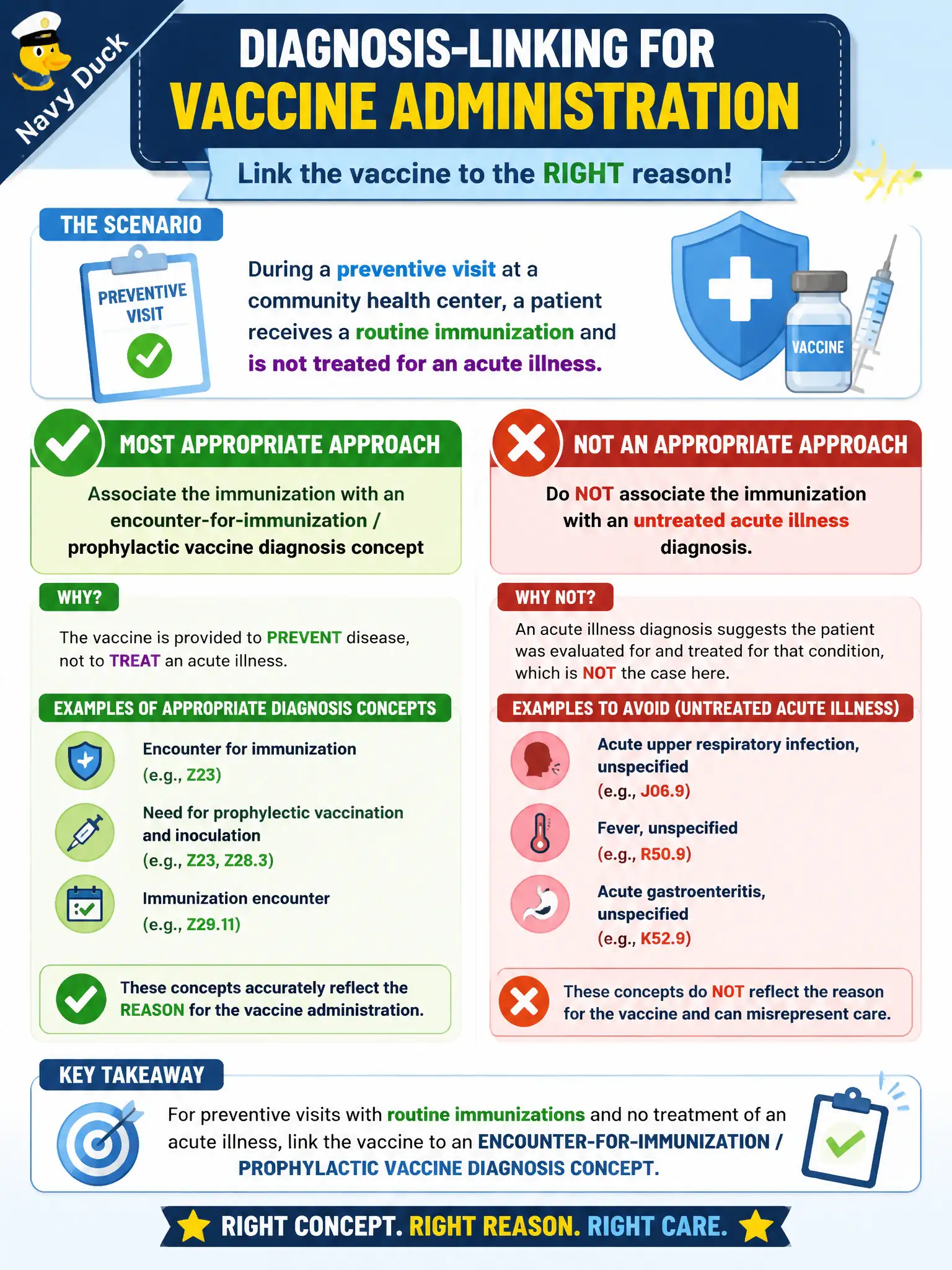
During a preventive visit at a community health center, a patient receives a routine immunization and is not treated for an acute illness. Which diagnosis-linking approach is most appropriate for the vaccine administration?
Select an answer to reveal the explanation.
Short Explanation
A flu shot on a well visit is prevention, not a cold-and-cough visit. Link the vaccine to the immunization/prophylaxis reason—not to an illness nobody treated that day. Keep the story matching what actually happened.
Full Explanation
During a preventive visit at a community health center, when a patient receives a routine immunization and is not treated for an acute illness, associate the immunization with an encounter-for-immunization or prophylactic vaccine diagnosis concept rather than an untreated acute illness. Diagnosis linking should mirror prevention reality so public-program immunization claims remain medically coherent.
Linking the immunization only to acute bronchitis that was not evaluated or treated fails by concept because it fabricates an illness rationale. Omitting diagnosis codes for vaccine administration fails because immunizations still need diagnosis association for professional claims. Reporting a problem-oriented E/M diagnosis as the sole pointer for a standalone preventive vaccine fails when the encounter’s vaccine story is prophylactic, not problem-focused illness care.
Exam caveat: if a significant separately identifiable E/M for illness occurs with immunization, both diagnosis sets may apply with appropriate E/M reporting rules—this stem is vaccine without acute treatment. Operational check: default vaccine charge masters to immunization Z-code (or equivalent) pointers and clear them only when documentation supports a different necessity link.