
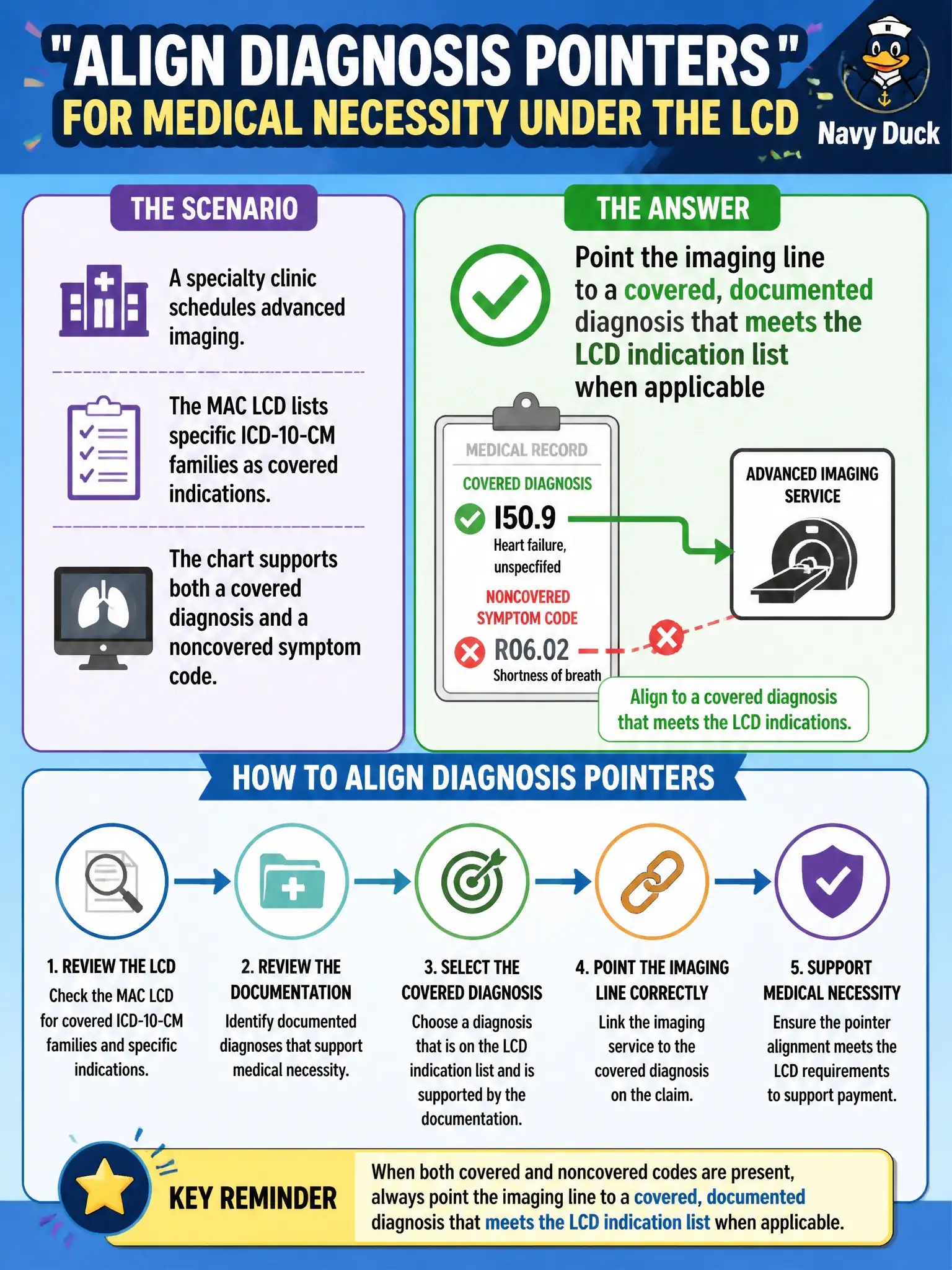
A specialty clinic schedules advanced imaging. The MAC LCD lists specific ICD-10-CM families as covered indications. The chart supports both a covered diagnosis and a noncovered symptom code. How should the coder align diagnosis pointers for medical necessity under the LCD?
Select an answer to reveal the explanation.
Short Explanation
LCDs are like a guest list for covered reasons. If the chart has a diagnosis on that list, point the imaging to it. Using only a weak symptom when a covered indication is documented is asking for a necessity denial.
Full Explanation
When a MAC LCD lists specific ICD-10-CM families as covered indications for advanced imaging, and the chart supports both a covered diagnosis and a noncovered symptom code, point the imaging line to a covered, documented diagnosis that meets the LCD indication list when applicable. Aligning pointers to covered indications is practical medical-necessity stewardship for civic specialty clinics subject to Local Coverage Determinations.
Always pointing only to the least specific symptom code to avoid overcoding reviews fails by concept because under-specific symptom pointers often fail LCD coverage lists. Ignoring LCD covered lists because professional claims supposedly never follow LCDs fails because Part B services commonly are subject to LCDs/NCDs. Submitting without diagnosis pointers and attaching the LCD PDF instead fails because claim adjudication still needs coded diagnosis linkage on the claim.
Exam caveat: the covered diagnosis must be documented—do not point to an LCD-favored code the clinician did not support. Operational check: scrub high-cost imaging against LCD ICD lists, prefer supported covered indications in the pointer order, and query when only noncovered symptoms are documented for a requested study.