
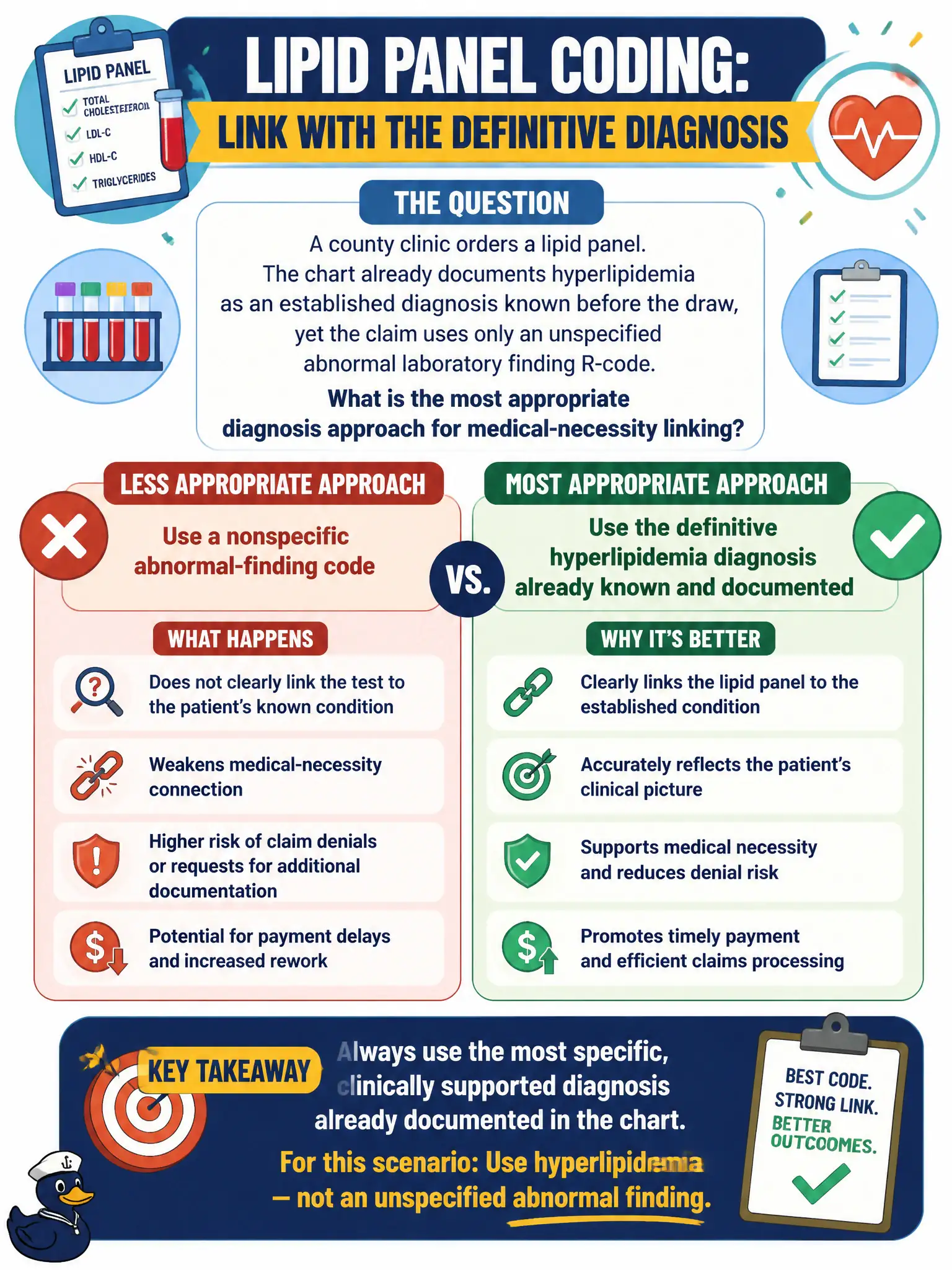
A county clinic orders a lipid panel. The chart already documents hyperlipidemia as an established diagnosis known before the draw, yet the claim uses only an unspecified abnormal laboratory finding R-code. What is the most appropriate diagnosis approach for medical-necessity linking?
Select an answer to reveal the explanation.
Short Explanation
If the doctor already knows it is hyperlipidemia, do not hide behind a vague “abnormal lab” code. Definitive beats nonspecific when the chart supports it. Link the panel to the known diagnosis so medical necessity is clear.
Full Explanation
For outpatient laboratory medical-necessity linking, use the definitive hyperlipidemia diagnosis already known and documented rather than a nonspecific abnormal laboratory finding R-code when the chart supports the named chronic diagnosis. County clinics ordering lipid panels for established hyperlipidemia should report the known condition so necessity is clear and risk/quality data remain accurate.
Always preferring symptom R-codes over named chronic diagnoses on outpatient lab claims fails by concept because definitive diagnoses take precedence when established. Leaving the claim without diagnosis codes fails because panels still require medical-necessity diagnoses/pointers. Reporting only a screening Z-code when monitoring known hyperlipidemia fails because it misstates a diagnostic/monitoring context as pure screening.
Exam caveat: if the lipid abnormality is truly new and not yet diagnosed, an abnormal-finding code may be appropriate until a definitive diagnosis is documented—do not invent hyperlipidemia without support. Operational check: when the problem list and assessment already state hyperlipidemia, point the panel to that ICD-10-CM code and avoid defaulting to nonspecific R-codes.