
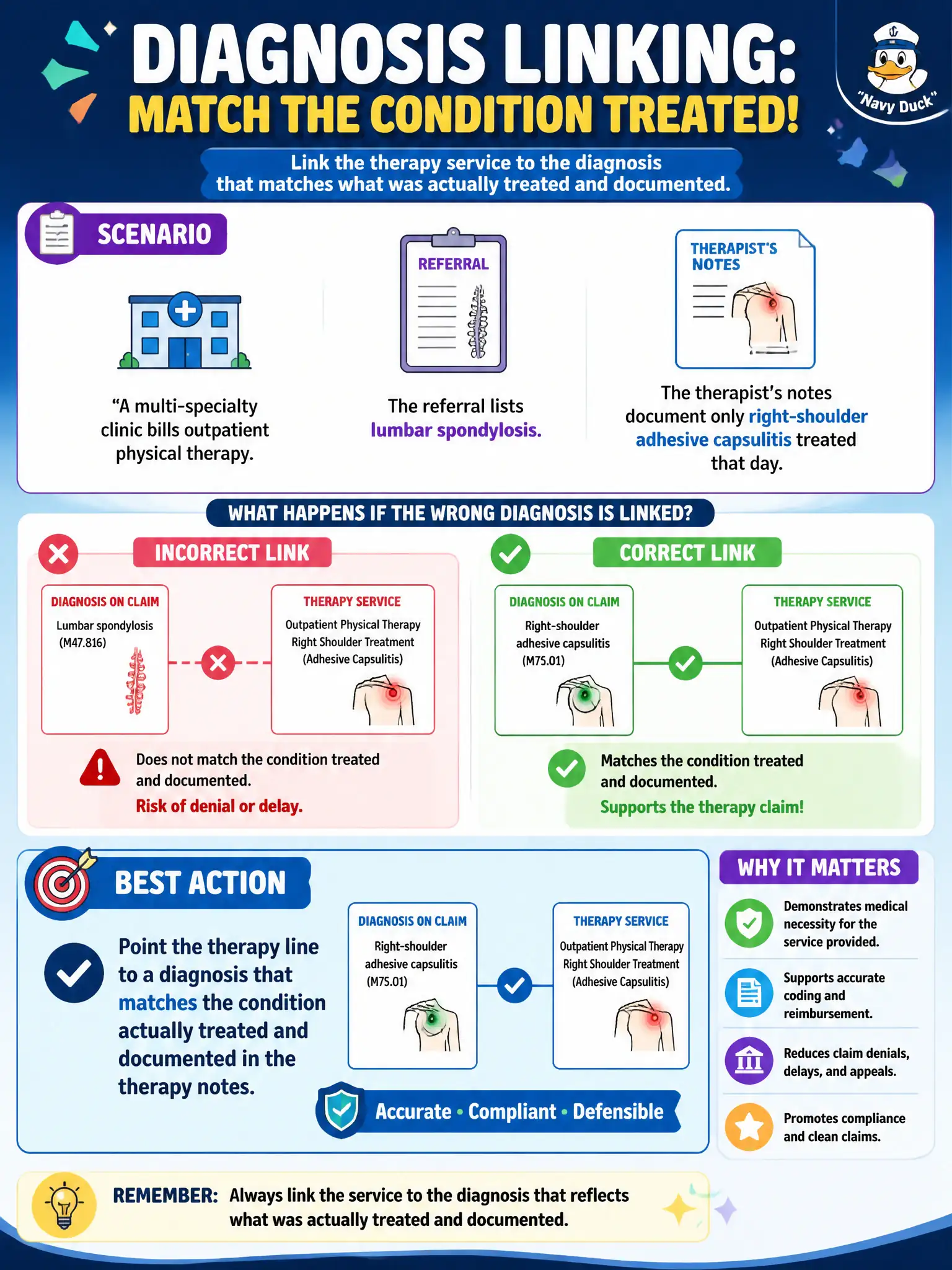
A multi-specialty clinic bills outpatient physical therapy. The referral lists lumbar spondylosis, but the therapist’s notes document only right-shoulder adhesive capsulitis treated that day. Which diagnosis-linking action best supports the therapy claim?
Select an answer to reveal the explanation.
Short Explanation
Think of the referral as a map and the notes as where the therapist actually walked. Payors want the diagnosis that matches the body part and condition treated that day. When the notes show shoulder capsulitis, link therapy to that supported diagnosis—not the unused lumbar referral code.
Full Explanation
Therapy claims should point to the diagnosis matching the condition actually treated and documented in the therapy notes. When a referral lists lumbar spondylosis but the therapist’s notes document only right-shoulder adhesive capsulitis treated that day, the therapy line should link to the supported shoulder diagnosis. Civic outpatient therapy billing stewards public funds by aligning diagnosis pointers with care delivered, not with an unused referral code.
Keeping the referral diagnosis as the sole pointer when the treated joint differs fails by concept because referral language does not override the documented treatment focus. Omitting any diagnosis pointer and relying on therapy CPT alone fails because procedure codes do not establish medical necessity without diagnoses. Substituting an unrelated wellness Z-code to avoid specialty review fails because it falsifies the reason for therapy.
Exam caveat: if both spinal and shoulder conditions were treated and documented, both may be relevant; this stem’s notes support shoulder-only treatment that day. Operational check: read the day’s therapy assessment/goals before pointing, and replace stale referral diagnoses when the treated condition differs.