
A screening colonoscopy in the ambulatory setting converts to a biopsy when a polyp is found. How should diagnosis coding and pointers support the claim?
Select an answer to reveal the explanation.
Short Explanation
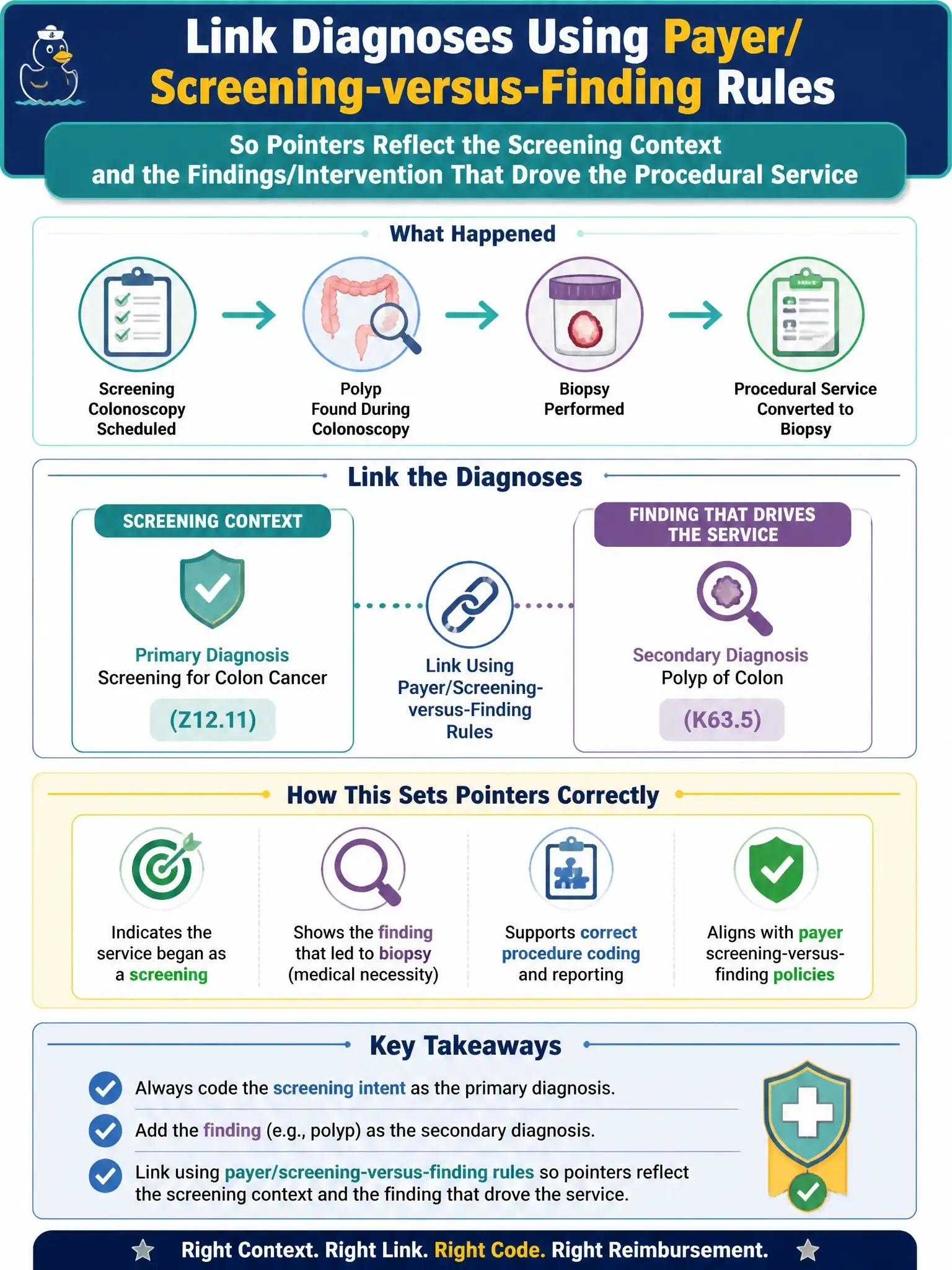
When a screening colonoscopy turns into a biopsy, you need to link the claim to both the screening reason and the polyp or finding that drove the procedure. Follow payer screening-to-finding rules so medical necessity and benefit logic line up. Don't point it to an unrelated chronic code or an old symptom code.
Full Explanation
When a screening colonoscopy in the ambulatory setting converts to a biopsy after a polyp is found, diagnosis coding and pointers must support both the screening context and the findings or intervention that drove the procedural service, following payer screening-versus-finding rules. Civic GI practices should link the claim so medical necessity and benefit logic reflect preventive intent plus the pathology-driving discovery, not an unrelated leftover problem-list symptom. The correct approach is to link diagnoses using payer screening-versus-finding rules so pointers reflect the screening context and the findings or intervention that drove the procedural service. Pointing the biopsy procedure code exclusively to a symptom code for headache documented years earlier in the problem list fails by concept because headache has no clinical nexus to the colon intervention. Reporting only an unrelated diabetes diagnosis as the pointer because chronic conditions always establish necessity fails because chronic conditions do not automatically establish necessity for colonoscopy or biopsy. Removing all screening-related diagnoses once a biopsy occurs so the claim shows no preventive intent fails because erasing preventive context can distort benefit and coding logic that payers still expect to see articulated under screening-to-finding rules. Exam caveat: exact diagnosis-code sequencing and commercial versus Medicare screening conversion policies vary; apply the active payer rule set for screening converted to therapeutic or diagnostic intervention. Operational check: capture screening indication and polyp or finding diagnoses, set pointers to the diagnoses that support the biopsy service under those rules, and avoid orphan symptom pointers from unrelated problems.