
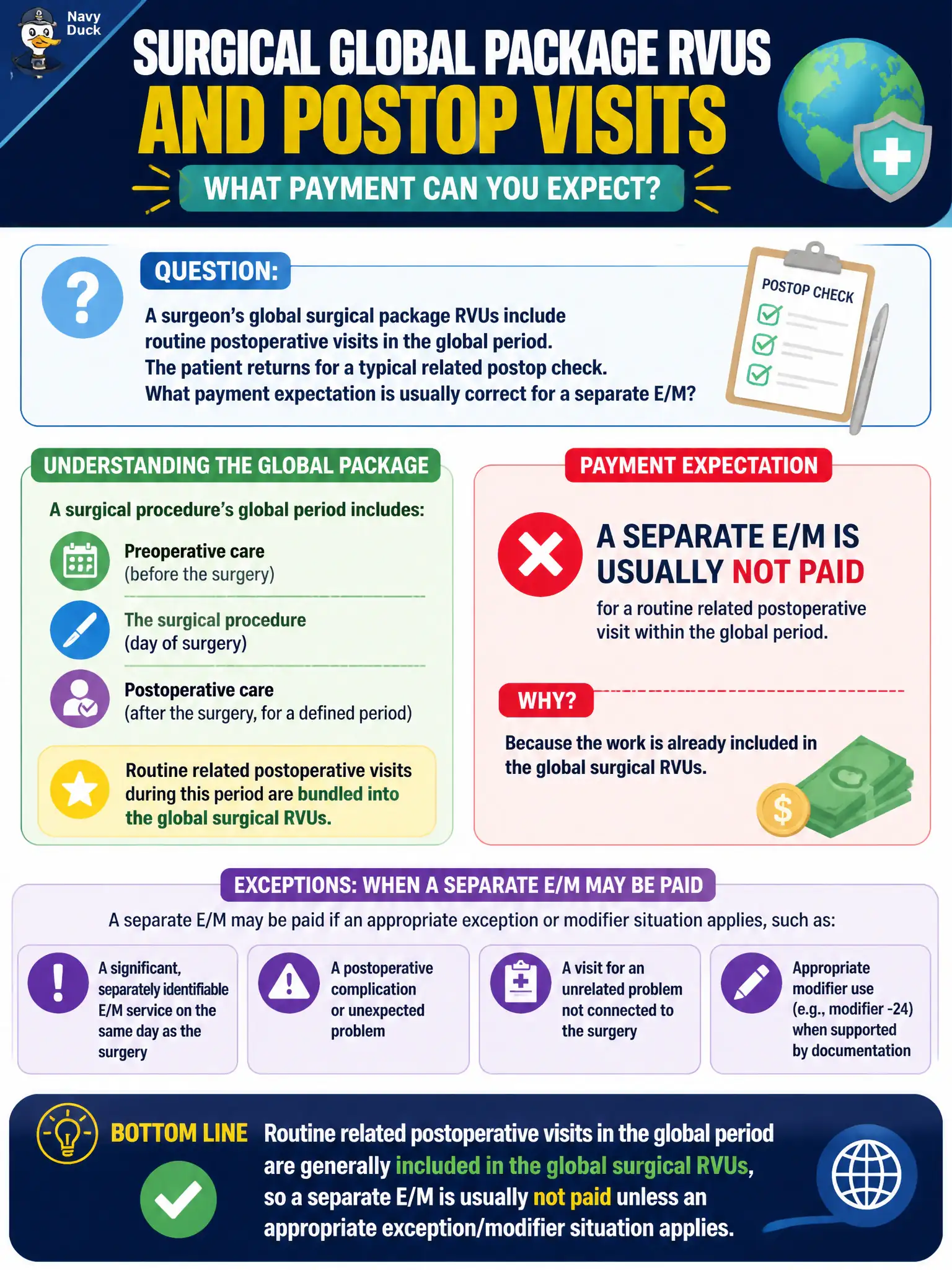
A surgeon’s global surgical package RVUs include routine postoperative visits in the global period. The patient returns for a typical related postop check. What payment expectation is usually correct for a separate E/M?
Select an answer to reveal the explanation.
Short Explanation
The surgery payment already packed a lunch for the routine postop visits—that’s the global package. A normal related check-in usually does not get a second E/M paycheck. Save separate E/M billing for the real exceptions, with the right modifier story when rules allow.
Full Explanation
Global surgical package RVUs typically include routine postoperative visits during the global period. When a patient returns for a typical related postoperative check, a separate E/M is usually not paid unless an appropriate exception or modifier situation applies. Civic surgical practices should treat routine related postop care as already priced into the surgery payment rather than as an automatic second professional-fee check.
Billing a high-level office E/M for every postop visit because global packages never include follow-up fails by concept because inclusion of routine postop care is a defining global-package feature. Claiming postoperative visits are paid only when reported with inpatient DRG codes on the professional claim fails because DRGs are facility inpatient constructs, not professional claim requirements for postop E/M. Converting each postop visit to a new surgical CPT to bypass global inclusion fails because it misrepresents the encounter.
Exam caveat: unrelated E/Ms, return to the OR, and certain modifier-supported scenarios can be separately payable; document the exception clearly. Operational check: identify the global period end date, suppress routine related postop E/M charges inside the window, and release separate E/M billing only when documentation supports an exception with the correct modifier.