
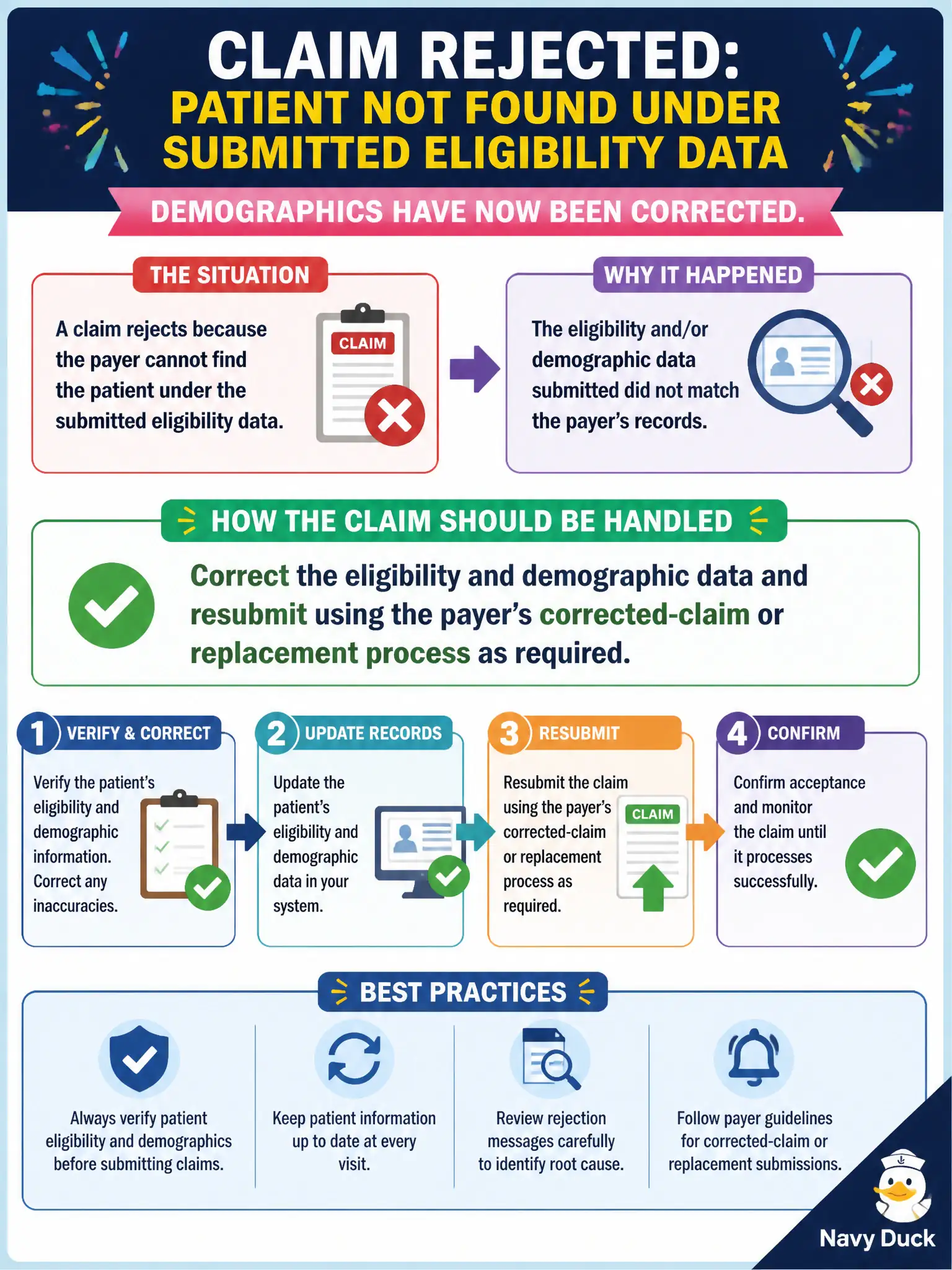
A claim rejects because the payer cannot find the patient under the submitted eligibility data. Demographics have now been corrected. How should the claim be handled?
Select an answer to reveal the explanation.
Short Explanation
“Patient not found” usually means the claim’s ID story was messy, not that care never happened. Fix the demographics, then send a proper corrected or replacement claim the way that payer wants it. Resending the same wrong data—or borrowing someone else’s member ID—only digs a deeper hole.
Full Explanation
When a claim rejects because the payer cannot find the patient under submitted eligibility data, and demographics have now been corrected, resubmit using the payer’s corrected-claim or replacement process as required. Fixing the data and following the proper replacement pathway restores a billable professional encounter for civic clinic patients instead of abandoning charges or recycling bad identifiers.
Abandoning visit charges permanently because eligibility rejections cannot be repaired fails by concept because demographic rejects are routinely correctable. Billing a different patient’s active member ID so the claim pays fails because using another person’s coverage is fraudulent. Submitting the identical original claim repeatedly without changes fails because repeating wrong eligibility data will not clear a patient-not-found reject.
Exam caveat: some payers require a frequency/type code for replacement claims (for example, frequency code 7) rather than a simple duplicate original; use the payer’s specified process. Operational check: correct member ID/name/DOB/payer ID, validate eligibility, then submit as corrected/replacement and void or replace the rejected claim per clearinghouse rules.