
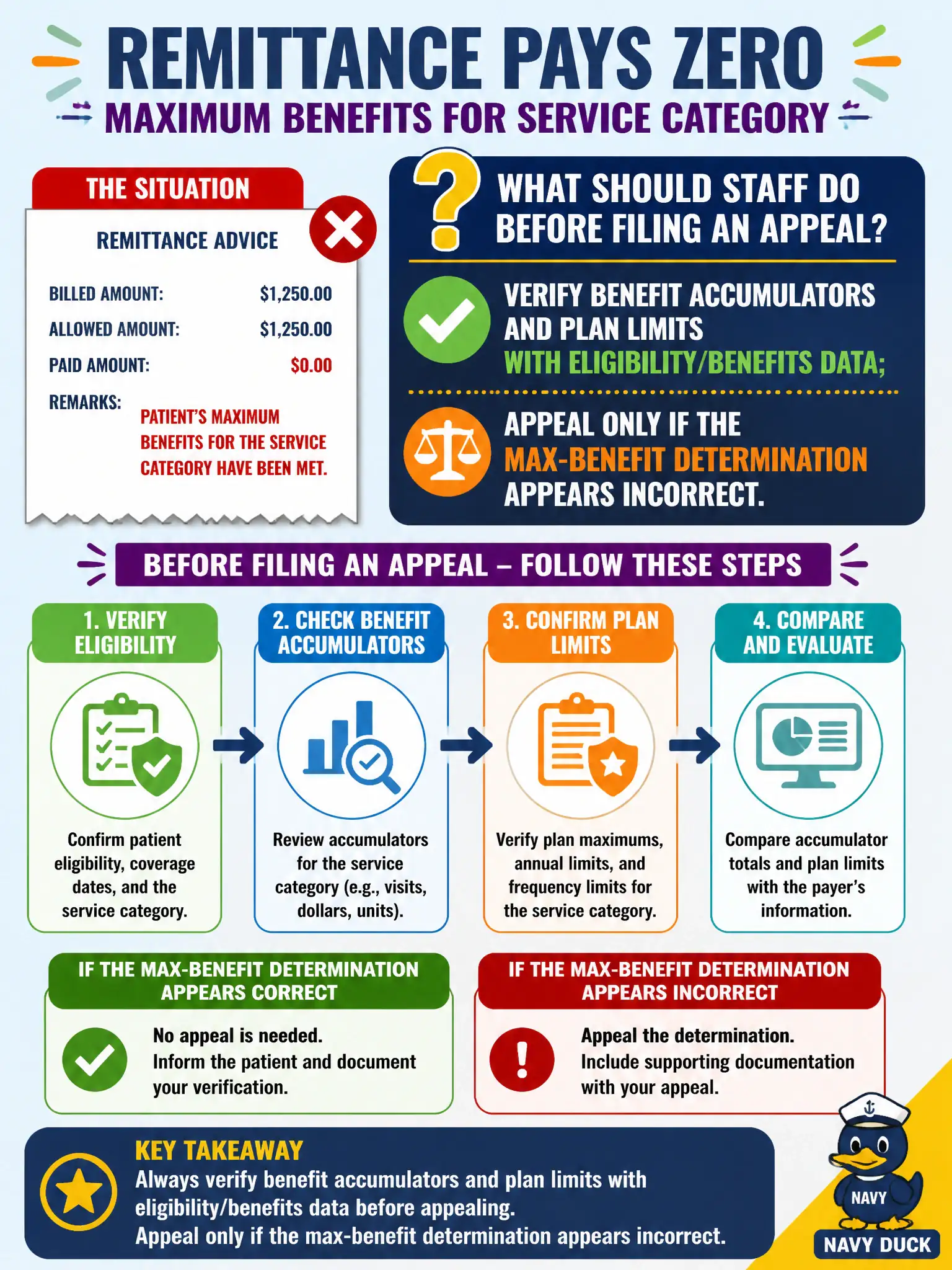
A remittance pays zero with a remark that the patient’s maximum benefits for the service category have been met. What should staff do before filing an appeal?
Select an answer to reveal the explanation.
Short Explanation
“Max benefits met” might be right—or the accumulator might be wrong. Peek at the benefits and year-to-date totals before you fire off an appeal. If the well really is dry, appealing on principle wastes everyone’s time; if the count is off, then appeal with proof.
Full Explanation
A remittance that pays zero because the patient’s maximum benefits for the service category have been met requires verification before appeal. Staff should check benefit accumulators and plan limits with eligibility/benefits data and appeal only if the max-benefit determination appears incorrect. In community clinics, confirming accumulator truth prevents wasted appeals while still catching payer errors that harm patients and professional-fee revenue.
Appealing immediately on every max-benefit remark without checking accumulators fails by concept because many such denials are factually correct. Balance-billing more than the allowed amount to recover the payer’s zero payment fails because patient billing is constrained by plan allowed amounts and contract rules. Recoding to a different unrelated CPT solely to bypass the max fails because it misrepresents the service to evade benefit limits.
Exam caveat: calendar-year versus plan-year limits and category definitions differ; verify the correct benefit bucket. Operational check: compare the remittance remark to real-time benefits, document accumulator balances in the account, appeal with proof when mismatched, and counsel the patient on true out-of-pocket options when the max is valid.