
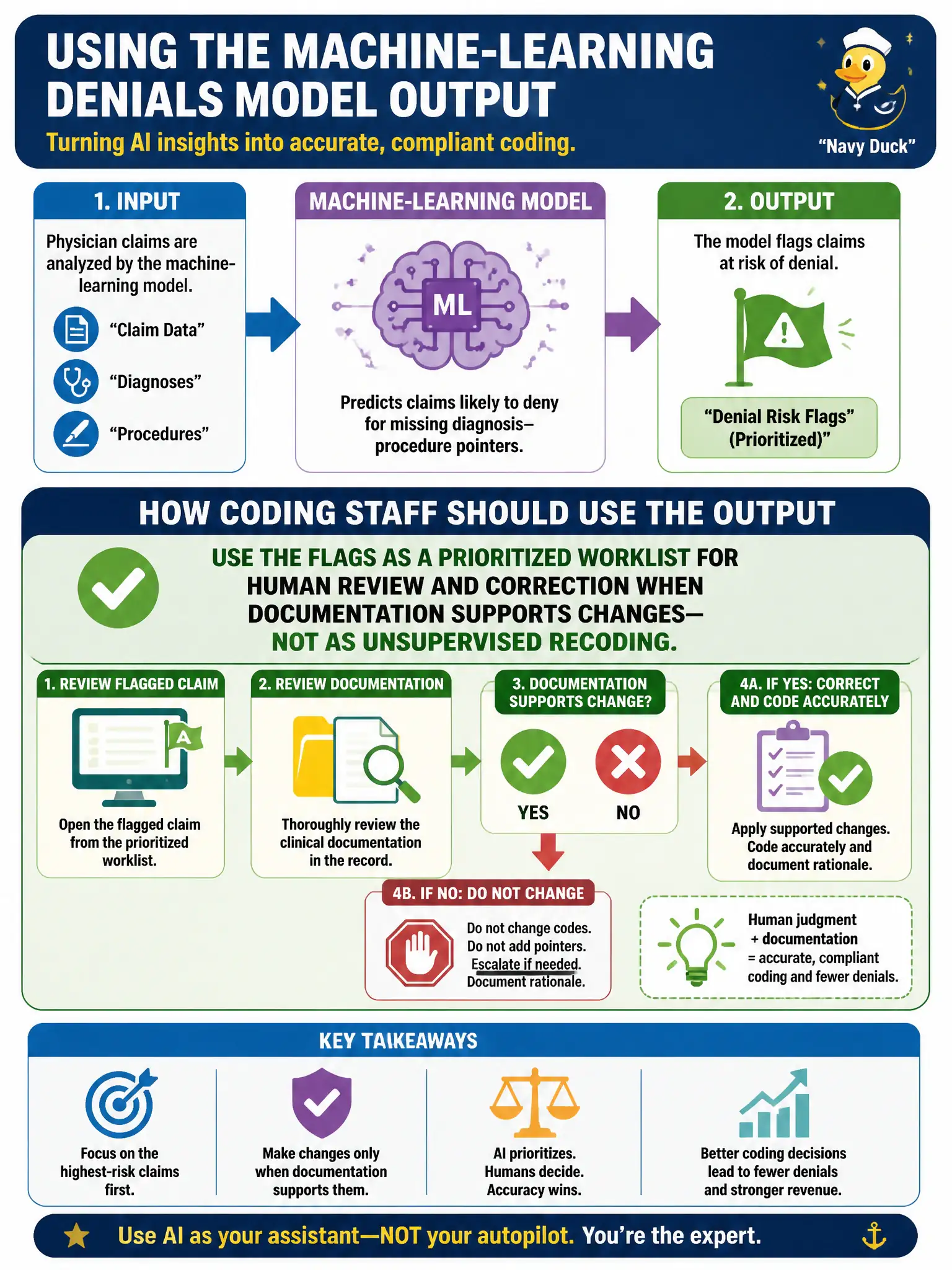
A machine-learning denials model flags physician claims that are likely to deny for missing diagnosis–procedure pointers. How should coding staff use that output?
Select an answer to reveal the explanation.
Short Explanation
A denials model is a smoke alarm, not a rewrite bot. Let it sort the pile so humans fix missing pointers and real documentation gaps. Do not let the algorithm invent codes just to dodge a predicted denial.
Full Explanation
AI denial-prediction tools can prioritize claims with elevated risk of rejection for issues such as missing diagnosis–procedure pointers or incomplete claim data. They support workflow triage for a multi-specialty civic clinic; they do not authorize unsupervised diagnosis or procedure changes. Coding staff should use the flags as a prioritized worklist for human review and correction when documentation supports changes—not as unsupervised recoding. Compliant coding should remain intact even if a model predicts denial risk. Automatically rewriting diagnoses to whatever the model predicts will pay fails as model-driven upcoding without chart review. Disabling claim edits because predictive models replace documentation standards fails by removing necessary controls. Deleting flagged claims so denial rates appear lower fails as metric manipulation and revenue-cycle concealment. Exam caveat: predictive risk ≠ coding error; some high-risk claims are correctly coded and should be worked as payer-education or auth issues, not recoded. Operational check: sort the ML worklist by risk, open each claim and the note, fix true pointer/documentation defects, leave correct codes alone, and track false-positive flags for model/governance feedback in the county RCM committee.