
After a motor-vehicle accident, a third-party auto liability insurer requests ICD external-cause detail and enforces a timely-filing limit different from the patient’s major medical plan. How should the physician coder approach the liability claim?
Select an answer to reveal the explanation.
Short Explanation
Auto liability is not just another PPO card. They often want the crash story in the codes and run a different filing clock—treat them as their own rulebook.
Full Explanation
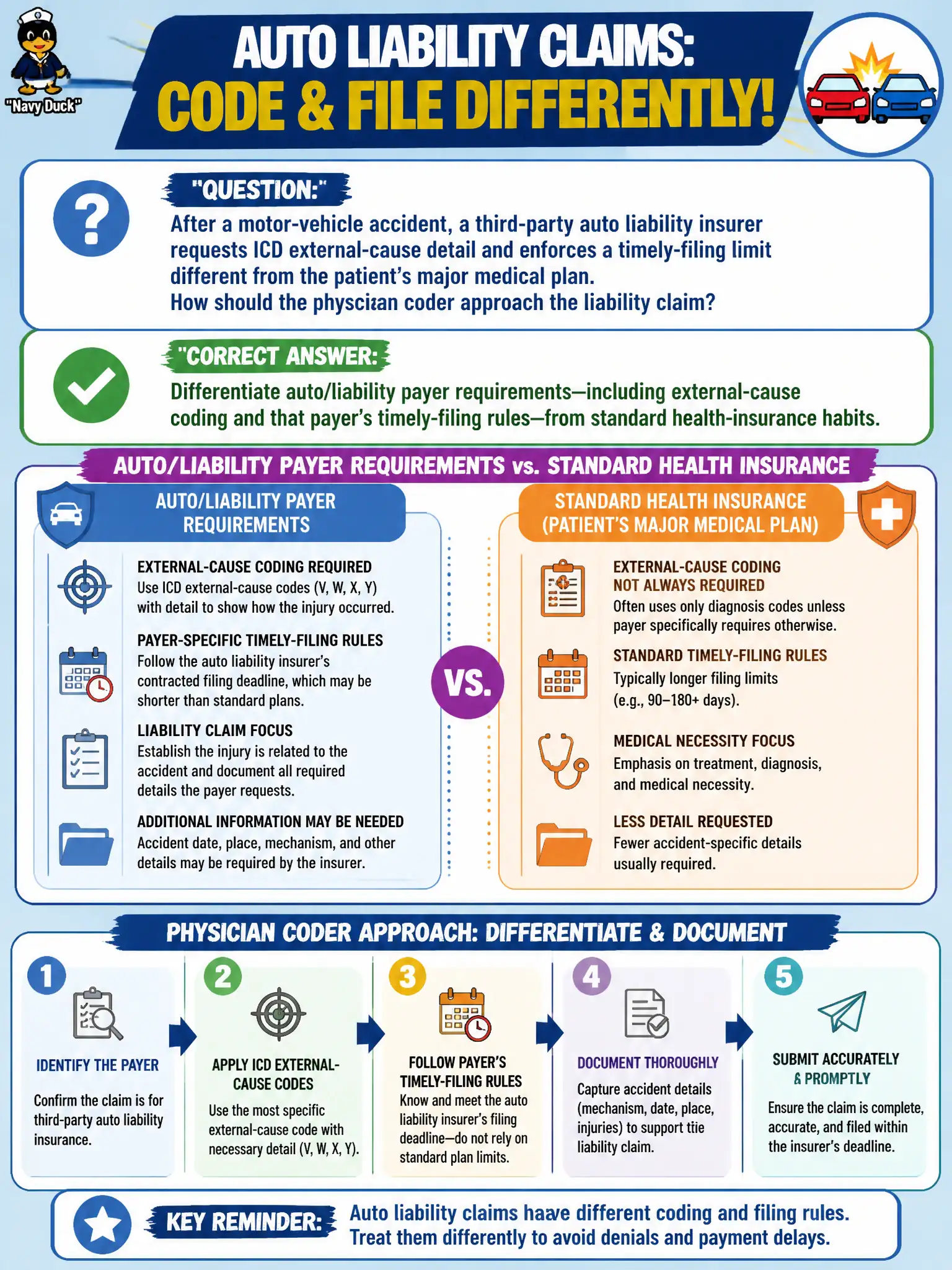
Third-party auto/liability insurers frequently require external-cause of injury coding and enforce timely-filing and documentation rules that differ from commercial major medical plans or Medicare. After a motor-vehicle accident, when a liability insurer requests ICD external-cause detail and applies a different timely-filing limit, the physician coder must differentiate those liability payer requirements from standard health-insurance CMS-1500 habits and follow the liability payer’s rules for that claim. Using only the major medical plan’s timely filing and omitting external causes because “liability never needs them” fails when the liability payer explicitly requires that detail and has its own filing clock. Billing the liability claim as an inpatient DRG fails by setting and payment system: office professional claims are not DRG-billed. Ignoring the auto insurer and always forcing Medicare primary first fails because liability/Medicare primacy and conditional payment rules are fact-specific and not a blanket “Medicare first” shortcut. Exam caveat: payer-type identification comes before habit—auto, WC, Medicaid, MA, and commercial FFS can diverge on external cause, POS, and timely filing. Operational check: flag the claim as liability/auto, apply required external-cause codes, calendar that payer’s timely-filing deadline, suppress major-medical-only assumptions, and keep the civic clinic’s liability checklist at the billing desk.