
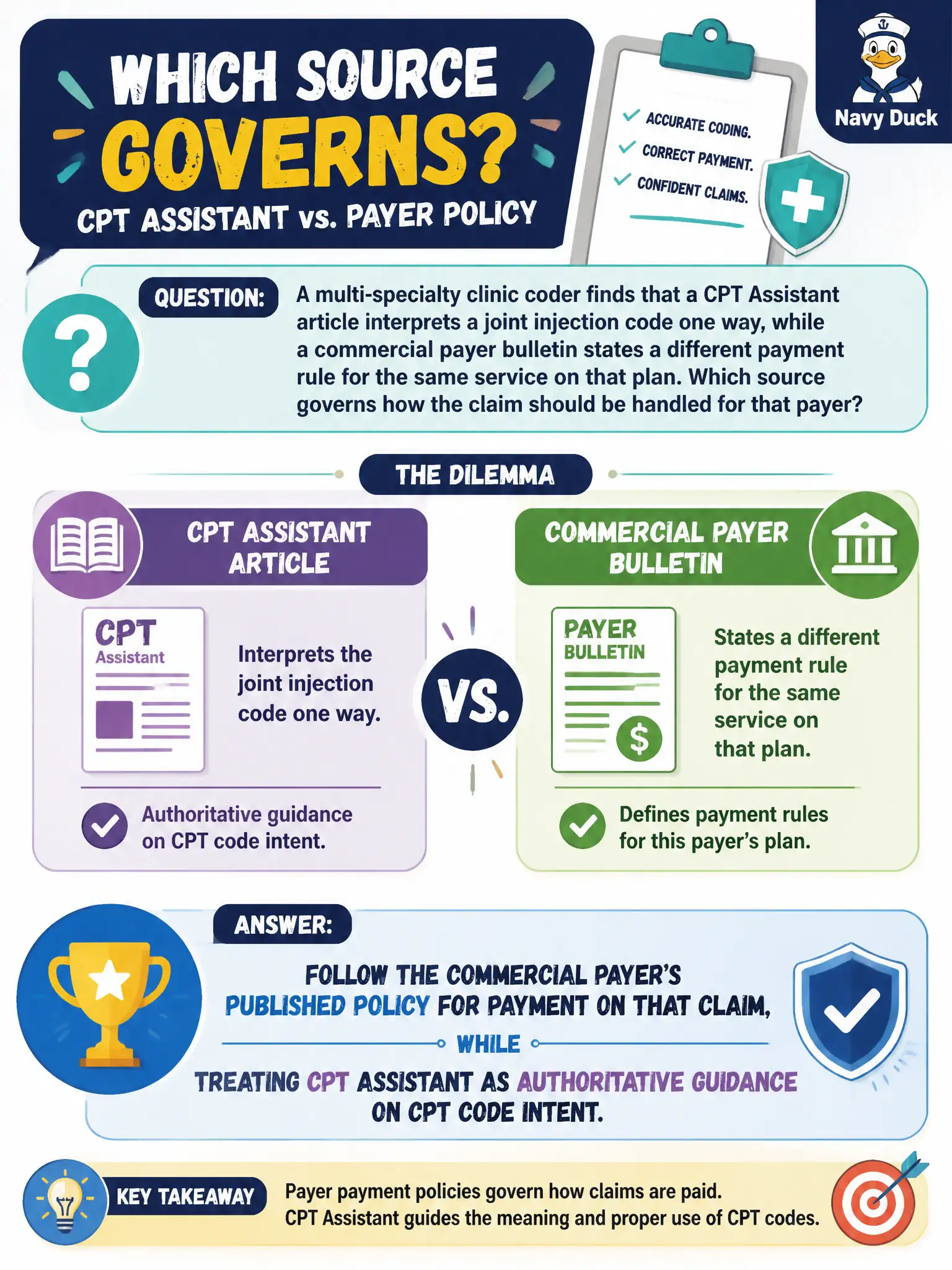
A multi-specialty clinic coder finds that a CPT Assistant article interprets a joint injection code one way, while a commercial payer bulletin states a different payment rule for the same service on that plan. Which source governs how the claim should be handled for that payer?
Select an answer to reveal the explanation.
Short Explanation
Payment fights and coding-intent fights are different animals. CPT Assistant helps you understand what the CPT code means; the payer’s own bulletin decides how that plan pays. Code with CPT integrity, then follow the contract rules for payment.
Full Explanation
For physician professional-fee claims, AMA CPT Assistant–class materials guide correct CPT interpretation and code intent, while commercial payer bulletins and contracts govern payment policy for that plan—including coverage limits and edit behavior that may differ from pure CPT guidance. When a multi-specialty civic clinic faces a joint-injection interpretation in CPT Assistant that conflicts with a commercial payer bulletin’s payment rule, the coder follows the commercial payer’s published policy for how that claim will pay, while still treating CPT Assistant as authoritative guidance on what the CPT code means. Document conflicts and appeal with both sources when clinically and contractually appropriate. Always overriding the payer bulletin to bill exactly as CPT Assistant describes because “AMA controls reimbursement” fails by conflating code intent with payer payment policy. Ignoring both sources and accepting PMS auto-assignment fails as abdication of research. Using only hospital CCS facility bundling rules fails by setting: physician-office claims rely on professional coding and payer policy, not facility CCS bundling as the governing frame. Exam caveat: win-the-definition with CPT sources; win-the-payment argument with contract/payer policy—CCS-P expects you to know which question you are answering. Operational check: cite CPT Assistant for code meaning in the worksheet, cite the payer bulletin for payment handling, bill per payer policy for that claim, and prepare a dual-source appeal packet if the municipal practice disputes the payment rule.