
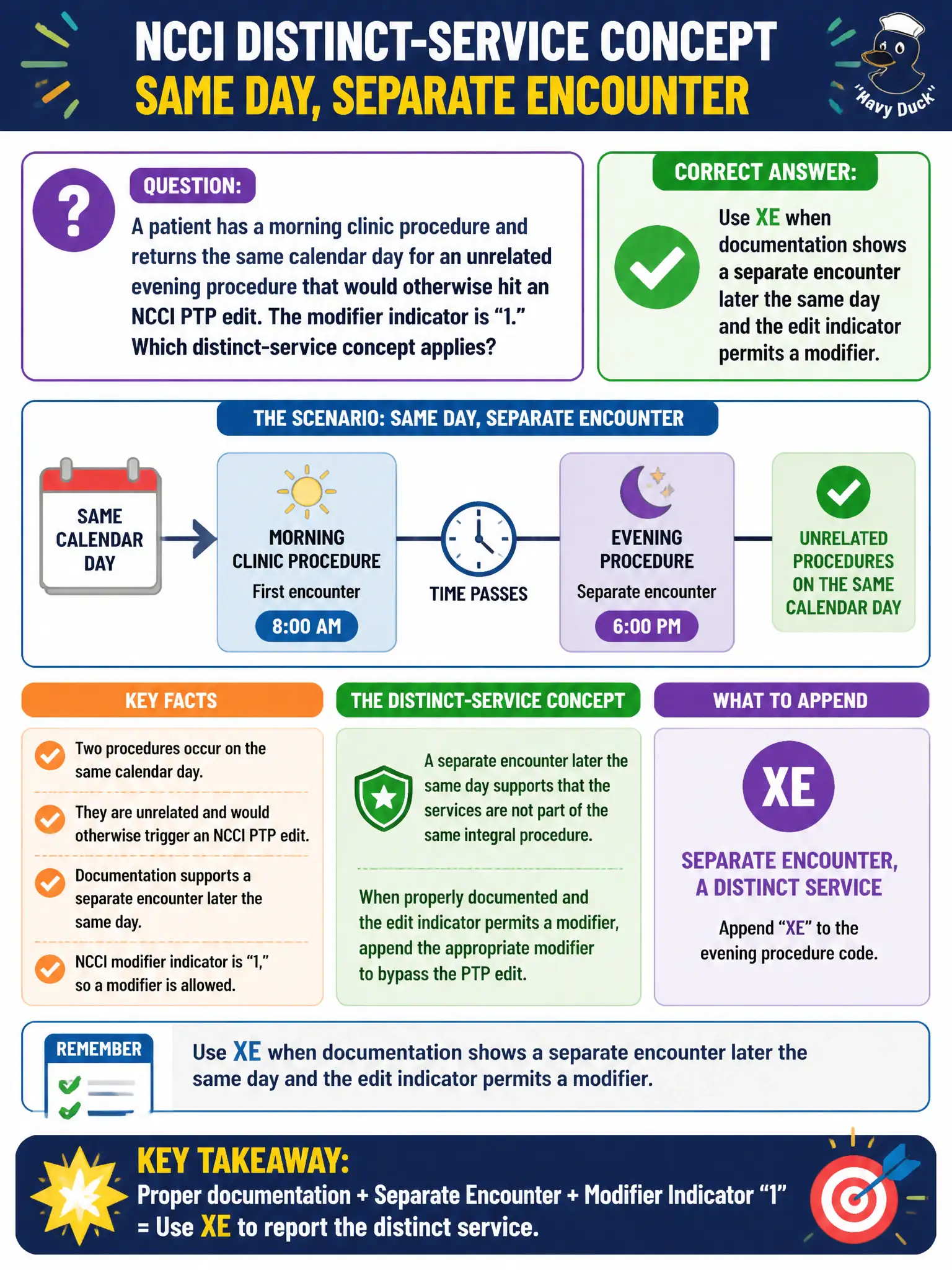
A patient has a morning clinic procedure and returns the same calendar day for an unrelated evening procedure that would otherwise hit an NCCI PTP edit. The modifier indicator is “1.” Which distinct-service concept applies?
Select an answer to reveal the explanation.
Short Explanation
Morning visit, evening return—that is a separate encounter, even on the same date. XE is the “came back later” flag when the edit will even let you talk.
Full Explanation
Same calendar date does not automatically equal one encounter for NCCI distinct-service analysis. Modifier XE denotes a separate encounter. In a civic clinic workflow where a patient has a morning procedure and returns later the same day for an unrelated evening procedure that would otherwise hit a PTP edit with modifier indicator “1,” XE can support separate reporting when documentation shows a true later encounter and the indicator permits a modifier. Billing both without a modifier because “same-day always means one encounter” fails by collapsing encounter timing into calendar date alone. Using XS because any same-day pair is anatomic by definition fails when the rationale is separate encounter timing rather than separate structure. Using modifier 76 on both lines fails because 76 addresses repeat identical procedures by the same physician, not general PTP distinctness for unrelated services across encounters. Exam caveat: indicator “1” is necessary but not sufficient—documentation must support the chosen distinct-service concept, and unrelated clinical indications should be clear in both notes. Operational check: confirm two timed encounters in scheduling/EHR, ensure both procedure notes stand alone, verify PTP indicator for the DOS, append XE (or payer-accepted equivalent), and retain encounter timestamps in the county clinic’s claim attachment/worksheet if audited.