
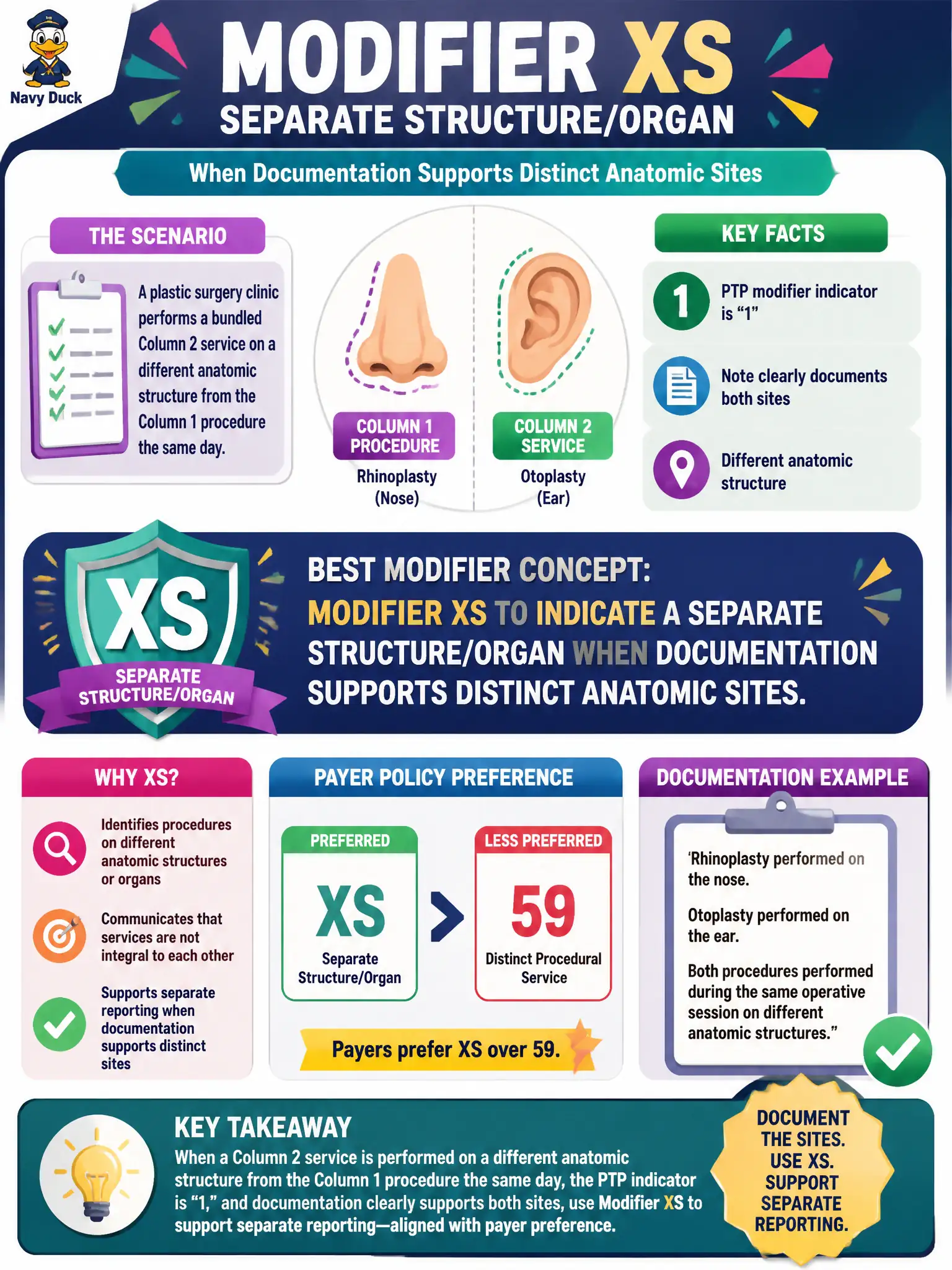
A plastic surgery clinic performs a bundled Column 2 service on a different anatomic structure from the Column 1 procedure the same day. The PTP modifier indicator is “1,” and the note clearly documents both sites. Which modifier concept best supports separate reporting when payer policy prefers X{EPSU} over 59?
Select an answer to reveal the explanation.
Short Explanation
Different body part, same trip to the OR—that is an XS story when the indicator allows it. XE is for a truly separate visit, not two sites in one session.
Full Explanation
When a PTP edit has modifier indicator “1,” a distinct-service modifier may be appropriate if documentation supports distinctness. CMS X{EPSU} modifiers refine why services are distinct; XS indicates a separate organ/structure. In a plastic surgery clinic serving a public program, when a Column 2 service occurs on a different anatomic structure from the Column 1 procedure the same day and the note clearly documents both sites—and payer policy prefers X{EPSU} over generic 59—XS is the concept that matches anatomic distinctness. Using XE for a separate encounter fails when both services occurred in one operative session; XE is encounter-based, not structure-based. Using XP solely because two different CPT books were used fails because XP relates to a separate practitioner, not to coding-manual packaging. Using modifier 52 on both lines fails because reduced-services logic does not establish distinct anatomic sites for PTP bypass. Exam caveat: prefer the X modifier that matches the clinical reason when the payer wants X{EPSU}; do not default to 59 if policy directs more specific modifiers, and never apply any bypass modifier when the indicator is “0.” Operational check: verify indicator “1,” confirm separate structures in the op note with laterality/site detail, append XS (or payer equivalent), avoid XE/XP mismatches, and place a brief distinct-structure rationale in the municipal coding worksheet.