
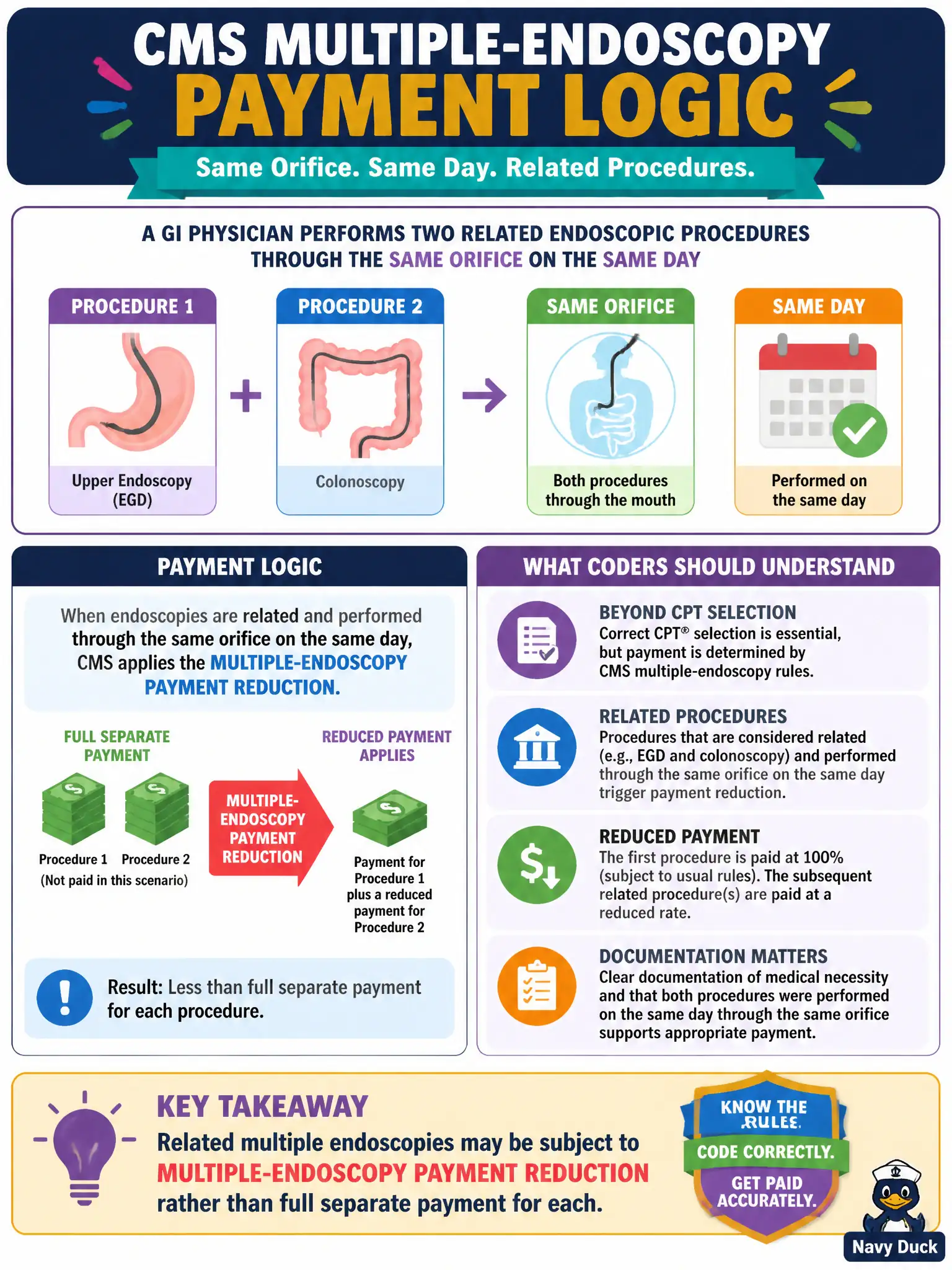
A GI physician performs two related endoscopic procedures through the same orifice on the same day that fall under CMS multiple-endoscopy payment logic. Beyond correct CPT selection, what should the coder understand about payment?
Select an answer to reveal the explanation.
Short Explanation
Same doorway, related scopes—CMS often treats the second look like a discount add-on, not a full second ticket price. Knowing that keeps expectations honest when the remittance comes back.
Full Explanation
CMS multiple-endoscopy payment logic can reduce allowed amounts when related endoscopic procedures in the same family are performed through the same orifice on the same day. Accurate CPT selection and any required modifiers remain necessary, but the CCS-P coder for a public GI program should understand that remittance may reflect multiple-endoscopy reduction rather than full separate payment for each related scope. That payment-policy awareness prevents incorrect “underpayment” appeals when the reduction is expected. Believing CMS always pays each endoscopy at 100% regardless of relatedness fails because multiple-endoscopy rules specifically address related same-orifice families. Thinking the rules apply only when modifier 22 is present fails because 22 addresses increased procedural services and is not the switch that activates multiple-endoscopy reduction. Coding the second endoscopy as an E/M to avoid reduction fails by transforming a procedural service into an unrelated E/M family and misrepresenting the record. Exam caveat: payment reduction is not permission to omit a documented, separately identifiable endoscopy that policy still wants coded; distinguish coding completeness from expected payment adjustment. Operational check: verify both endoscopies are documented and correctly coded, confirm same-orifice related-family status under current CMS logic, expect possible reduction on remittance, and document the payment-policy note in the civic billing worksheet before filing an appeal.