
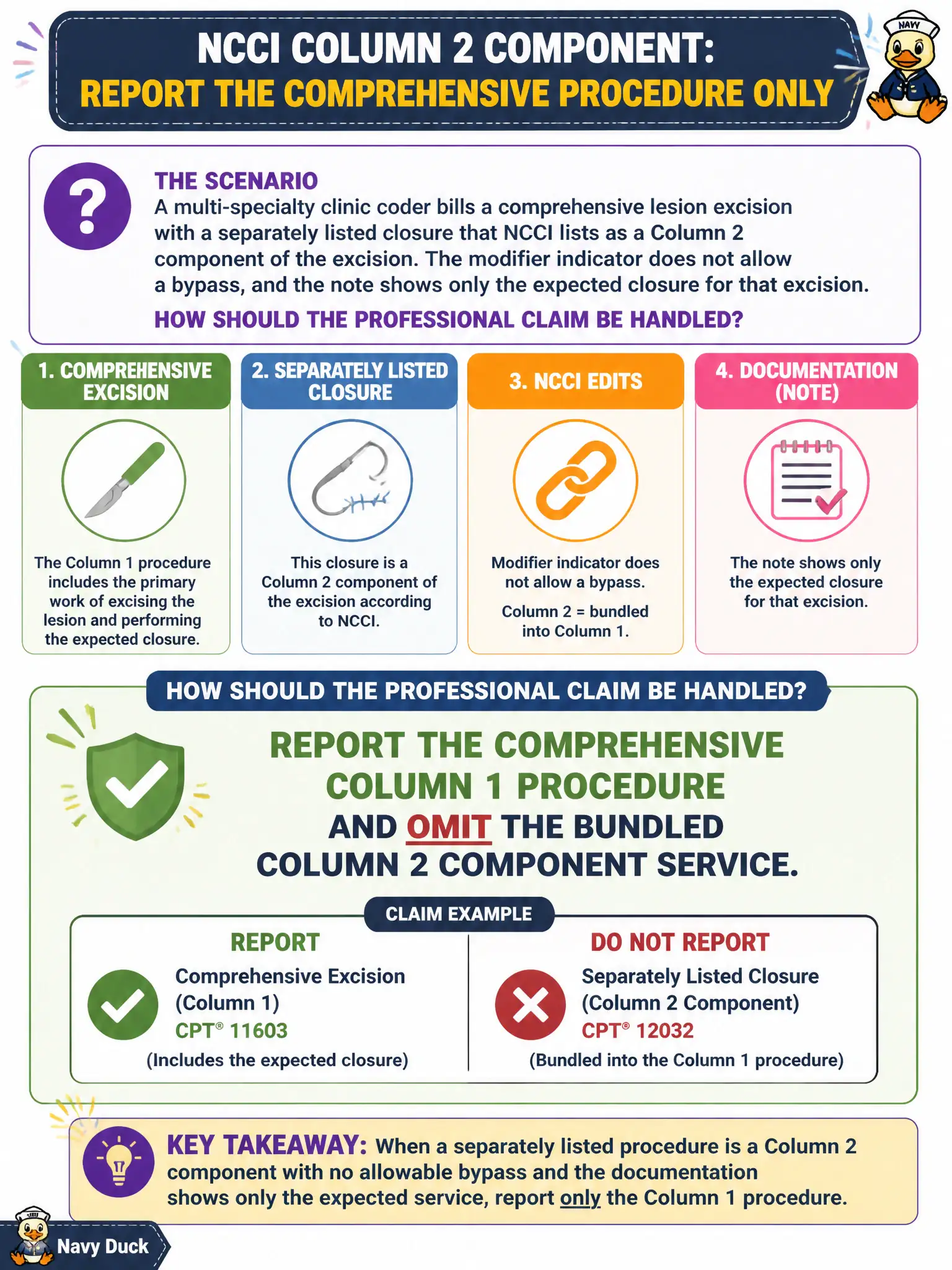
A multi-specialty clinic coder bills a comprehensive lesion excision with a separately listed closure that NCCI lists as a Column 2 component of the excision. The modifier indicator does not allow a bypass, and the note shows only the expected closure for that excision. How should the professional claim be handled?
Select an answer to reveal the explanation.
Short Explanation
Think of Column 1 as the whole meal and Column 2 as the side that already comes with it. If NCCI says that closure is part of the excision and you cannot override the edit, you bill the main dish—not the free side a second time.
Full Explanation
On a professional-fee claim for a county multi-specialty clinic, NCCI procedure-to-procedure (PTP) edits treat a Column 2 service as a component of a more comprehensive Column 1 procedure when both would otherwise describe overlapping work for the same encounter and anatomic context. When the published modifier indicator does not permit override and the operative note shows only the closure that is inherent to the lesion excision, the CCS-P coder reports the comprehensive Column 1 excision and omits the bundled Column 2 closure. That approach preserves correct coding hierarchy and avoids separate payment for work already valued in the primary service. Billing both codes and treating any denial as an automatic underpayment fails because the edit is a correct-coding control, not an underpayment presumption; appealing without a true distinct-service rationale wastes civic revenue-cycle effort and weakens audit posture. Replacing a specific excision CPT with an unlisted surgical code solely to evade NCCI fails because unlisted reporting is reserved for services without an adequate specific code, not for bypassing published edits. Reporting only the Column 2 closure while dropping the comprehensive excision fails by concept because it understates the definitive procedural work performed and inverts Column 1/Column 2 logic. Exam caveat: modifier indicators and PTP pairs are date-of-service versioned; civic clinics must apply the NCCI file effective for the DOS, and indicator “1” still requires documentation of distinctness—not automatic unbundling. Operational check: before claim submission, confirm the PTP pair and modifier indicator for the DOS, compare the note to inherent-component expectations, omit the Column 2 line when only expected component work is present, and document the NCCI rationale in the coding worksheet for the public clinic’s compliance file.