
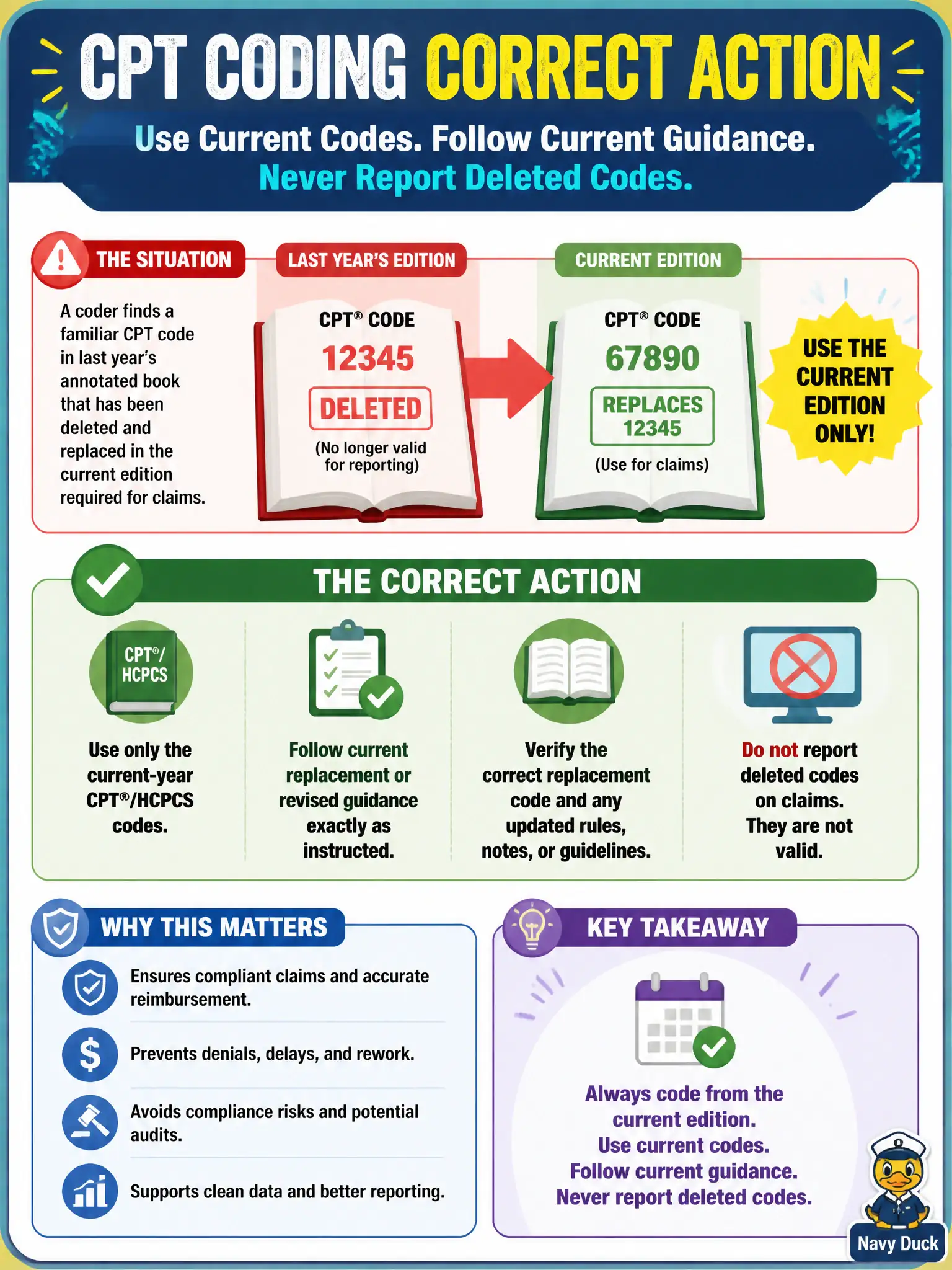
A coder finds a familiar CPT code in last year’s annotated book that has been deleted and replaced in the current edition required for claims. What is the correct action?
Select an answer to reveal the explanation.
Short Explanation
Old codebooks are nostalgia, not claim fuel. When a code is deleted this year, park it—use the current book’s replacement or revised path instead of hoping denials, homemade local codes, or modifier 52 will bless a zombie CPT.
Full Explanation
Coders must use only the current-year CPT/HCPCS codes and follow current replacement or revised guidance; deleted codes must not be reported on claims. Last year’s annotated book is a study aid, not a claim source. Current-code discipline in county billing offices prevents denials and compliance exposure from zombie codes that no longer exist in the active code set.
Continuing to use the deleted code until denials appear knowingly submits invalid coding. Inventing a local code equal to the deleted number for internal tracking and external billing is unacceptable for external payer claims. Reporting the deleted code with modifier 52 to indicate it is outdated but still partially valid misuses reduced-service logic to resurrect a deleted code.
Exam caveat: mid-year CMS HCPCS updates and January CPT updates both matter—confirm the code set effective for the date of service. Operational check: verify the code in the current codebook or payer-effective file, follow replacement instructions when a code is deleted, update charge masters promptly, and never bill deleted codes with creative modifiers on civic professional claims In county and community practices, that discipline also reduces rework from preventable denials and supports transparent stewardship of Medicaid and Medicare professional payments..