
Under CPT moderate sedation guidelines, when is moderate sedation generally separately reportable by the same physician performing a diagnostic or therapeutic service?
Select an answer to reveal the explanation.
Short Explanation
Moderate sedation is not ‘any pill equals a sedation code,’ and it is not ‘always free.’ It is separately reportable when CPT says the service allows it and the timed, supervised sedation work is really in the note.
Full Explanation
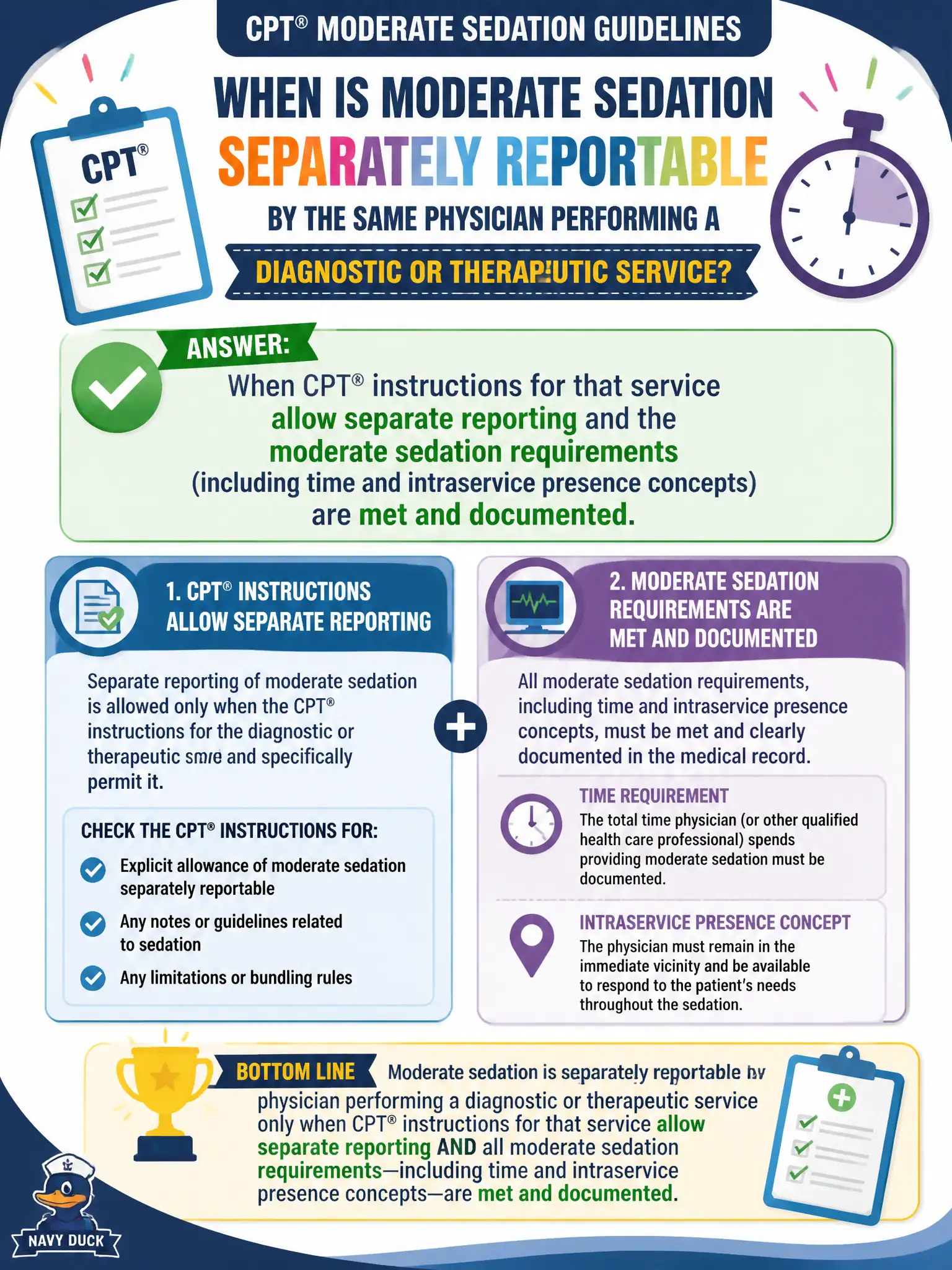
Under CPT moderate sedation guidelines, moderate sedation is generally separately reportable by the same physician performing a diagnostic or therapeutic service when CPT instructions for that service allow separate reporting and the moderate sedation requirements—including time and intraservice presence concepts—are met and documented. It is neither “any pill equals sedation coding” nor “always bundled forever.” Clear sedation documentation in community procedure clinics protects patients and payment integrity.
Reporting moderate sedation whenever any oral anxiolytic is given in the office, regardless of CPT sedation rules, overreaches beyond moderate sedation definitions. Claiming moderate sedation is never separately reportable because it is always bundled into every CPT procedure ignores services for which CPT permits separate sedation reporting. Limiting separate sedation reporting to only when an inpatient DRG is also assigned invents a facility-DRG prerequisite irrelevant to professional sedation coding.
Exam caveat: many interventional codes bundle sedation—read the parenthetical and CPT moderate sedation guidelines for the primary procedure. Operational check: confirm the primary code allows separate moderate sedation, document intraservice presence and time elements required, select the appropriate moderate sedation codes, and avoid sedation lines for mere anxiolysis that does not meet moderate sedation criteria.