
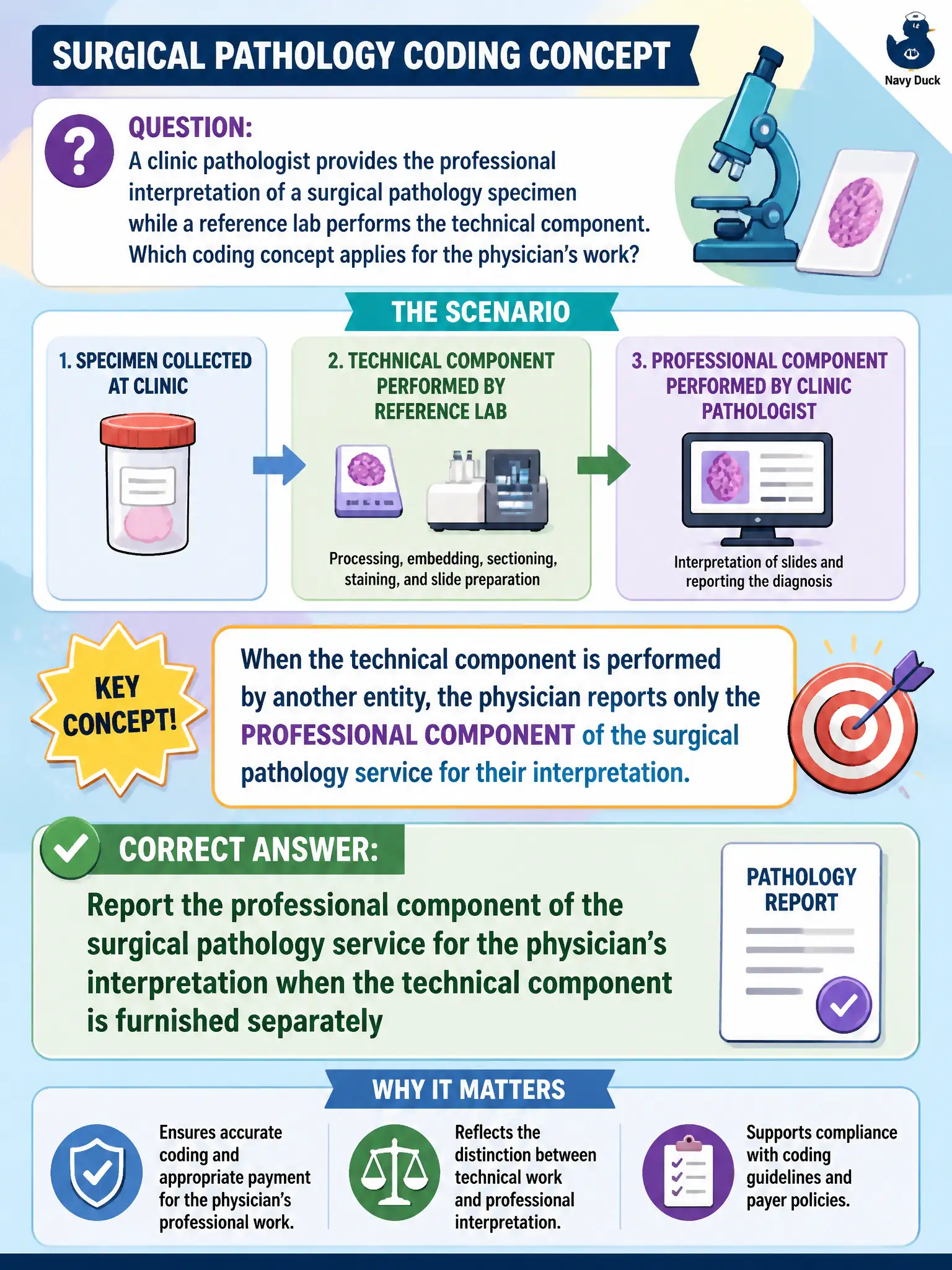
A clinic pathologist provides the professional interpretation of a surgical pathology specimen while a reference lab performs the technical component. Which coding concept applies for the physician’s work?
Select an answer to reveal the explanation.
Short Explanation
Reading the slides is the doctor’s brainwork—the professional piece—while the lab’s machines and processing are the technical piece. Bill the professional interpretation concept for the pathologist, not a mystery facility revenue code, a slide-count E/M, or PCS.
Full Explanation
When a clinic pathologist provides professional interpretation of a surgical pathology specimen while a reference lab performs the technical component, report the professional component of the surgical pathology service for the physician’s interpretation. Splitting TC/PC correctly keeps reference-lab partnerships in community pathology transparent and prevents billing a global pathology service the clinic did not fully furnish.
Reporting only a facility revenue code because professional pathology interpretation is never billed separately erases allowable professional pathology billing. Reporting an office E/M level based solely on the number of slides reviewed substitutes visit leveling for pathology professional-component coding. Reporting ICD-10-PCS resection codes for each block examined imports inpatient procedure coding into professional pathology interpretation.
Exam caveat: modifier 26 (or equivalent professional-component reporting) is commonly used when TC is elsewhere—follow the pathology code’s component structure. Operational check: confirm who performed technical processing versus interpretation, report the professional pathology component for the physician, link the surgical pathology diagnosis, and coordinate so the reference lab bills technical services without duplicate global billing.