
Where should a CCS-P coder look in CPT resources to confirm that an add-on code is exempt from modifier 51 multiple-procedure reductions?
Select an answer to reveal the explanation.
Short Explanation
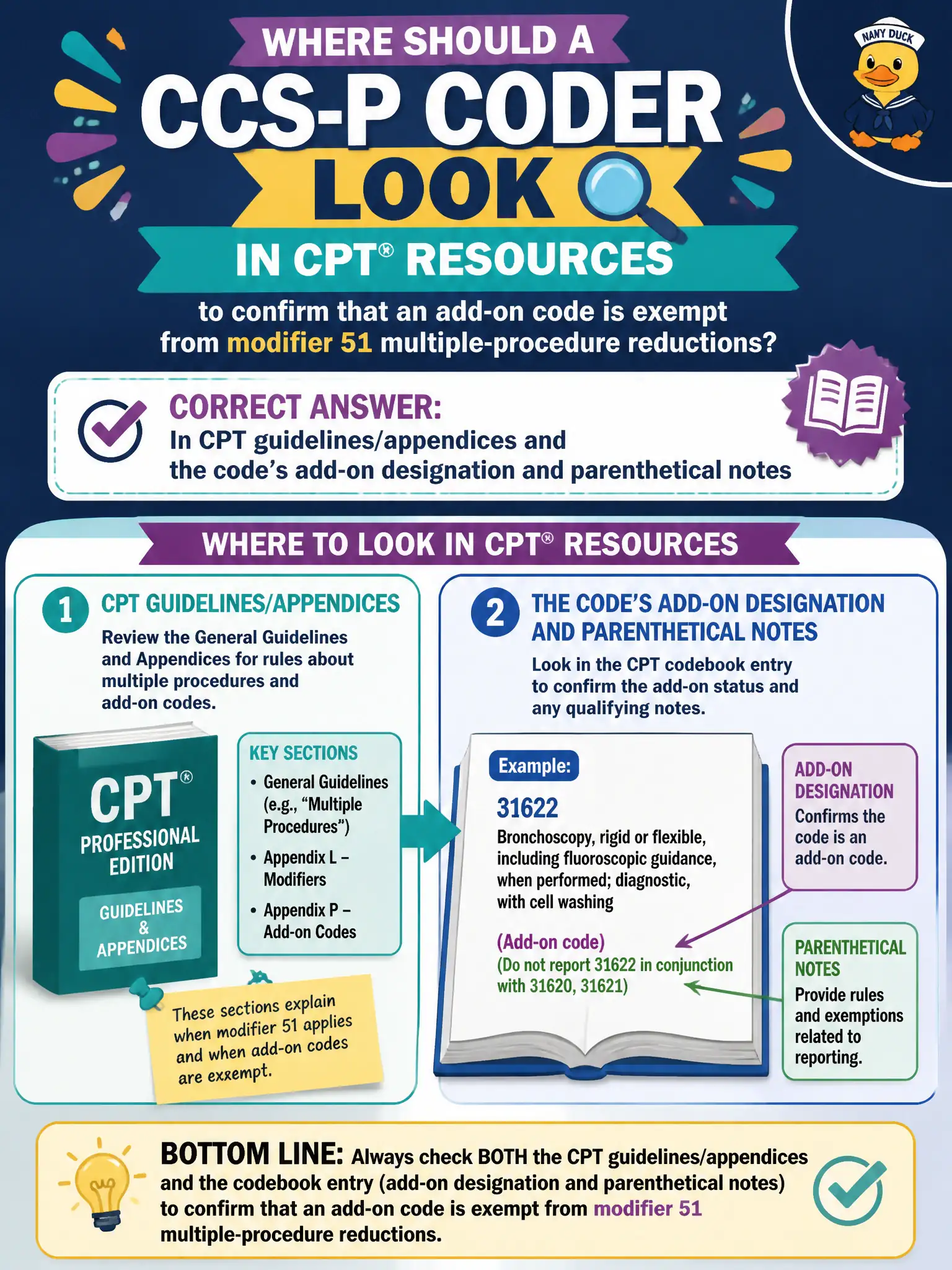
Add-on exemption is a CPT map legend, not something you dig out of ICD guidelines, UB manuals, or HIPAA privacy chapters. Check CPT’s own guidelines, appendices, and the code’s add-on markings.
Full Explanation
To confirm that an add-on code is exempt from modifier 51 multiple-procedure reductions, a CCS-P coder looks in CPT guidelines and appendices and at the code’s add-on designation and parenthetical notes. Add-on exemption is a CPT map legend. Checking the right book keeps community multi-procedure claims from incorrectly applying reduction modifiers to codes CPT already carved out.
Looking only in the ICD-10-CM Official Guidelines for Coding and Reporting answers diagnosis questions, not CPT add-on modifier-51 status. Looking only in the UB-04 billing manual facility instructions addresses facility claims, not physician CPT add-on rules. Searching the HIPAA Privacy Rule administrative simplification text addresses privacy, not procedural add-on payment modifiers.
Exam caveat: payer software may still process reductions differently, but the coding concept for exemption originates in CPT add-on designation—not in ICD, UB, or HIPAA privacy chapters. Operational check: verify the code is marked add-on in current CPT, read parenthetical primary-code requirements, omit modifier 51 on designated add-ons, and pair with an appropriate primary on the professional claim In county and community practices, that discipline also reduces rework from preventable denials and supports transparent stewardship of Medicaid and Medicare professional payments..