
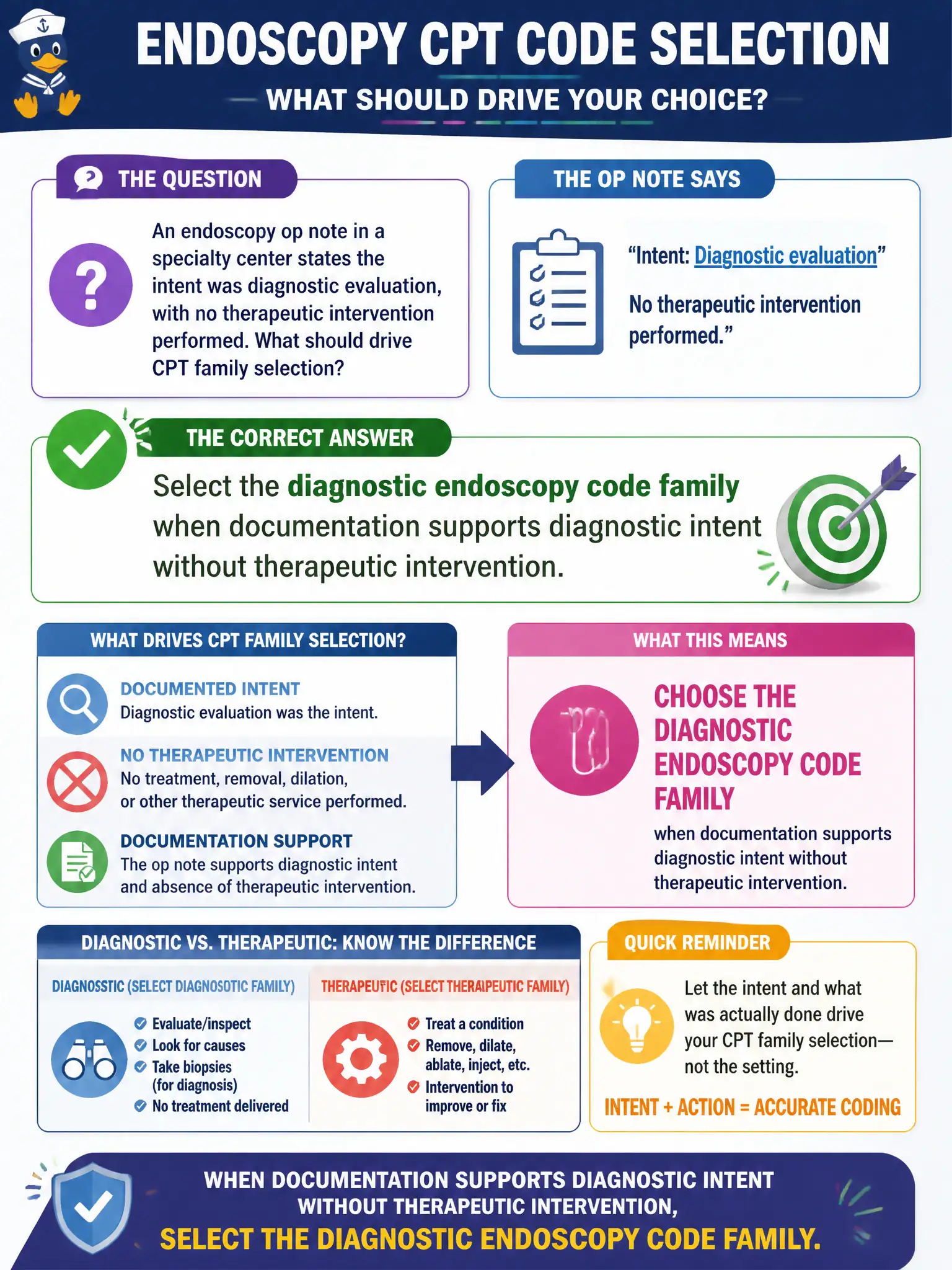
An endoscopy op note in a specialty center states the intent was diagnostic evaluation, with no therapeutic intervention performed. What should drive CPT family selection?
Select an answer to reveal the explanation.
Short Explanation
Intent is the steering wheel. If the note says look-and-see with no fix-it work, drive into the diagnostic code family—not the higher-paying therapeutic lane, an unlisted detour, or a random radiology swap.
Full Explanation
Endoscopy CPT family selection should follow documented intent and intervention: select the diagnostic endoscopy code family when documentation supports diagnostic evaluation without therapeutic intervention. Intent is the steering wheel for community specialty centers choosing between diagnostic and therapeutic families, protecting payment integrity when “look-and-see” work was all that occurred.
Always selecting the therapeutic endoscopy family because it pays more is upcoding without therapeutic work. Always selecting an unlisted code when both diagnostic and therapeutic families exist abandons specific codes without need. Always selecting a radiology fluoroscopy code instead of an endoscopy code misclassifies endoscopic evaluation as a radiology-only service.
Exam caveat: if a biopsy or other therapeutic/diagnostic intervention occurs, the code family may shift accordingly—read the op note interventions, not the scheduled intent alone. Operational check: confirm diagnostic intent, absence of therapeutic intervention, select the diagnostic endoscopy family, and retain the findings report for audit without inflating to therapeutic codes for civic payer claims In county and community practices, that discipline also reduces rework from preventable denials and supports transparent stewardship of Medicaid and Medicare professional payments..