
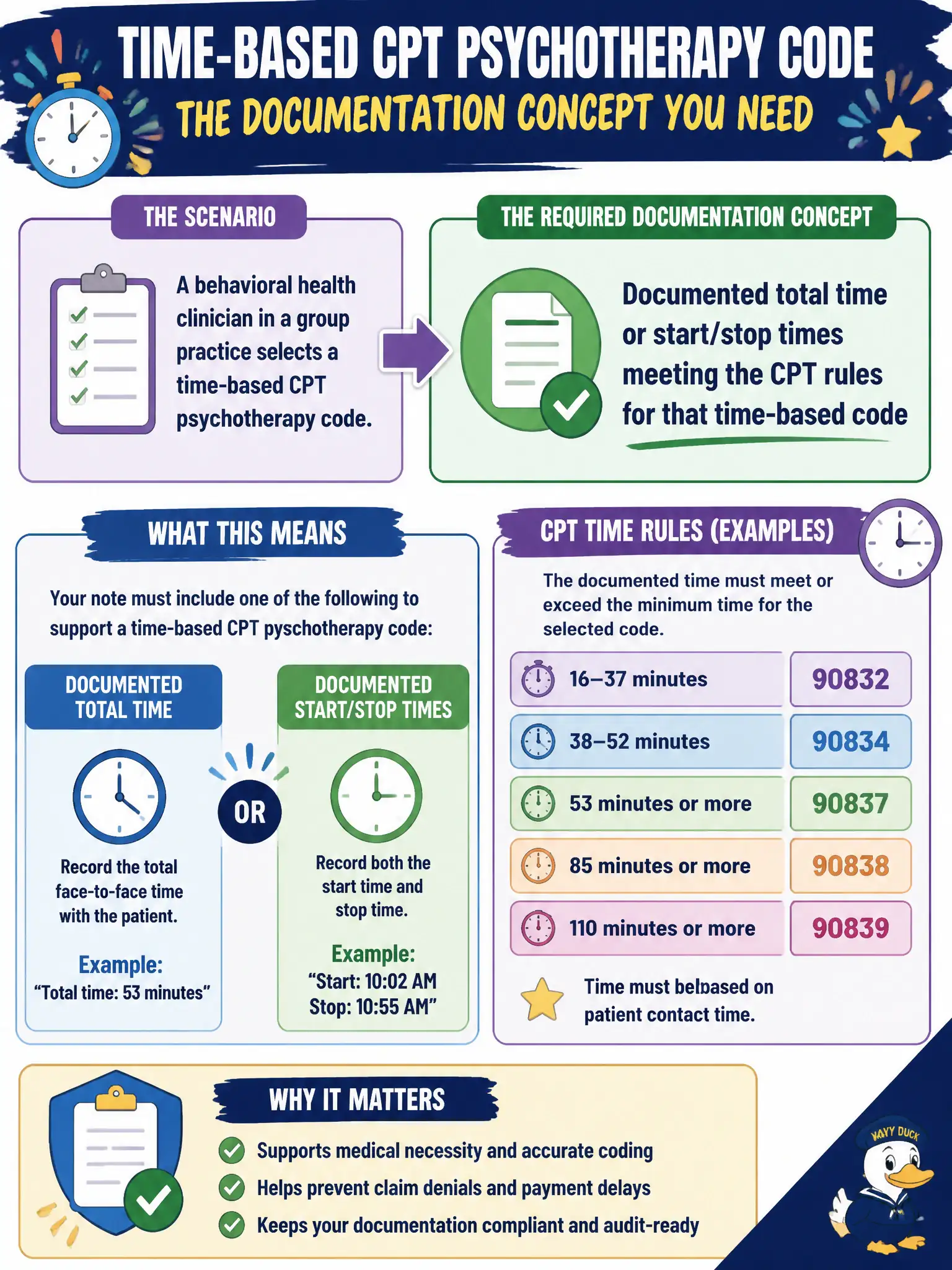
A behavioral health clinician in a group practice selects a time-based CPT psychotherapy code. What documentation concept is required to support that code?
Select an answer to reveal the explanation.
Short Explanation
Time-based codes live or die on the clock. If the note never shows real minutes (or start/stop), you are guessing—and CPT does not grade on ‘we spent enough time, trust us.’
Full Explanation
Time-based CPT psychotherapy codes require documented total time or start/stop times meeting the CPT rules for that code. Behavioral health clinicians in group practices serving community patients must make the clock visible in the record; without minutes, the time-based code lacks a foundation. Accurate time documentation supports access measurement and payment integrity for public mental-health services.
A generic statement that “adequate time was spent” without minutes or start/stop detail fails CPT time documentation expectations. Relying only on the diagnosis list because time-based CPT codes never require timed documentation is false for time-selected psychotherapy families. Printing a fee schedule RVU row into the note does not document clinical time and is irrelevant to CPT time support.
Exam caveat: some psychotherapy codes are chosen by time ranges—meeting the midpoint or published threshold rules for that edition matters. Operational check: record total minutes or start/stop times, select the psychotherapy code matching documented time and service type, and retain modality and medical-necessity content alongside the clock for civic BH audits In county and community practices, that discipline also reduces rework from preventable denials and supports transparent stewardship of Medicaid and Medicare professional payments..