
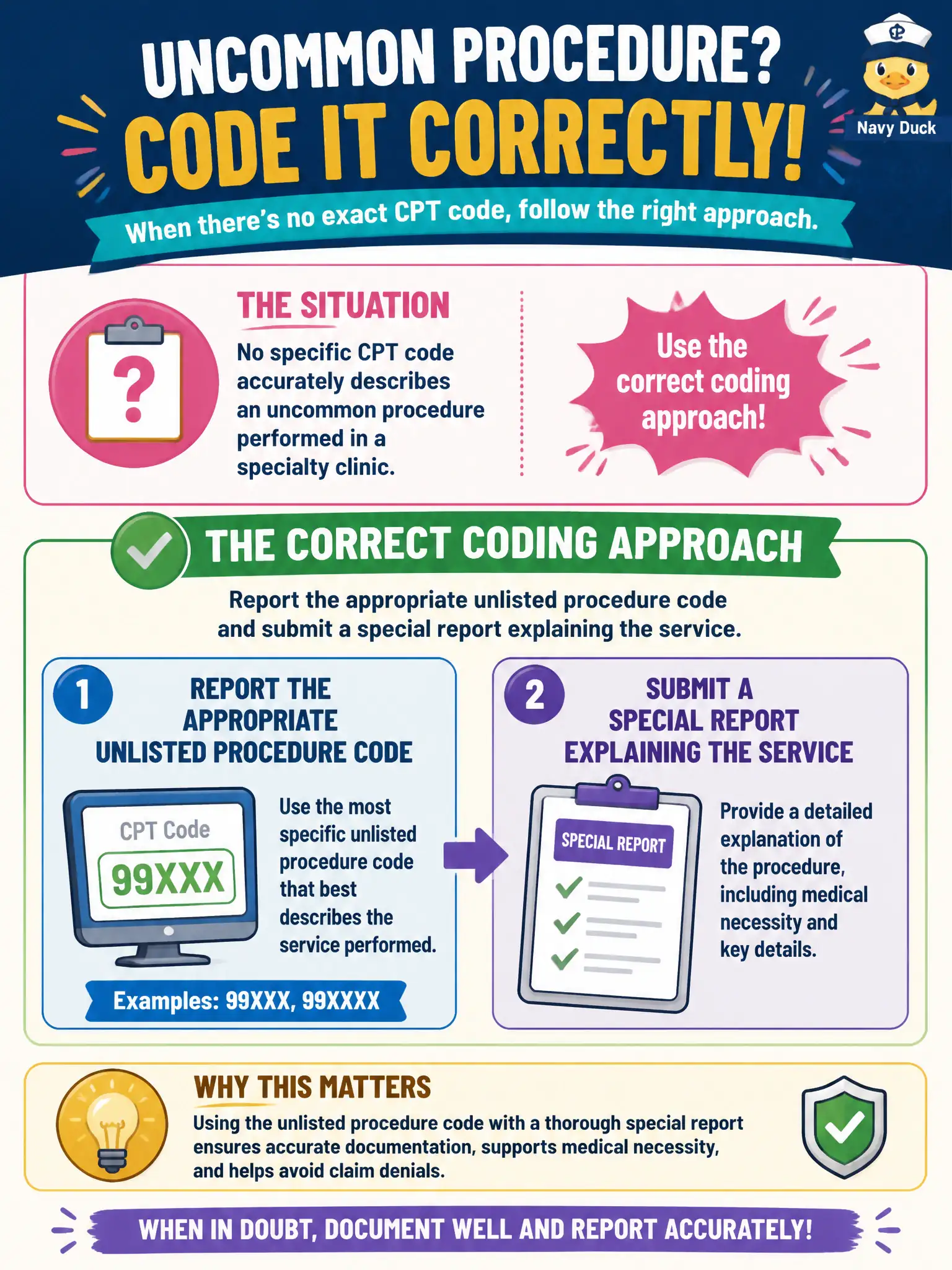
No specific CPT code accurately describes an uncommon procedure performed in a specialty clinic. What is the correct coding approach?
Select an answer to reveal the explanation.
Short Explanation
When CPT has no perfect hat on the rack, you do not squeeze a wrong-sized hat onto the claim or wait forever. Use the unlisted procedure lane and attach a special report that tells the payer what was actually done.
Full Explanation
When no specific CPT code accurately describes an uncommon procedure performed in a specialty clinic, report the appropriate unlisted procedure code and submit a special report explaining the service. Unlisted reporting with a clear narrative is the honest path for rare community specialty work rather than forcing a wrong specific code or leaving the service invisible.
Picking the closest specific CPT code even if key components were not performed misrepresents the service and risks compliance findings. Leaving the procedure uncoded until a new CPT number is published mid-year abandons current-year billing without a valid reason. Reporting an E/M code only because unlisted procedures are never used on professional claims is incorrect—unlisted procedure codes exist precisely for professional claims when needed.
Exam caveat: compare carefully to specific codes first; unlisted is last resort when no specific code fits, and payers often require paper or attachment review. Operational check: confirm no specific CPT fits, select the correct unlisted family for the anatomic/system section, attach a special report comparing the work to related listed codes, and price/document per clinic policy for transparent civic billing.