
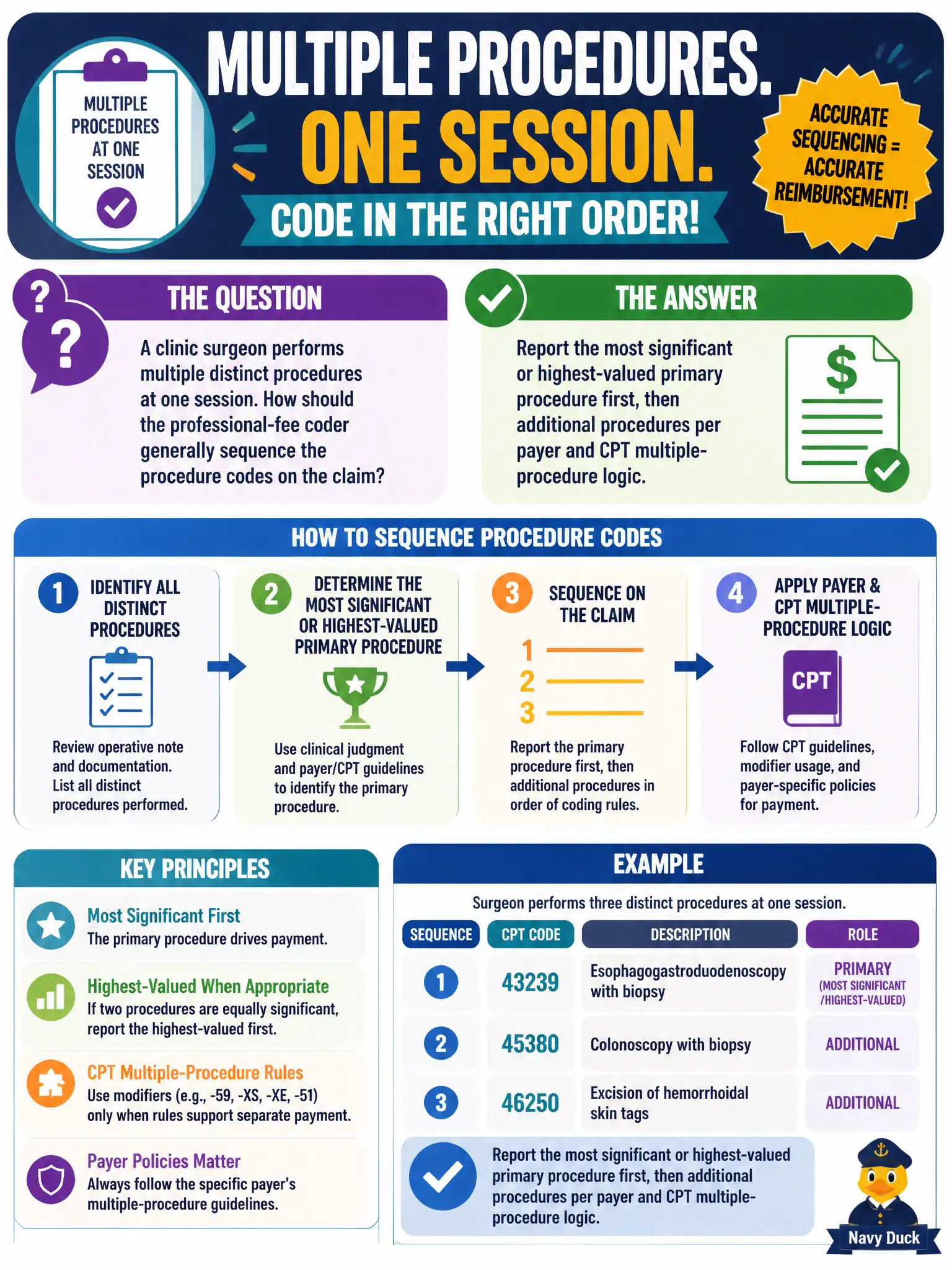
A clinic surgeon performs multiple distinct procedures at one session. How should the professional-fee coder generally sequence the procedure codes on the claim?
Select an answer to reveal the explanation.
Short Explanation
Lead with the headliner—the biggest, most significant procedure—then stack the supporting acts. Numeric order, burying the high-value code, or keeping only the first cut of the day are how clean claims turn into messy payments.
Full Explanation
When a clinic surgeon performs multiple distinct procedures at one session, professional-fee coding generally sequences the most significant or highest-valued primary procedure first, then additional procedures per payer and CPT multiple-procedure logic. Leading with the headliner helps payment systems apply reductions correctly and keeps community multi-procedure claims interpretable.
Always listing codes in numeric CPT order regardless of value or significance can bury the primary procedure and confuse ranking. Always listing the lowest-RVU code first so payers apply reductions to higher-valued lines manipulates payment logic improperly. Reporting only the first procedure chronologically started and omitting the others understates medically necessary distinct procedures actually performed.
Exam caveat: some payers re-sort by RVU automatically, but professional coding still should present a coherent primary-first claim and apply required modifiers. Operational check: rank procedures by significance/value from the op note, place the primary first, add secondary procedures with any required multiple-procedure or distinct-service modifiers, and do not omit distinct work to “simplify” the civic surgical claim.