
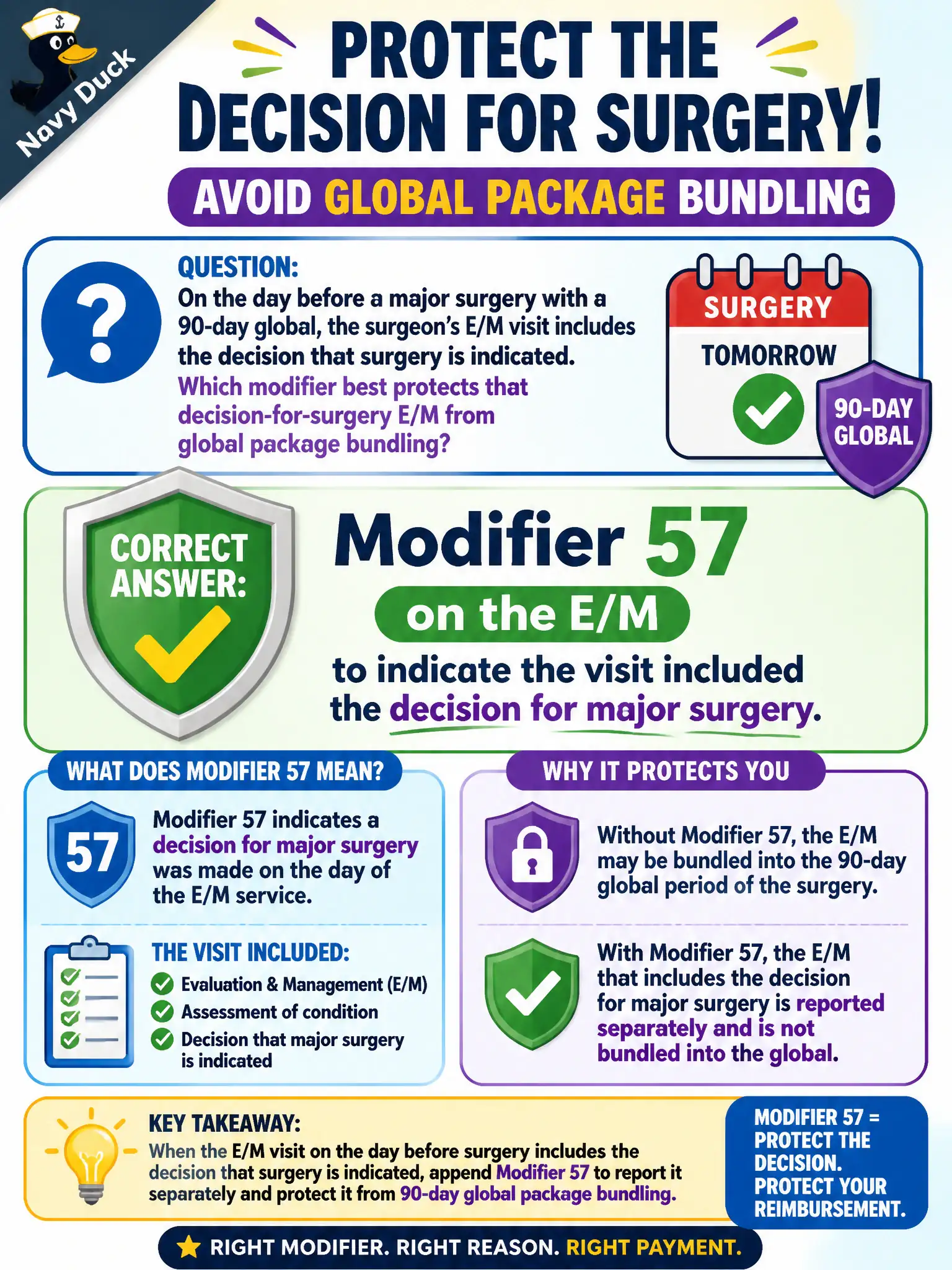
On the day before a major surgery with a 90-day global, the surgeon’s E/M visit includes the decision that surgery is indicated. Which modifier best protects that decision-for-surgery E/M from global package bundling?
Select an answer to reveal the explanation.
Short Explanation
Decision for major surgery on that E/M—often the day before—gets modifier 57 so the visit isn’t swallowed by the global package. Think ‘green light for the operation,’ not a routine vitals stop.
Full Explanation
Modifier 57 on an E/M indicates the visit included the decision for major surgery and helps protect that decision-for-surgery evaluation from being bundled into the global package when timing rules apply (often the day before or day of major surgery). Community surgical access depends on recognizing real decision visits rather than absorbing them silently into globals.
Modifier 25 on the E/M for every preoperative history regardless of global days misuses same-day minor-procedure E/M logic for major-surgery decision visits. Modifier 24 on the preoperative decision visit because surgery has not started misapplies unrelated postoperative E/M logic before the global even begins. Modifier 78 on the E/M to show an unplanned return before the operation invents a return-to-OR concept for a preoperative E/M.
Exam caveat: modifier 57 is generally tied to major surgical global packages (commonly 90-day); minor procedure decision visits more often use modifier 25 constructs when separately identifiable. Operational check: confirm major surgery decision documented, timing relative to the operation, append modifier 57 to the E/M when indicated, and align diagnoses to the surgical condition Accurate modifier selection in county and community practices also reduces avoidable denials that divert staff time from patient access..