
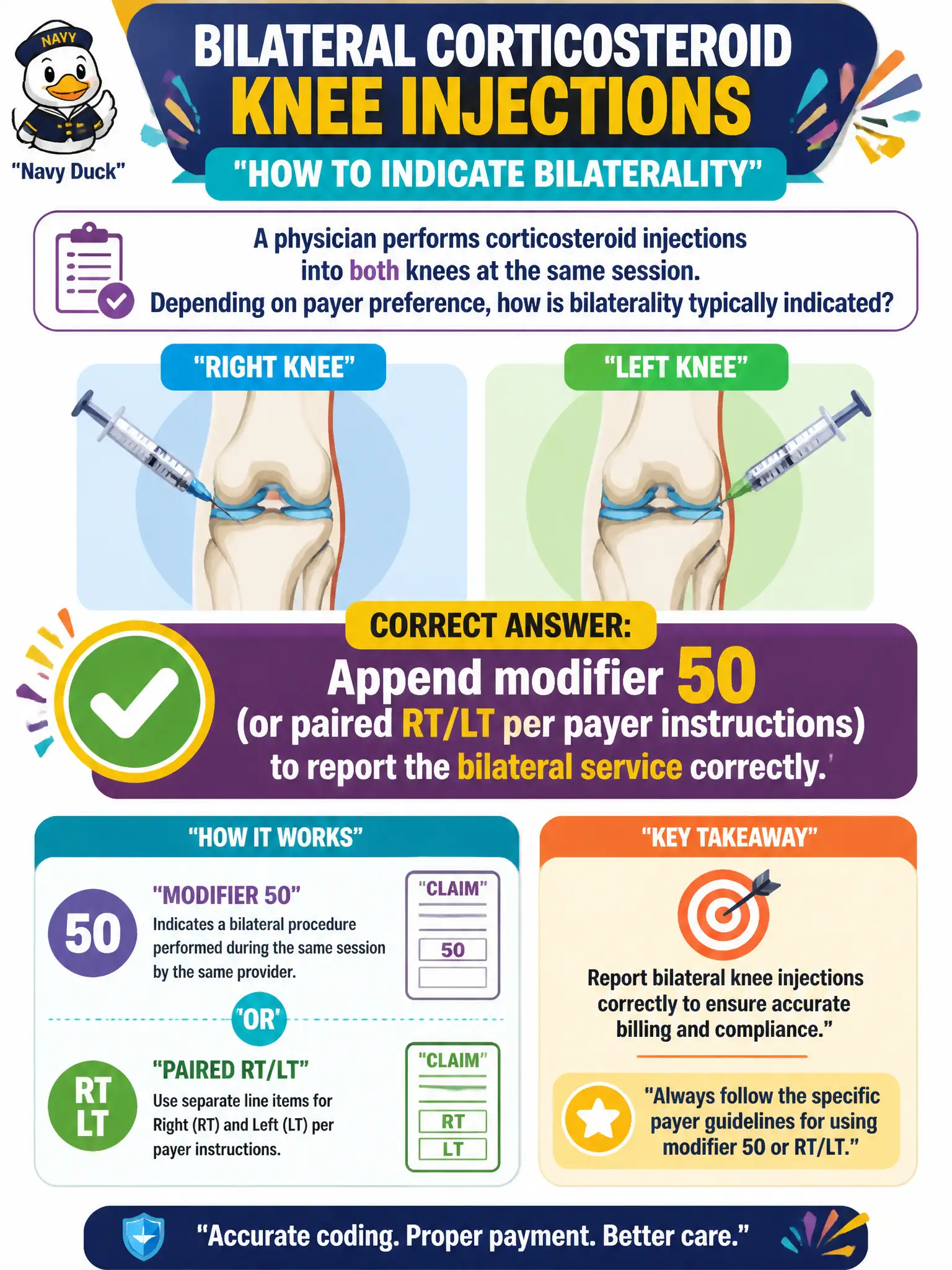
A physician performs corticosteroid injections into both knees at the same session. Depending on payer preference, how is bilaterality typically indicated?
Select an answer to reveal the explanation.
Short Explanation
Two knees, one session: bilaterality is the story. Modifier 50 or paired RT/LT—whichever the payer wants—beats guessing with 22 or 51 alone.
Full Explanation
Bilateral corticosteroid injections into both knees at the same session are typically indicated with modifier 50 or paired RT/LT modifiers depending on payer preference. Correct bilaterality reporting in community rheumatology and primary-care injection clinics ensures both joints’ treatment is visible and paid under the payer’s bilateral rules without misusing unrelated modifiers.
Always using modifier 22 alone without laterality or bilateral indicators claims increased work without identifying two sides. Reporting modifier 78 because both knees were treated in one OR trip misuses unplanned related return-to-OR logic for a planned bilateral office or session service. Using only modifier 51 and omitting any bilateral or laterality designation may mark multiple procedures but fails to communicate bilaterality when required.
Exam caveat: some codes are inherently bilateral or have bilateral payment indicators that change whether 50 versus units versus RT/LT is correct—check the fee schedule indicator. Operational check: document both knees injected, consult the bilateral surgery indicator or payer bilateral policy, and append modifier 50 or paired RT/LT as instructed—not 22, 78, or 51 alone as a substitute.