
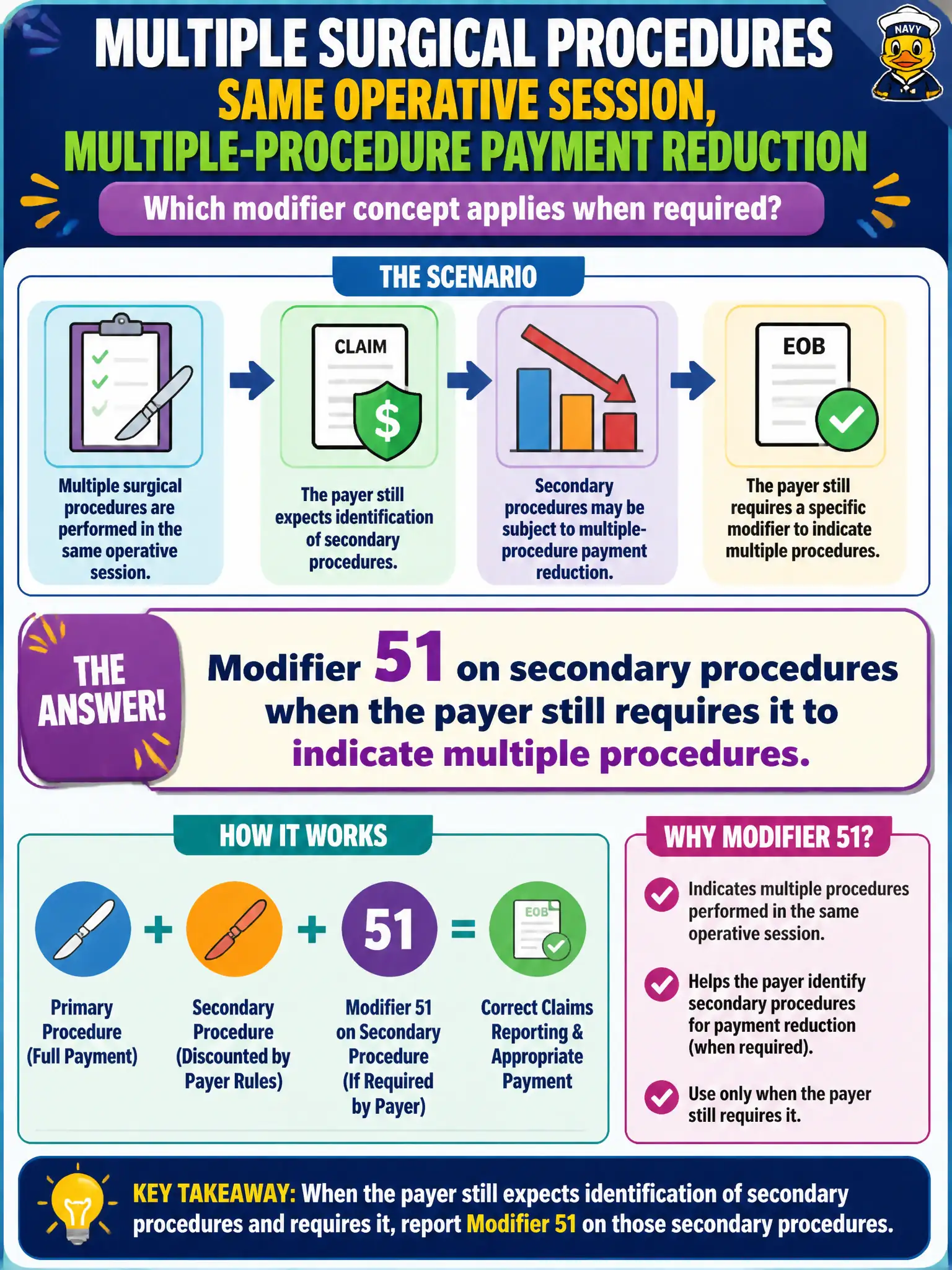
Multiple surgical procedures are performed in the same operative session, and the payer still expects identification of secondary procedures subject to multiple-procedure payment reduction. Which modifier concept applies when required?
Select an answer to reveal the explanation.
Short Explanation
When payers still want a breadcrumb for extra procedures in one session, modifier 51 marks the secondary work. It’s payer-dependent, but the concept is ‘more than one procedure here.’
Full Explanation
When multiple surgical procedures are performed in the same operative session and the payer still expects identification of secondary procedures subject to multiple-procedure payment reduction, modifier 51 on secondary procedures is the concept used when required. Sequencing and multiple-procedure identification keep professional claims in community ORs interpretable for payment algorithms.
Modifier 25 on every surgical code performed after the first misuses an E/M-significant-and-separately-identifiable modifier on surgical lines. Modifier 24 on secondary procedures during the global period of an unrelated visit addresses unrelated postoperative E/M services, not same-session multiple surgeries. Modifier 77 because a different physician must bill every secondary procedure invents a repeat-by-another-physician requirement that multiple-procedure reporting does not impose.
Exam caveat: many payers no longer require modifier 51 because their systems auto-detect multiple procedures—follow payer billing manuals. Operational check: list procedures by significance/value, append modifier 51 to secondary codes when the payer still requires it, and apply NCCI/distinct-service modifiers separately when truly needed.