
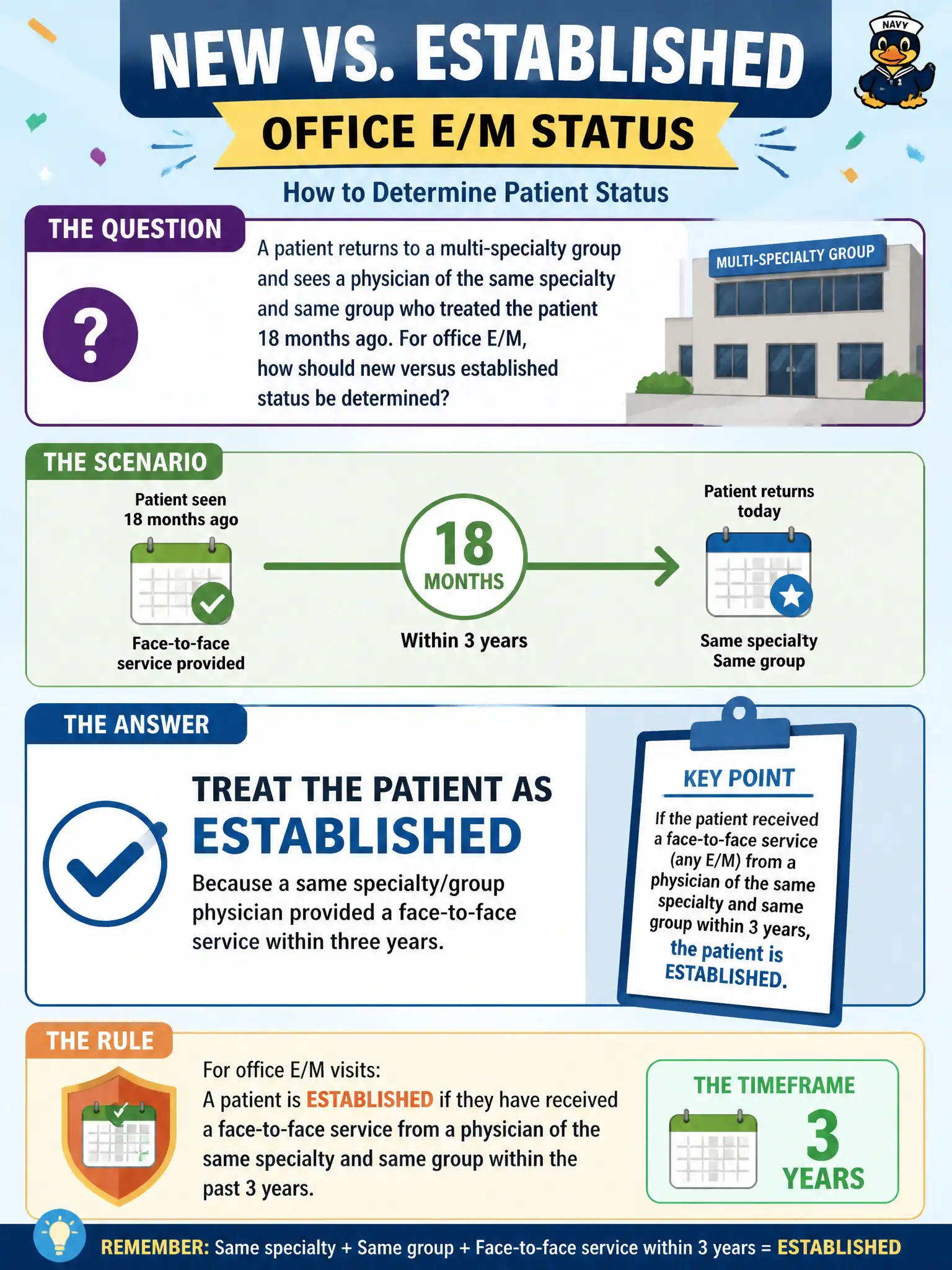
A patient returns to a multi-specialty group and sees a physician of the same specialty and same group who treated the patient 18 months ago. For office E/M, how should new versus established status be determined?
Select an answer to reveal the explanation.
Short Explanation
Three-year rule is the club membership card: same specialty, same group, face-to-face within three years means established. A new door badge or a new diagnosis line doesn’t reset the clock.
Full Explanation
New versus established status for office E/M follows the three-year professional rule: if a physician of the same specialty in the same group provided a face-to-face service within three years, the patient is established. An 18-month return to a multi-specialty group same specialty therefore remains established. Consistent new/established logic in county clinics prevents artificial “new patient” upcoding that distorts access metrics and payment.
Always coding new patient if a different building entrance is used invents new status from geography. Coding new patient whenever a new diagnosis appears on the problem list confuses clinical novelty with patient status. Using consultation status instead of new/established for every return visit bypasses the required office status determination when consult codes are not the question.
Exam caveat: same-specialty and same-group definitions matter—cross-specialty visits in a multi-specialty group can still be new for that specialty. Operational check: search the practice’s professional history for same specialty/group face-to-face services within three years; if found, select established office E/M families and document specialty accordingly.