
A physiatry office performs needle EMG of three extremities. What documentation-driven coding concept applies?
Select an answer to reveal the explanation.
Short Explanation
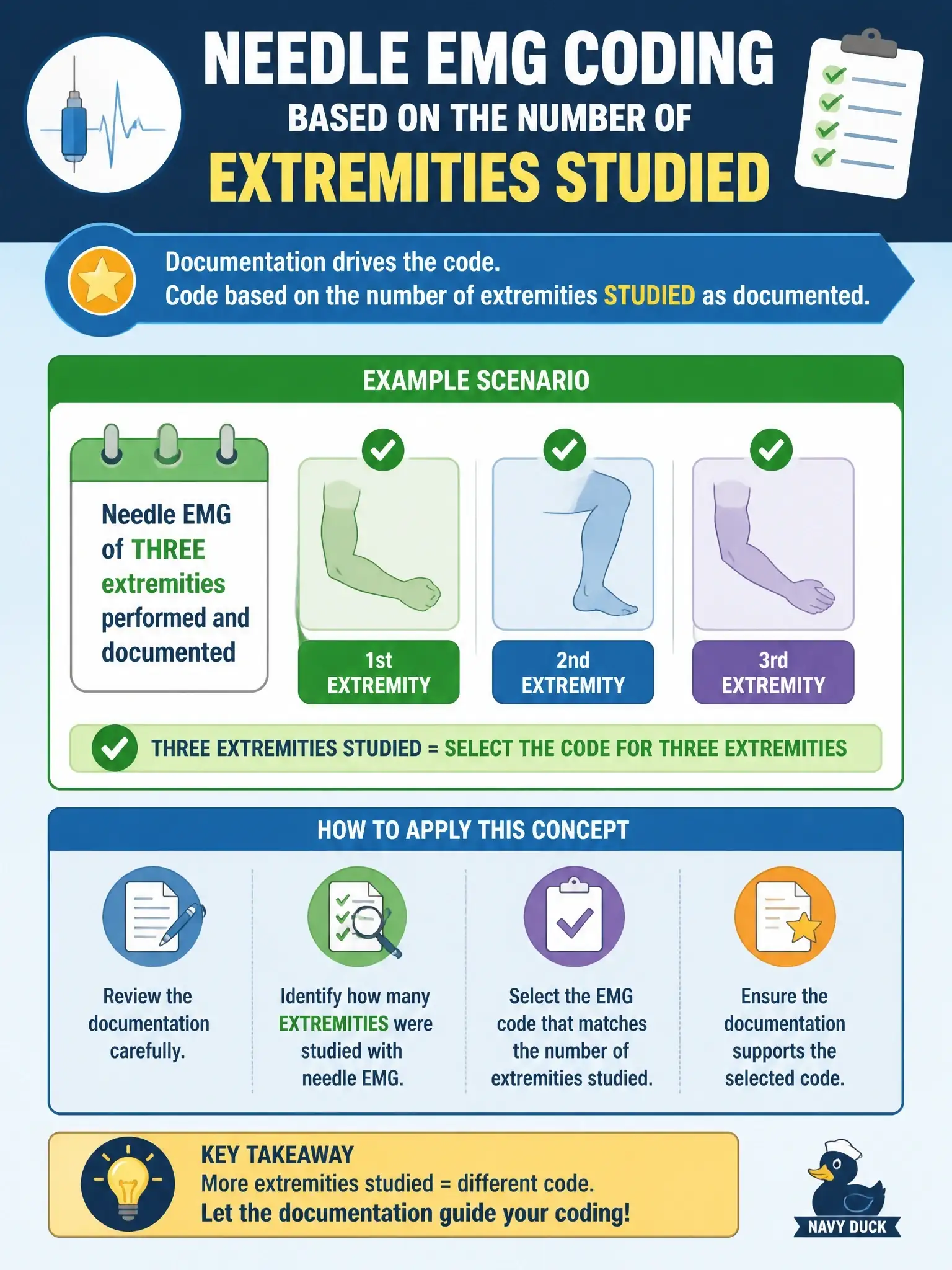
Needle EMG coding follows the extremities you documented. If three extremities were studied, you select the EMG code based on that count—not a psychotherapy time code, a limited EMG label, or NCS-only reporting.
Full Explanation
The documentation-driven coding concept is selecting needle EMG coding based on the number of extremities studied as documented. When a physiatry office performs needle EMG of three extremities, EMG reporting should follow the extremity-count structure rather than collapsing the study into an unrelated time code or a single limited label. Accurate EMG unitization in community neurodiagnostic programs supports medical necessity review and transparent professional billing.
The option that reports EMG using only a psychotherapy time code substitutes behavioral health timing for electrodiagnostic procedure families and does not reflect needle EMG work. The option that uses only nerve conduction study codes and never identifies needle EMG when both may be performed erases needle EMG work that is separately conceptualized from nerve conduction studies. The option that always bills a single limited EMG regardless of how many extremities were examined undercounts multi-extremity documented work.
Exam caveat: nerve conduction studies and needle EMG are often paired but remain distinct code families—report each according to what was performed and documented. Operational check: list extremities examined with needle EMG, map the count to the EMG family’s extremity structure, and retain waveform or study summary documentation for audit. In public and nonprofit clinics, accurate professional coding also supports transparent stewardship of Medicaid, Medicare, and grant-funded visits, reducing rework from denials that delay revenue needed for community access.