
An allergy clinic performs percutaneous allergy skin testing for 20 antigens. How should units be conceptualized?
Select an answer to reveal the explanation.
Short Explanation
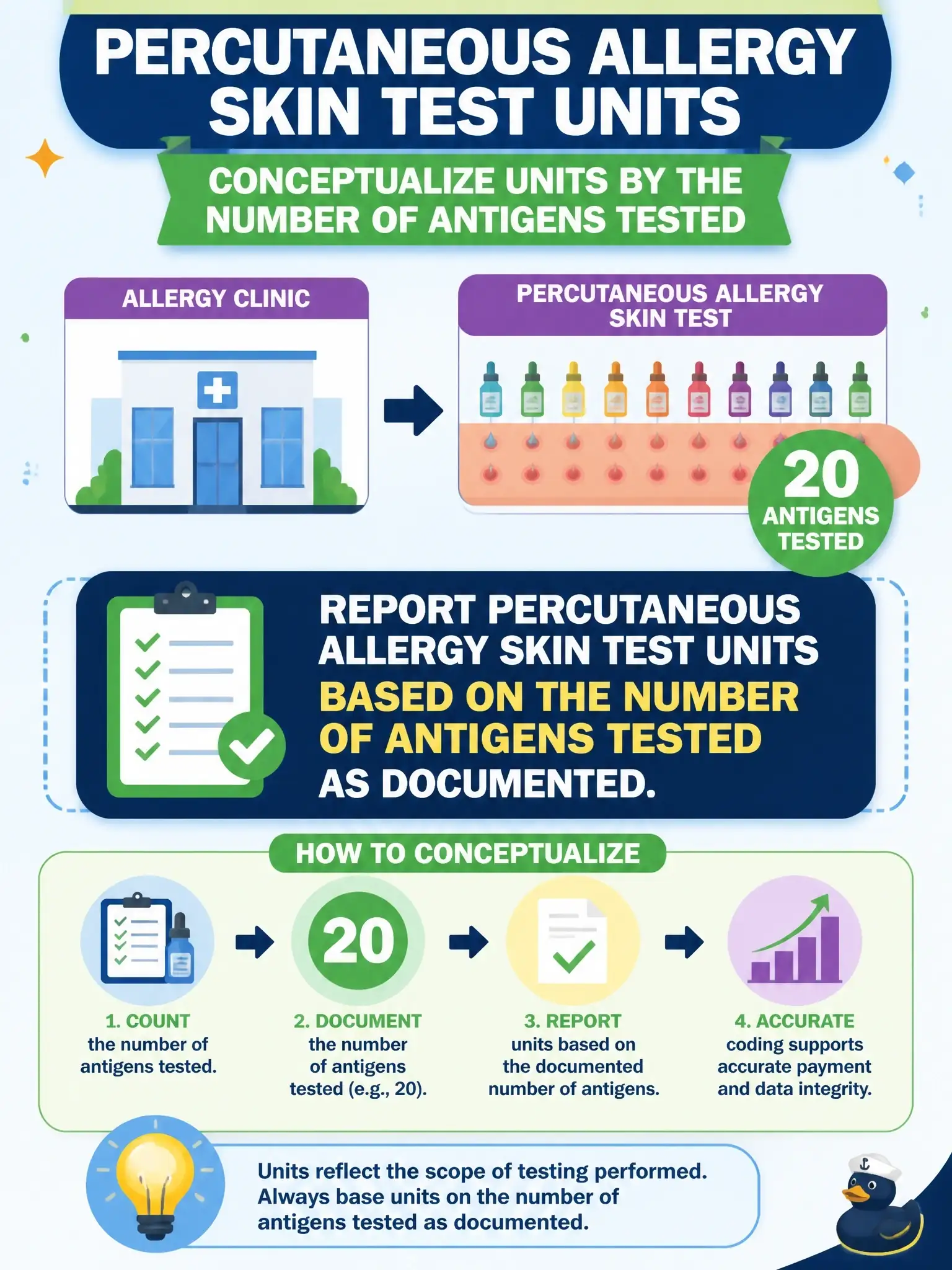
Each antigen prick is like a separate quiz question on the arm. You count the antigens tested and apply the percutaneous skin-test unit rules to that documented count. It isn't one vague visit, and it isn't excisions or shots.
Full Explanation
Percutaneous allergy skin testing for multiple antigens is generally unitized from the number of antigens tested as documented, following the relevant code family's unit structure. An allergy clinic testing twenty antigens should reflect that counted testing work so community allergy programs report utilization accurately for quality measurement, medical necessity review, and payment integrity across public and commercial payers.
The option that says to code 20 surgical excisions of skin lesions instead of skin tests misclassifies diagnostic testing as excisional surgery and invents operative wound care the encounter did not include. The option that says to always report a single unit for any allergy visit regardless of antigen count collapses counted antigen testing into one vague visit unit and understates documented work. The option that says to assign only immunotherapy injection codes when skin testing is performed substitutes therapeutic injection reporting for diagnostic skin testing.
Exam caveat: percutaneous, intracutaneous, and delayed hypersensitivity families differ—match the technique and antigen count documented rather than a generic allergy test label. Operational check: tally antigens tested on the procedure note or antigen list, map the count to the percutaneous skin-test unit rules, link appropriate rhinitis or hypersensitivity diagnoses, and retain antigen panels for audit.