
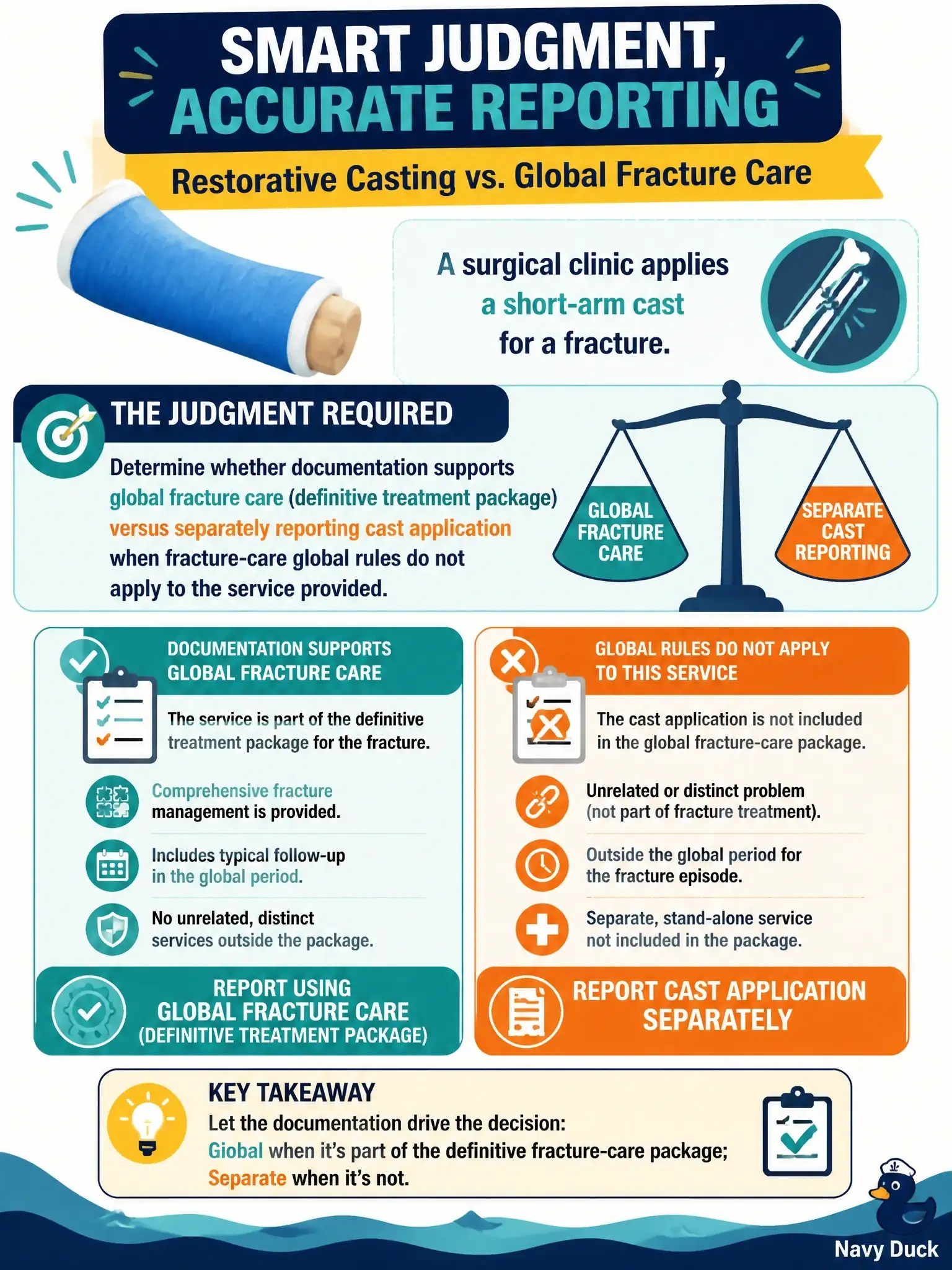
A surgical clinic applies a short-arm cast for a fracture. When deciding between restorative casting and global fracture-care reporting, what judgment is required?
Select an answer to reveal the explanation.
Short Explanation
Putting on a cast can be the whole broken-bone care package or just stabilizing it today, and those bill differently. Read whether the clinician took on definitive fracture care or mainly applied the cast. Don’t drag hospital DRGs into a clinic professional claim.
Full Explanation
Choosing between restorative casting and global fracture-care reporting requires reading whether documentation supports definitive fracture-care management versus cast application when global fracture-care rules do not apply to the service provided. The correct judgment is to determine whether documentation supports global fracture care as a definitive treatment package versus separately reporting cast application when fracture-care global rules do not apply to the service provided. Surgical clinics in community settings must not default to trauma DRGs or omit procedure families; professional coding follows the fracture-care versus casting judgment supported by the note. Asserting that casting is never reportable if any analgesic was given invents an exclusion unrelated to fracture-care packaging rules. Always billing hospital trauma DRGs for any clinic cast confuses facility inpatient payment with physician professional-fee coding. Reporting only an E/M and omitting both casting and fracture-care procedure families understates restorative or definitive work actually performed. Exam caveat: global fracture care includes restorative management concepts that differ from simple temporary immobilization—documentation of definitive treatment intent matters. Operational check: determine whether the clinician assumed definitive fracture care or applied a cast without global fracture-care billing, then select casting versus fracture-care families accordingly and apply any global-period rules.