
An ophthalmology technician performs refraction during a visit, and the payer often excludes refraction. What coding identification concept still applies?
Select an answer to reveal the explanation.
Short Explanation
Checking ‘which lens makes the letters sharp’ is refraction—different from the medical eye exam that looks for disease. Even if the payer shrugs and won’t pay, you still know it’s a separate service concept, not cataract surgery in disguise.
Full Explanation
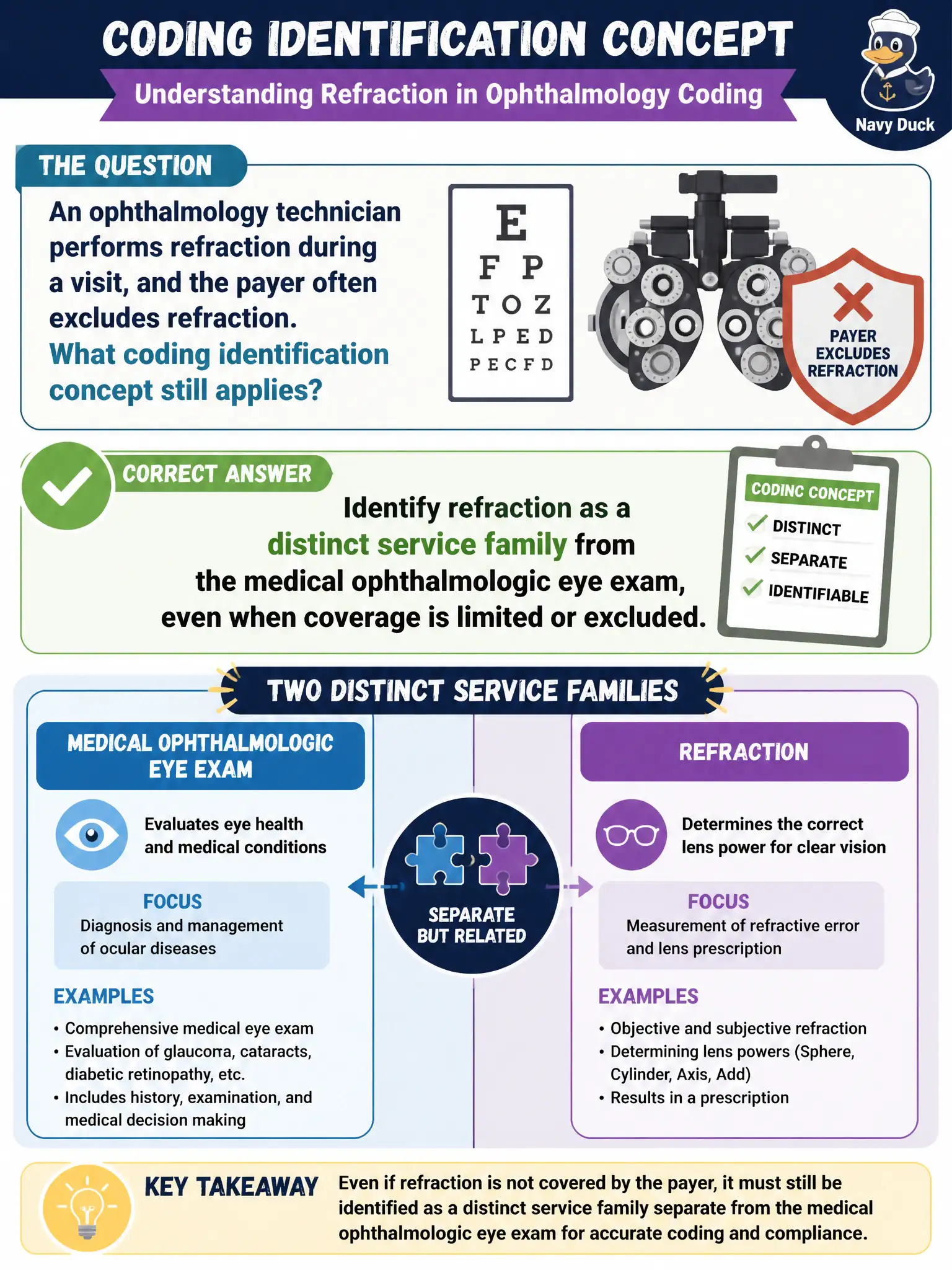
Refraction remains a distinct service family from the medical ophthalmologic eye exam even when a payer often excludes refraction from coverage. Identification and coding concepts are not the same as payment; civic eye clinics still need clean service identity for patient estimates, secondary payers, sliding-fee counseling, and compliance monitoring. Identify refraction separately from the disease-focused medical eye exam whenever refraction is performed.
Always merging refraction into the medical eye exam code so it is invisible on the claim erases a distinct service and obscures noncovered-service communication with patients. Reporting refraction as cataract surgery when any lens prescription changes invents operative work from a refractive measurement alone. Coding only contact-lens supply HCPCS and never naming refraction as a service may capture product supply while omitting the refractive determination itself.
Exam caveat: coverage exclusions do not authorize inaccurate bundling; follow payer billing instructions for noncovered refraction disclosure and any required beneficiary notices. Operational check: report refraction with its proper service family when performed, keep the medical eye exam code for the medical evaluation, separate product supply lines if applicable, and apply noncovered or ABN-related processes per payer policy.