
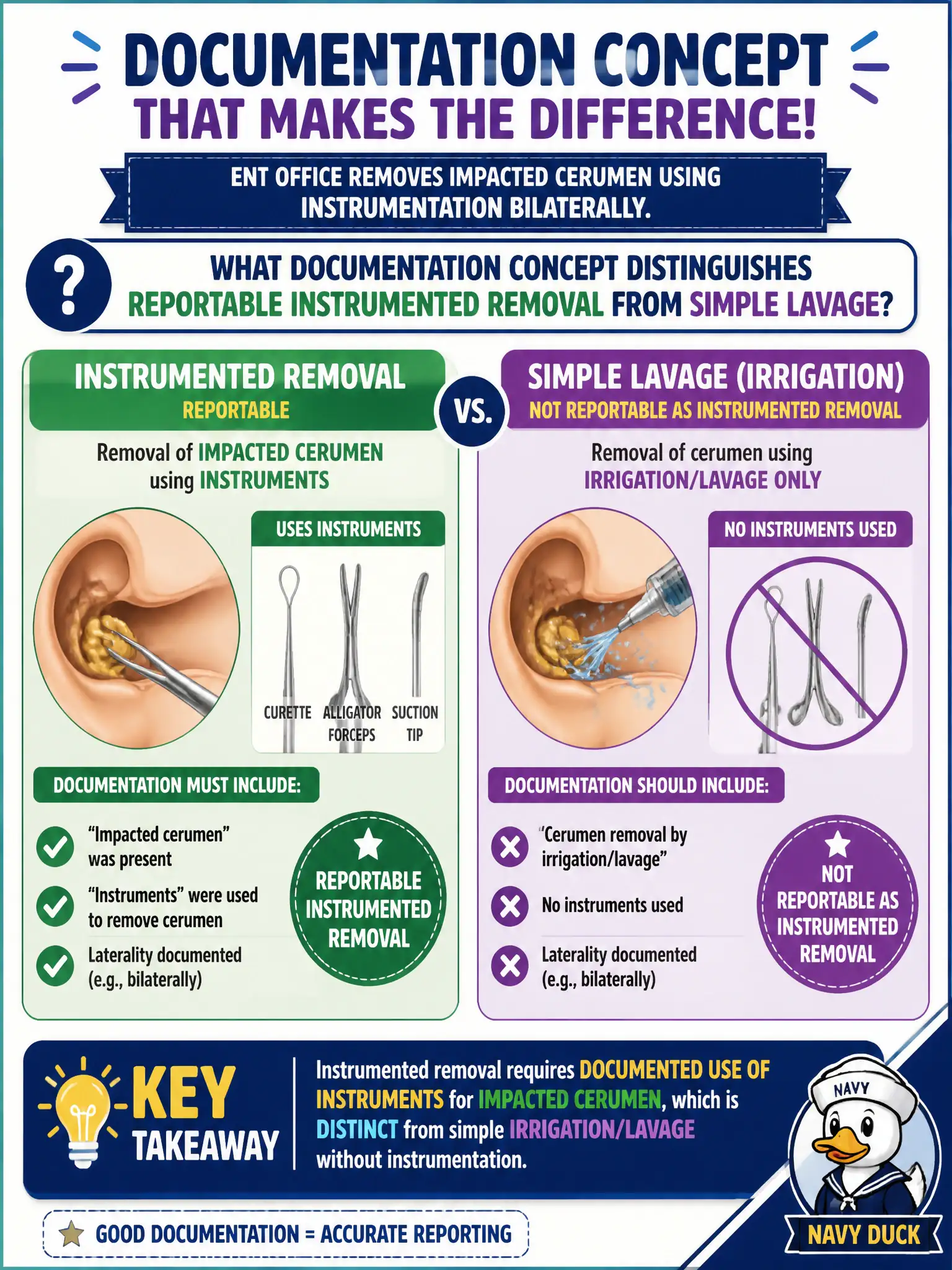
An ENT office removes impacted cerumen using instrumentation bilaterally. What documentation concept distinguishes reportable instrumented removal from simple lavage?
Select an answer to reveal the explanation.
Short Explanation
Squirting water at soft wax is a rinse; digging out a stuck plug with tools is a procedure. The note has to show instruments and impaction—not just ‘ears cleaned.’ Bilateral work still needs that instrumentation story.
Full Explanation
Reportable instrumented cerumen removal requires documented use of instruments for impacted cerumen, which is conceptually distinct from simple irrigation or lavage without instrumentation. ENT offices serving community patients must show impaction and instrumented technique—not a casual ear wipe—before selecting the instrumented-removal family. That documentation standard protects patients from unnecessary procedural billing and protects payers from inflated claims.
Treating any ear wipe during an office visit as instrumented cerumen removal fails the impaction and instrumentation requirements. Mapping bilateral ear lavage with water alone to the instrumented-removal family confuses rinse technique with instrumented extraction. Asserting that cerumen removal is never separately reportable with any ENT evaluation ignores situations where instrumented removal of impacted cerumen is separately identifiable under CPT and payer rules.
Exam caveat: bilaterality and same-day E/M modifier rules may still apply when a significant separately identifiable evaluation occurs. Operational check: confirm the note documents impaction plus instruments (not lavage alone), apply bilateral reporting if both ears meet criteria, and retain technique detail for audit.